A Khmer Breakfast and Street-Food Walk
Noodle soups, green fish curries and charcoal-grilled pork with broken rice: an early morning walk through the city’s best breakfasts.
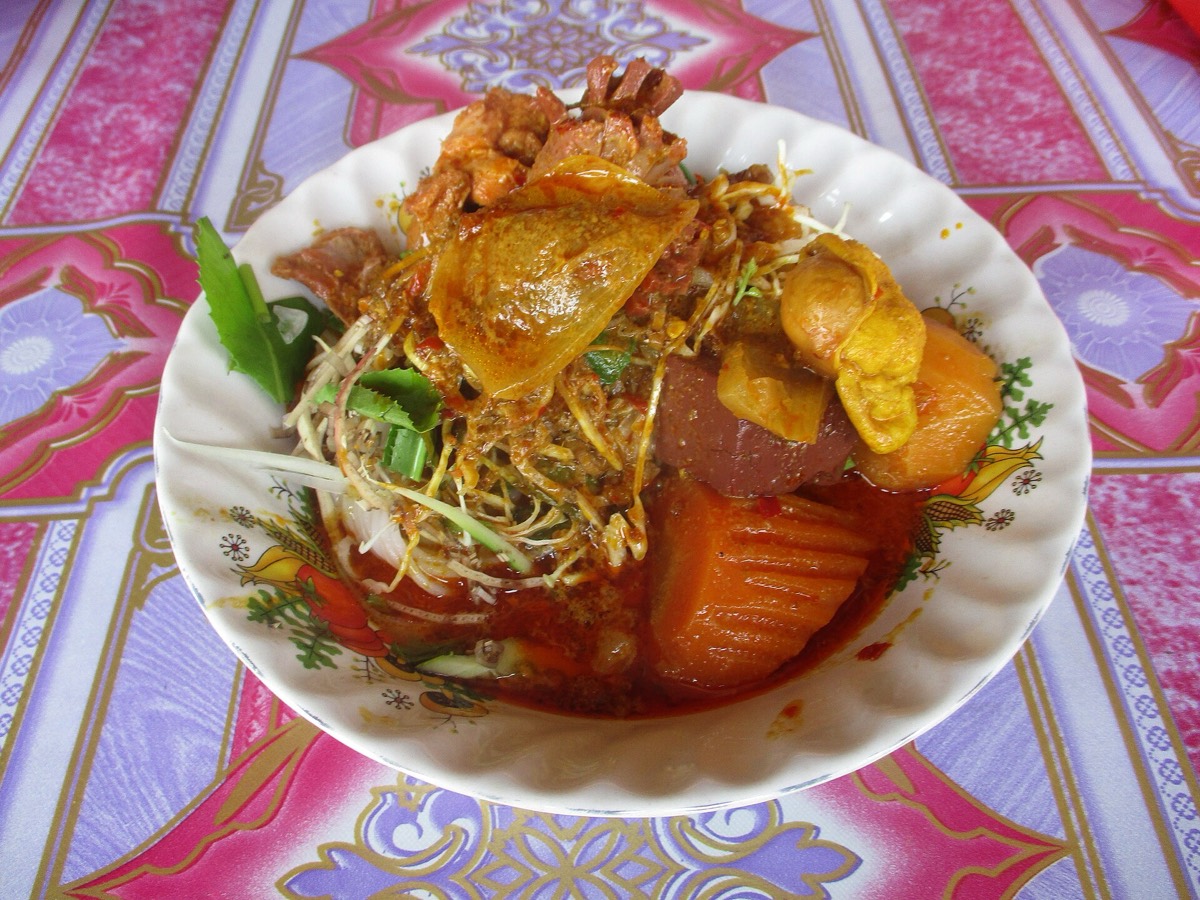

- Area
- Markets & neighbourhoods
- Start from
- Orussey Market area
- Distance
- about 3 km on foot
- Time needed
- a morning
- Best season
- All year; start at 6:30–7 am
- Difficulty
- Easy
- Transport
- On foot, with a tuk-tuk to the start
- Tickets & rules
- None
Why go
Cambodian food is quieter than Thai or Vietnamese cooking, and you discover it best at breakfast. Phnom Penh eats early: by six in the morning the pavements are already full of plastic stools, charcoal smoke and steaming pots, and by ten the best stalls have sold out.
This is a walk I do whenever I come back. I start at Orussey Market for noodles, wander through the streets toward the Central Market for grilled pork, and end with iced coffee somewhere shady. It is the best way I know to understand the city: you sit shoulder to shoulder with office workers, students and grandmothers, and everybody watches you try the herbs.
Expect clean, fresh flavours: lime, lemongrass, fish sauce, palm sugar and fistfuls of herbs and banana flower.
The story
Num banh chok is the most Khmer of all breakfasts: fresh rice noodles, pressed by hand in the villages and brought into the city before dawn, topped with a pale green fish curry made with lemongrass, turmeric and kaffir lime, then piled with cucumber, banana flower and herbs. It is sometimes called Khmer noodles, and women sell it from baskets carried on shoulder poles.
Kuy teav is the great morning soup, rice noodles in a clear pork broth with minced pork, offal or seafood, crispy garlic and herbs. Its roots lie in the Chinese communities of the city, like many of the dishes you will eat here, and you season it yourself at the table with lime, chilli and pepper.
Bai sach chrouk is perhaps the simplest dish: thin slices of pork marinated in coconut milk and garlic, grilled slowly over charcoal and served on broken rice with pickled vegetables and a little bowl of clear broth. The smell of it drifting through the streets at dawn is one of the signatures of Phnom Penh.
The finishing touch is iced coffee, strong, dark and sweetened with condensed milk, often served in a plastic bag with a straw. Kampot pepper, from the south of the country, appears in many dishes and is worth bringing home.
Getting there
Orussey Market is in the west of the central district, a short tuk-tuk ride from the riverside. From there you can walk east through the city center to the Central Market, around two kilometres.
Go early: many stalls close by nine or ten in the morning.
A suggested plan
- 6:30 amOrussey Market: kuy teav at the food stalls inside or along the edges.
- 7:30 amLook for a num banh chok seller in the streets or markets along the way.
- 8:30 amWalk toward the Central Market and stop for bai sach chrouk at a charcoal grill.
- 9:30 amIced coffee and fresh fruit near the Central Market.
- 10:30 amHead back to rest before the heat, or continue to the National Museum.
Where to stay
Any central base works; the walk is short. Staying near the Central Market means you can roll out of bed straight into breakfast.
Good to know
- Choose busy stalls with high turnover; that is the best food-safety rule.
- Ask for less sugar in iced coffee if you prefer.
- A bowl of noodles usually costs a few thousand riel, around one or two dollars.
- Point and smile: few stall holders speak English, but everyone understands.
- Ice in the city is usually made from treated water, but if your stomach is sensitive, skip it.
- Raw herbs are washed in local water; skip them for your first days if cautious.
- Watch for motorbikes on pavements and in market lanes.