The Independence Monument and Wat Langka
A lotus-tower monument, a long ceremonial park and a peaceful old monastery where anyone may join the monks in evening meditation.

- Area
- Markets & neighbourhoods
- Start from
- Royal Palace
- Distance
- about 2 km on foot
- Time needed
- half a day
- Best season
- All year; early morning or after 4 pm
- Difficulty
- Easy
- Transport
- On foot
- Tickets & rules
- None for the monument; modest dress at the pagoda
Why go
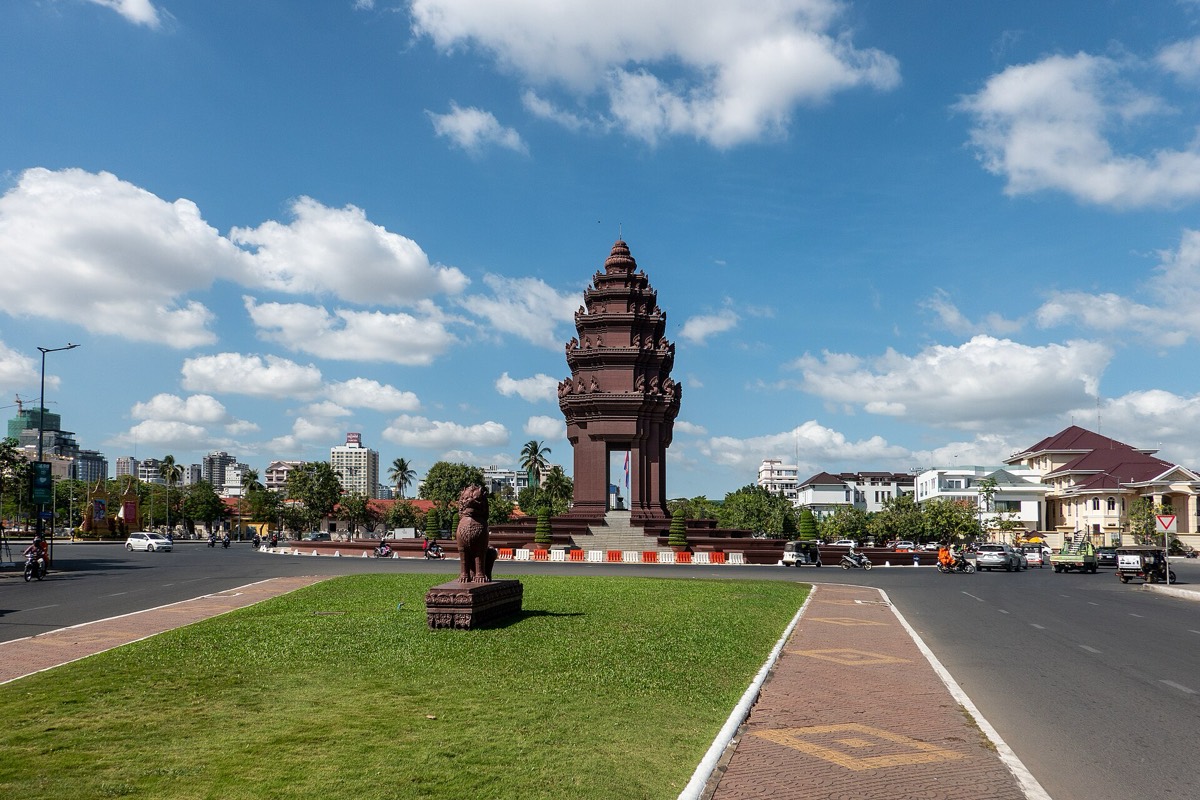
The broad boulevards south of the palace are where the city shows its modern face: the Independence Monument rising from a roundabout like a red lotus bud, the long green park of Hun Sen and Sihanouk boulevards stretching toward the river, and the statue of King Norodom Sihanouk under a gilded canopy.
It is at its best in the early morning and evening, when the park is full of joggers, badminton players and families, and the monument is lit up. Locals come here to exercise, take wedding photos and buy grilled corn. Most visitors drive past it in a tuk-tuk, and miss how pleasant the walk is.
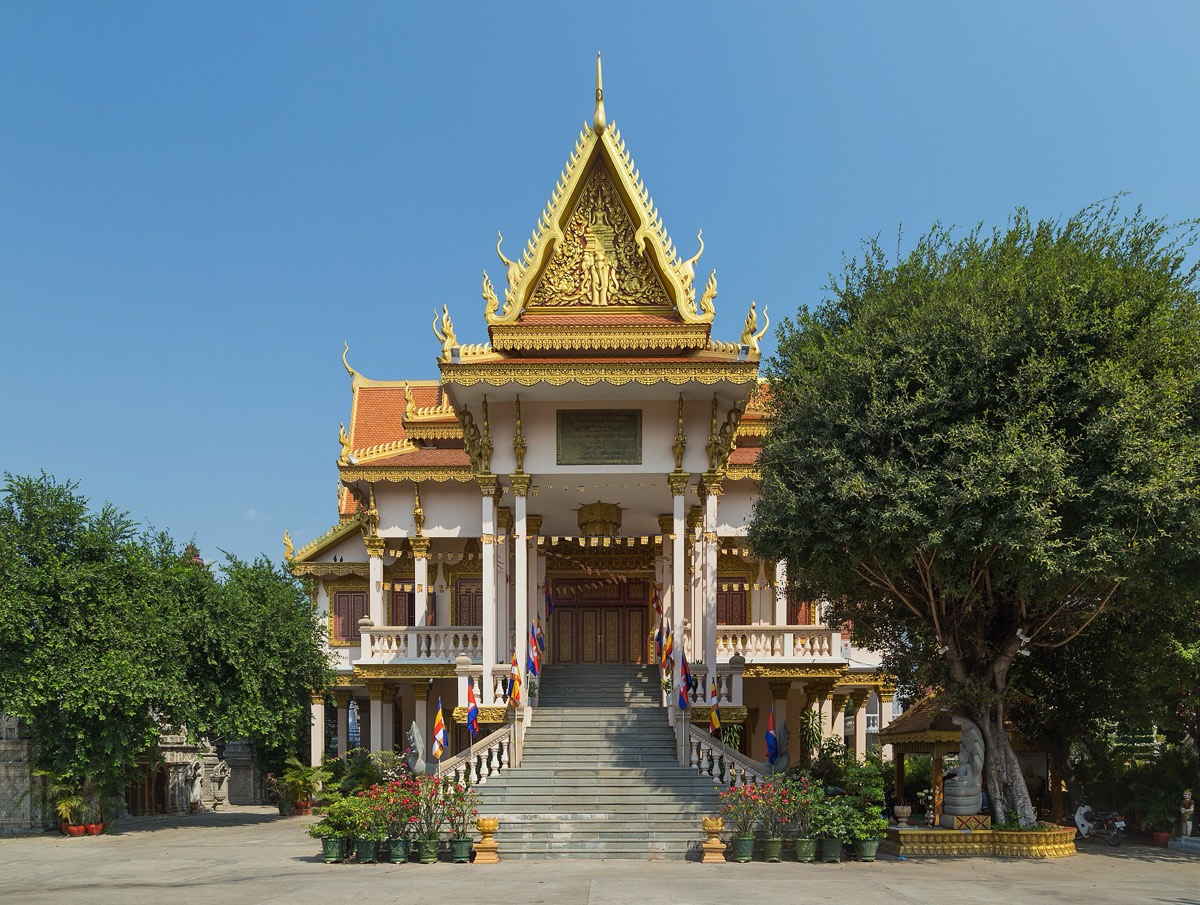
Five minutes away is Wat Langka, one of the oldest pagodas in the city and one of the gentlest. Its courtyards are shaded by big trees, the wall paintings in the main hall are bright and lively, and on some evenings the monks hold meditation sessions that are open to visitors.
The story
The Independence Monument was inaugurated in 1958 to mark Cambodia’s independence from France in 1953. It was designed by Vann Molyvann, the great architect of the period, who took the shape of the central tower of an Angkorian temple and turned it into a slender stack of nagas and lotus petals. It also serves as a memorial to those who died for the country, and wreaths are laid here on national days.
The statue of King Norodom Sihanouk, father of independence, was unveiled in 2013, the year after his death. It stands under a small golden pavilion just east of the monument, and families often leave flowers there.
Wat Langka is traditionally said to date back to the fifteenth century, when it was founded as a place to keep Buddhist texts, and its name recalls Sri Lanka, an important source of Theravada Buddhism. Like almost all pagodas in Cambodia, it suffered badly in the 1970s; it was used as a storehouse, and its revival in the 1980s was one of the signs that ordinary religious life was returning to the capital.
Today it is a lively monastery with a school for monks. If you join a meditation session, you will sit on the floor of a hall in the half-light, listening to the fans and the far-off traffic, and leave feeling oddly rested.

Getting there
Walk south from the palace along Sothearos Boulevard to the junction with Sihanouk Boulevard; the monument is a few minutes west. Wat Langka is on the corner of Sihanouk Boulevard and Norodom Boulevard, right next to the monument.
Crossing the roundabout takes patience: walk slowly and steadily, and let the traffic flow around you.
A suggested plan
- Late afternoonWalk from the palace through the long park toward the river and back.
- Before sunsetVisit the Sihanouk statue and the Independence Monument as the light turns gold.
- DuskStep into Wat Langka; look at the murals and ask about meditation times.
- EveningIf a session is on, join it; otherwise eat at one of the many restaurants in the BKK1 district nearby.
Where to stay
The BKK1 district just south of the monument is leafy, with apartment hotels, cafés and international restaurants; it suits longer stays and is a short ride from the riverside.
Good to know
- Meditation sessions usually happen on certain weekday evenings; ask at the monastery or check locally, as times change.
- Dress modestly and sit with your feet pointing away from the Buddha.
- The monument looks best lit up after dark.
- A donation box at the pagoda is the right way to give thanks.
- Traffic around the roundabout is heavy; never try to run across.
- Don’t climb on the monument; it is a memorial.
- Women should avoid touching monks or handing them things directly.