Under the Yellow Dome of the Central Market
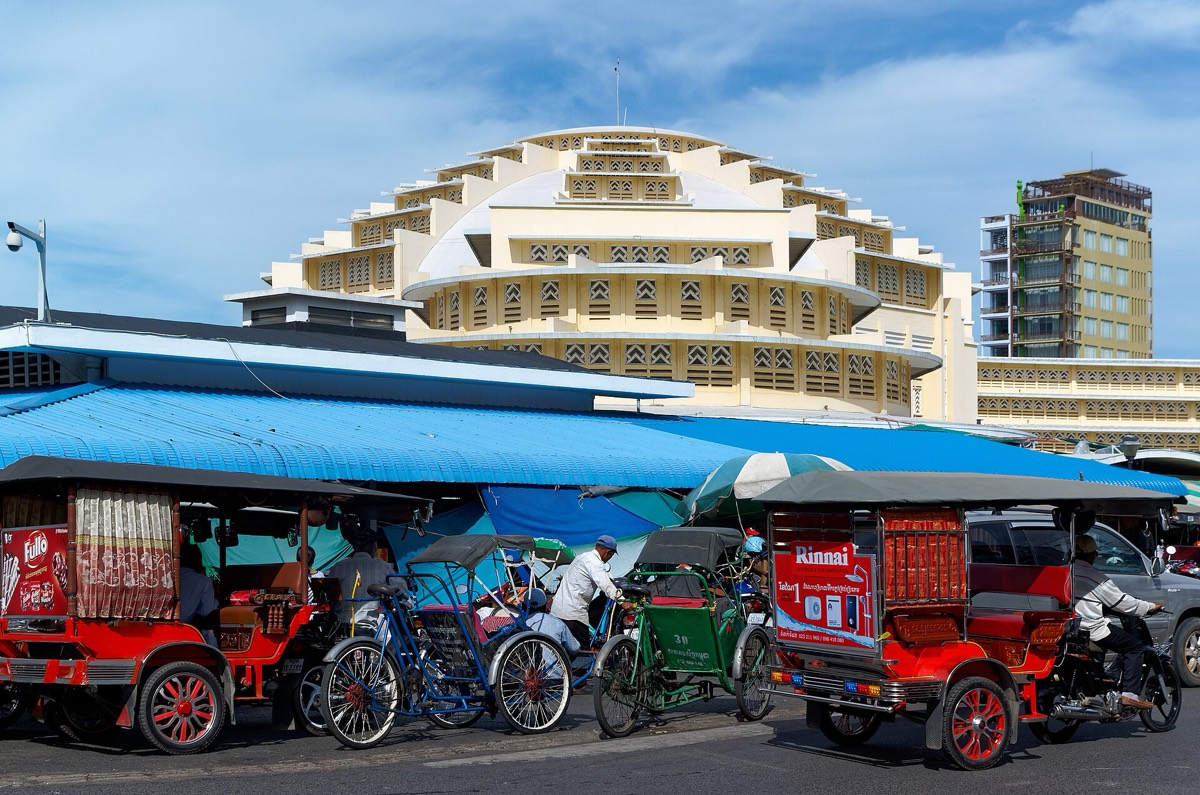
A great Art Deco dome the colour of custard, sheltering gold sellers, flower stalls, fruit pyramids and some of the best market breakfasts in town.

- Area
- Markets & neighbourhoods
- Start from
- Central Phnom Penh
- Distance
- walking distance from the riverside
- Time needed
- 2–3 hours
- Best season
- All year; mornings are coolest
- Difficulty
- Easy
- Transport
- On foot or tuk-tuk
- Tickets & rules
- None
Why go
Phsar Thmei, the New Market, is known to every foreigner as the Central Market, and it is one of my favourite buildings in Southeast Asia. A vast yellow dome rises from the middle of four long arms, like a starfish or a cross, and inside the light falls softly through high vents onto glass cases of gold and jewellery arranged in neat rings.
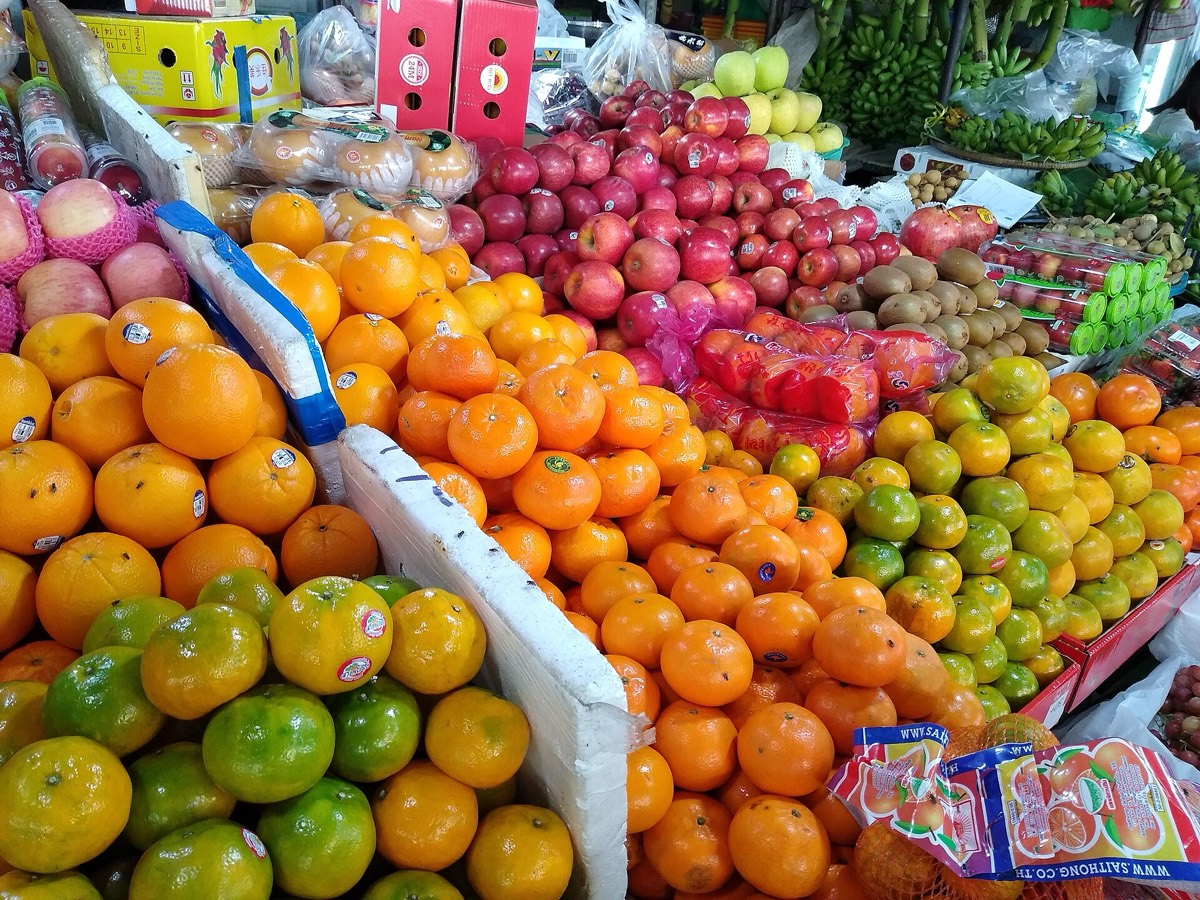
In the wings you will find everything else: watches and phones, T-shirts and kramas, the checked Khmer scarves, piles of dried fish, glistening fruit, fresh flowers and cooking pots. The outer edges are where the food is: noodle soups, grilled pork, sticky rice cakes wrapped in banana leaf, iced coffee with sweet condensed milk.
Even if you buy nothing, the walk through is a pleasure: the hum of voices, the smell of jasmine and fish sauce, and that extraordinary space overhead.
The story
The market was built in the 1930s, on land that had been a swampy lake, and opened in 1937. It was designed by French architects, with the engineer Louis Chauchon and the architect Jean Desbois usually credited, in an Art Deco style that was the height of fashion at the time. For decades it was said to be the largest market in Asia.
The design is clever for the tropics. The high dome and the louvred walls allow hot air to rise and escape while cooler air is drawn in at ground level, so the interior stays surprisingly bearable even on a hot afternoon. The pale yellow colour reflects the sun.
Like the rest of the city, the market was emptied in 1975, when the Khmer Rouge forced the entire population of Phnom Penh into the countryside. It came back to life in the 1980s, and by the 2000s it was crumbling and patched with sheets of metal. A major renovation finished around 2011, with French support, restored the dome and the original colour.
Spend a moment in the gold section. Many Cambodian families keep savings as gold jewellery rather than in banks, a habit shaped by the turbulent decades when money lost its value overnight, and watching the careful weighing and bargaining is like watching a small bank at work.

Getting there
The market sits in the middle of the city on Street 130 and Monivong Boulevard area, about fifteen minutes’ walk west of the riverside. Every tuk-tuk driver knows Phsar Thmei.
It opens early in the morning and winds down in the late afternoon.
A suggested plan
- Around 7 amStart with breakfast at the food stalls on the outer edge: a bowl of kuy teav noodle soup or bai sach chrouk, pork and rice.
- MorningWalk into the central hall to see the dome and the gold stalls.
- ThenExplore the four wings: fabrics and kramas, flowers, fruit, souvenirs.
- Late morningBuy fresh mango or rambutan to take away, then head back to rest from the heat.
Where to stay
The riverside and the lanes around Street 136 to 178 are within walking distance. The area right around the market is busy and noisy, with budget guesthouses.
Good to know
- Bargain politely in the souvenir sections; prices for food and gold are mostly fixed.
- A krama scarf makes a useful and inexpensive souvenir; it serves as sunshade, towel and pillow.
- Carry small notes and riel for food stalls.
- Go early for the most atmosphere and the coolest air.
- Pickpocketing is possible in the crowded aisles; keep your phone in a front pocket.
- Some ‘gold’ and gems in tourist stalls are not what they claim to be.
- Floors near the fish and meat sections can be slippery.