Tuol Tom Poung, the Russian Market
A low, crowded labyrinth of fabrics, spare parts, coffee and noodles, surrounded by one of the city’s most likeable café neighbourhoods.

- Area
- Markets & neighbourhoods
- Start from
- Central Phnom Penh
- Distance
- about 4 km south of the palace
- Time needed
- half a day
- Best season
- All year; mornings, as the market gets hot
- Difficulty
- Easy
- Transport
- Tuk-tuk or ride-hailing app
- Tickets & rules
- None
Why go
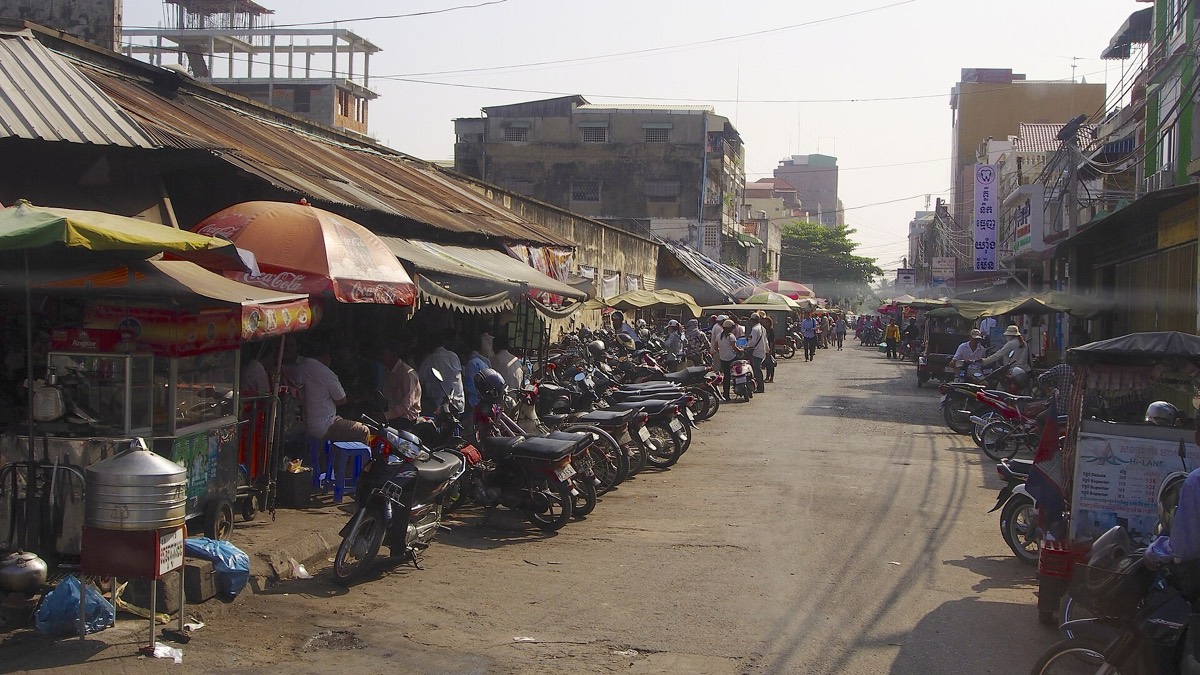
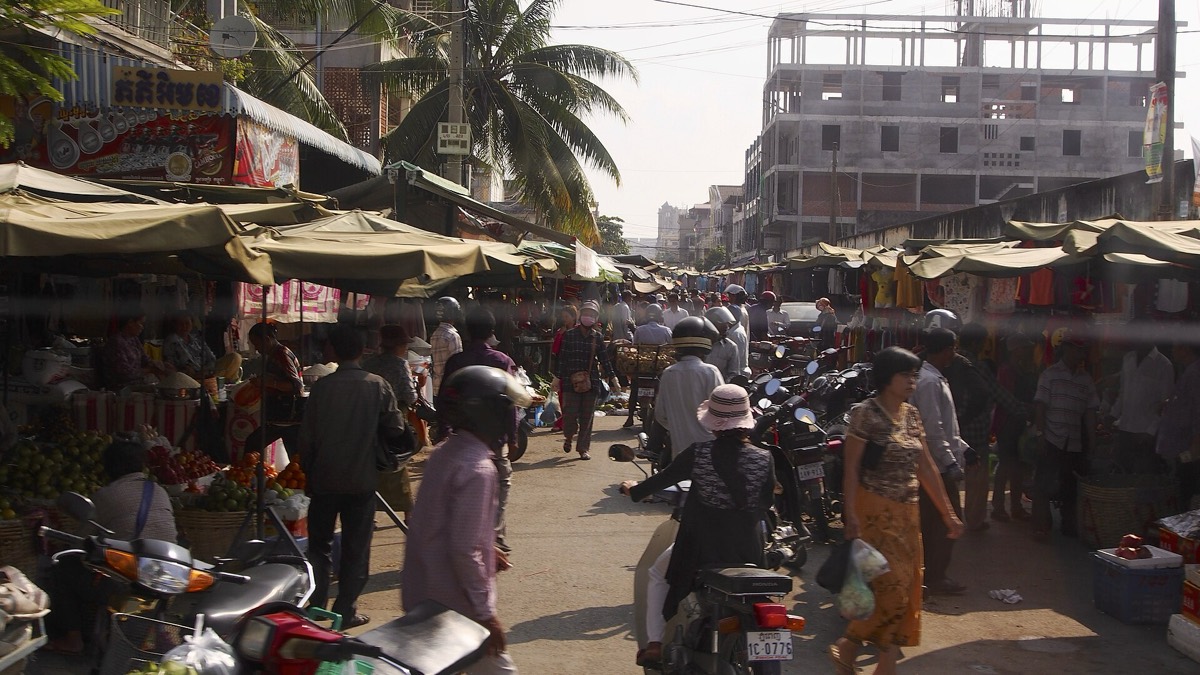
Phsar Toul Tom Poung is the opposite of the Central Market: no grand dome, just a dense, low-roofed maze of narrow aisles under corrugated metal, where the air is thick and the stalls are piled to the ceiling. It is hot, cramped and wonderful.
Here you find silk scarves and woven bags, wood carvings and silver boxes, bundles of clothes from the garment factories, and, in the far corners, entire aisles of motorbike parts, hinges and fan motors where mechanics sit mending things. The food section in the middle serves some of the best cheap breakfasts in the city.
The streets around the market have become one of the most pleasant parts of Phnom Penh to wander, with cafés, small boutiques, galleries and bakeries in old shophouses. I like to spend a morning in the market and the afternoon in the lanes around it.
The story
The market got its nickname in the 1980s, when the Soviet Union was one of Cambodia’s main foreign partners and many Russian advisers and technicians lived in the city. They shopped here so often that the market became known as the Russian Market, and the name stuck long after they left.
Tuol Tom Poung means something like the hill of the tom poung, a kind of tree, and the neighbourhood around it is still called by that name. In recent years it has become a favourite of young Cambodians and foreigners alike, with roasters, design studios and small restaurants taking over the ground floors of the shophouses.
In 2023 a fire damaged part of the market. Business carried on in and around it, and repairs have been under way, so the inside may look different from older descriptions. It is worth checking the current situation before you go, but the surrounding streets are lively whatever happens.
Wander a few streets south and east and you will find workshops making furniture and metalwork, children playing in the lanes, and the kind of neighbourhood life that the riverside has largely lost.

Getting there
The market lies in the south of the city between Street 155 and Street 163, around Street 440 and 450. A tuk-tuk from the riverside takes fifteen to twenty-five minutes depending on traffic.
Arrive in the morning, when the aisles are cooler and the food stalls busiest.
A suggested plan
- 8 amBreakfast in the food section: num banh chok, rice noodles with a green fish curry, or a bowl of kuy teav.
- MorningWalk the aisles slowly: fabrics, handicrafts, then the hardware and spare parts corners.
- Late morningIced coffee in one of the cafés on the streets around the market.
- AfternoonBrowse the shophouse boutiques and galleries in the surrounding lanes, then rest out of the heat.
Where to stay
Tuol Tom Poung itself has small hotels and guesthouses and is a good alternative to the riverside if you want a more local, residential base with good cafés.
Good to know
- Bargain with a smile; start at around half or two thirds of the first price for souvenirs.
- Check quality of ‘silk’: real silk is cool and soft, and a fair price is higher than for polyester.
- Bring cash in small notes.
- A small fan or a hand towel makes the hot aisles more bearable.
- The aisles are cramped; watch your bag and head.
- Fire safety in older markets is limited; know where the exits are.
- Fake branded goods are common; buy them knowing what they are.