Tuol Sleng Genocide Museum
A former school turned prison, now a museum and memorial: the hardest and perhaps most important visit in Phnom Penh.

- Area
- History & memory
- Start from
- Central Phnom Penh
- Distance
- about 2 km south-west of the palace
- Time needed
- half a day
- Best season
- All year; allow a quiet day around it
- Difficulty
- Easy
- Transport
- Tuk-tuk or on foot
- Tickets & rules
- Entry ticket (around 5 USD) plus audio guide (a few USD); quiet, respectful behaviour; modest dress
Why go
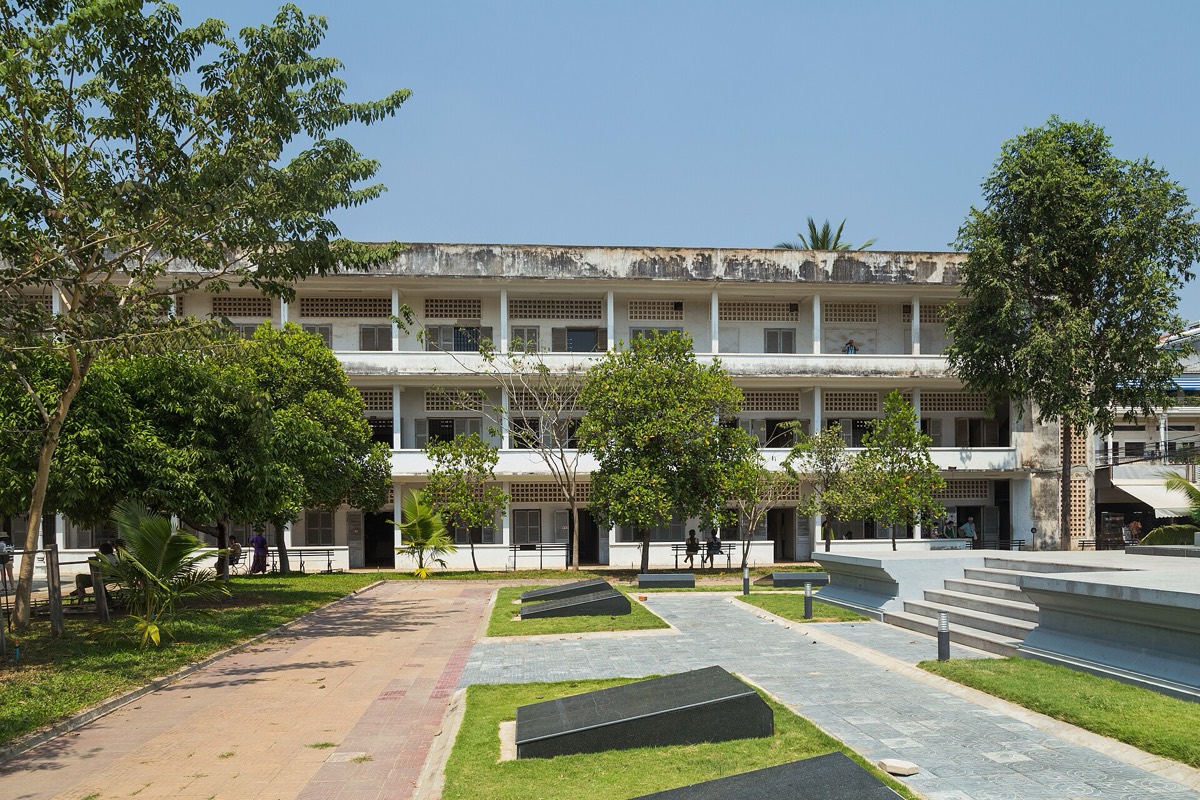
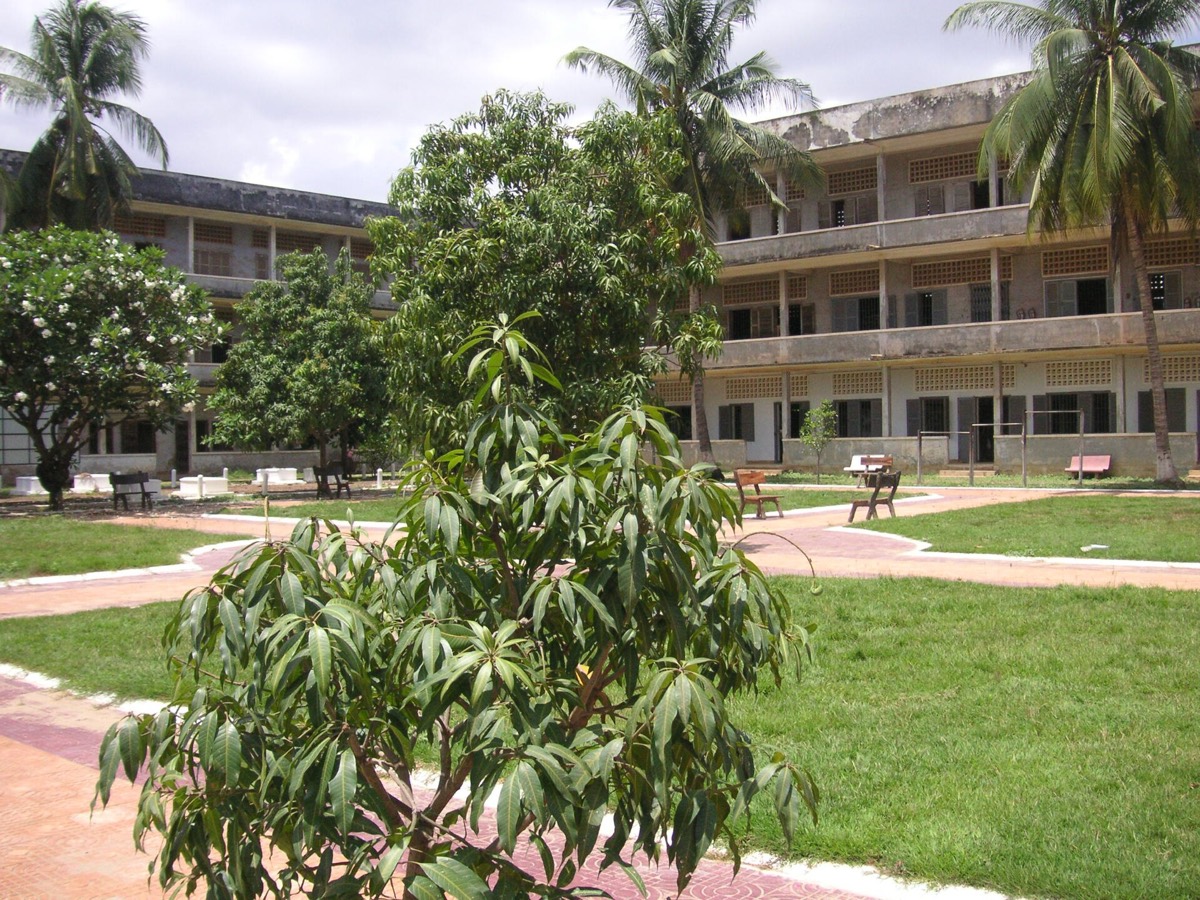
Nothing prepares you for Tuol Sleng. It is an ordinary school in an ordinary neighbourhood: four three-storey blocks around a grassy courtyard, with frangipani trees and a set of old gymnastic bars. Between 1975 and 1979 it was S-21, the main security prison of the Khmer Rouge regime, where thousands of people were imprisoned, interrogated and sent to their deaths.
I am not going to describe the rooms in detail. What stays with me most are the walls of photographs. The prison photographed every person it registered, and the faces look out at you, men and women, old people, teenagers, sometimes children. You cannot walk past them quickly.
It is a heavy visit, and some people decide it is not for them, which is fine. But if you go, you leave with a very different understanding of the country, of the resilience of the people you meet here, and of why family and survival mean what they do in Cambodia.
The story
The school was called Tuol Svay Prey High School before 1975. After the Khmer Rouge took the city in April 1975 and emptied it, the buildings were turned into a detention centre, the classrooms divided into cells with brick and wood, and the balconies covered with barbed wire to prevent escape.
Estimates of how many people passed through S-21 vary, with figures of around fourteen thousand to twenty thousand or more often quoted. Only a handful of prisoners are known to have survived, among them the painter Vann Nath, who was kept alive to paint portraits of the regime’s leader, and whose later paintings of what he witnessed hang in the museum. Two other survivors, Chum Mey and Bou Meng, spent many years at the site telling their stories to visitors.
When Vietnamese troops and Cambodian forces entered the city in January 1979, they found the prison and its meticulous archives. The museum opened soon after. The archives of S-21 were later inscribed on UNESCO’s Memory of the World register, and they became key evidence at the Extraordinary Chambers in the Courts of Cambodia, the tribunal that tried the prison’s commandant, Kaing Guek Eav, known as Duch, who was convicted in 2010.
Today the museum also works on education and on telling individual stories, not only numbers. Some exhibitions focus on the lives of victims before the regime, on the women of S-21, or on the young guards, many of them teenagers from the countryside.

Getting there
The museum is on Street 113 near Street 350, in a residential district south-west of the center. A tuk-tuk from the riverside takes ten to fifteen minutes.
It opens in the morning and closes in the late afternoon. Many people combine it with Choeung Ek on the same day; I would suggest visiting them on separate days, or at least with a long break between.
A suggested plan
- MorningArrive when it opens, when it is quietest; rent the audio guide, which is excellent and allows you to set your own pace.
- First hourBlock A and the courtyard, then the photographs in Block B.
- Second hourBlocks C and D, the paintings of Vann Nath and the exhibitions on individual lives.
- AfterwardsSit in the courtyard for a while before leaving.
- Rest of the daySomething gentle: a quiet café, the National Museum garden, or the riverside at dusk.
Where to stay
Any central base works. The surrounding area is residential, with local cafés where you can sit for a while after the visit.
Good to know
- The audio guide is strongly recommended; it gives context and allows silence.
- Bring water and allow at least two hours.
- Think carefully about bringing young children.
- Be gentle with yourself afterwards; plan a calm afternoon.
- Photography in some rooms and of the portraits is discouraged; follow signs and be respectful.
- Don’t smile or pose for photos at the site.
- Keep voices low; many Cambodian visitors are here for family members.