Taman Sari: the water castle and the underground mosque
A royal pleasure garden of pools, tunnels and a circular mosque hidden underground, now half swallowed by a lively neighbourhood of artists and bird-sellers.

- Area
- Kraton & old city
- Start from
- Kraton
- Distance
- about 1 km on foot
- Time needed
- half a day
- Best season
- All year; early morning is quietest
- Difficulty
- Easy
- Transport
- On foot from the Kraton
- Tickets & rules
- Ticket for the bathing complex; the kampung lanes are free
Why go
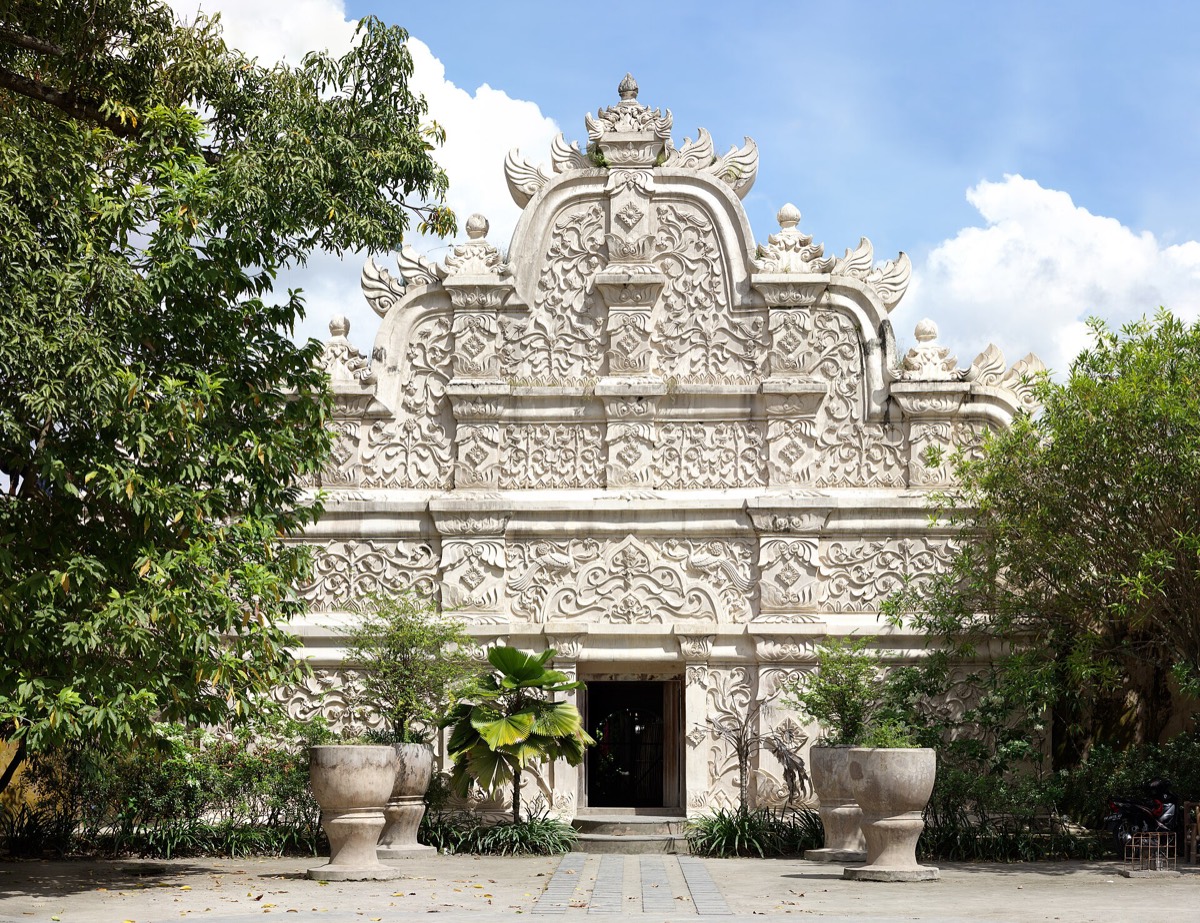
Taman Sari was the sultan’s garden, a place of bathing pools, pavilions, artificial lakes and hidden passages. Much of it was ruined long ago, and what survives is scattered among the narrow lanes of a living kampung. That is exactly its charm: you go from a restored courtyard of turquoise pools to an alley where someone is hanging washing above a crumbling eighteenth-century arch, and then down a dark staircase into a tunnel.
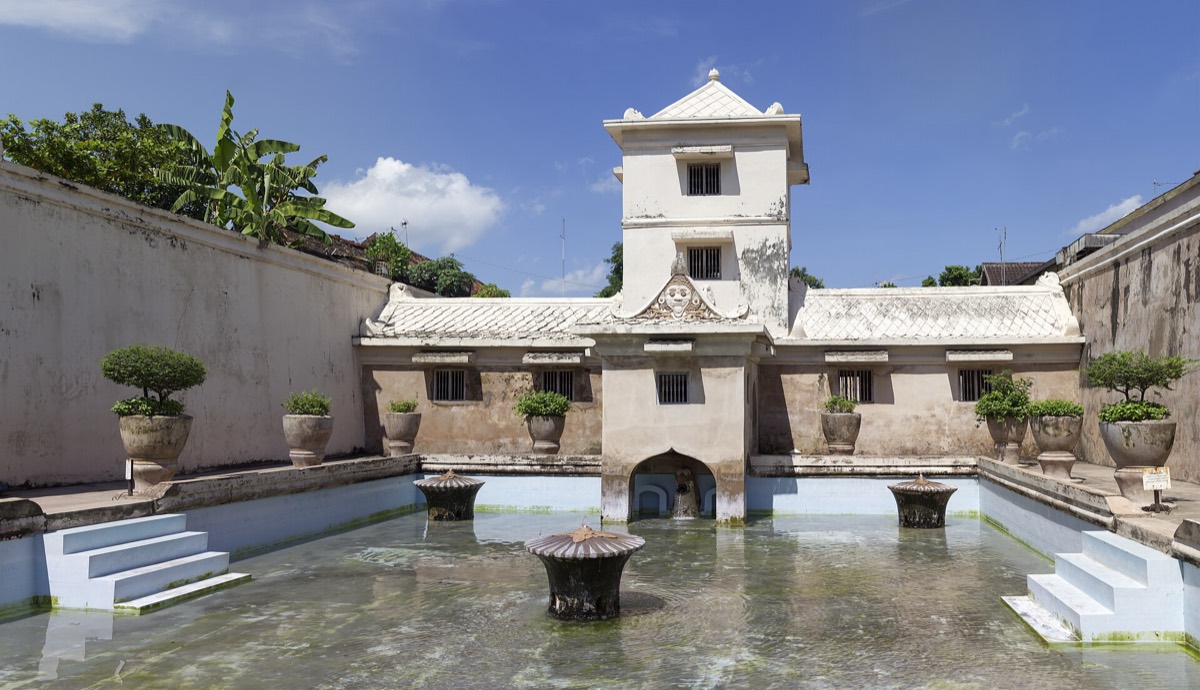
The main bathing complex, Umbul Pasiraman, is the most photographed part. Three pools sit between ornate walls with carved flower urns and gates, and a small tower looks down over them. The Sumur Gumuling, an underground mosque, is the strangest: a circular two-storey building with a well in the centre where five staircases meet, lit by a round opening in the roof. Stand in the middle and the light falls straight onto the stone.
Around it all, the kampung has its own life: batik painters, small galleries, murals, children playing football in courtyards, and the bird market just to the south. It’s a place to wander slowly, to get a little lost and to be shown a shortcut by someone’s grandmother.
The story
Taman Sari was built in the mid-eighteenth century, around 1758–1765, under Hamengkubuwono I, shortly after the Kraton itself. It was far more than a bath. There were artificial lakes with island pavilions, a tunnel network, an underground mosque, gardens of fruit trees and flowers, and possibly a defensive role, as the sultan could retreat here and slip away by water if needed. Some local stories say a Portuguese architect was involved, which would explain certain European touches in the design, though historians debate it.
According to the most popular tale, the sultan watched his wives and concubines bathing in the pools from the tower and threw a flower to choose his companion for the afternoon. Guides tell it with a grin, and it may be no more than a legend, but the layout fits: the tower overlooks the open pools, and the sultan’s private pool lies beyond, behind another wall.
The garden did not last long in its full glory. Fighting during the British attack on the palace in 1812 caused damage, and a powerful earthquake in 1867 brought down more. The lakes were drained, and the kraton’s servants and craftsmen gradually built their houses on top of the ruins. That is why today you find old walls embedded in family homes and staircases leading into private courtyards.
Parts of the complex, including the main pools, were restored from the 1970s onwards, and further restoration followed the 2006 earthquake. The rest was left to the kampung, which turned out to be the best curator of all: people keep the paths swept, paint murals and show visitors the way to the tunnels.

Getting there
From the Kraton it’s a pleasant 10–15 minute walk west and south through the palace quarter. A becak driver will happily take you too, but agree on the price first and be clear that you don’t want to stop at batik shops on the way.
The ticket office is at the main bathing complex. The underground mosque is reached through the kampung lanes and a tunnel; signs are few, so follow the flow of visitors or ask.
A suggested plan
- 9:00Buy a ticket at Umbul Pasiraman and see the pools before the tour groups arrive.
- 9:45Walk through the lanes to Sumur Gumuling, going down through the tunnel.
- 10:30Climb up to the ruins of Pulo Kenongo for views across the rooftops.
- 11:15Wander the kampung: murals, batik studios and small cafés.
- 12:00Walk south to the Ngasem area and the bird and plant market before lunch.
Where to stay
Guesthouses tucked into the kampung around Taman Sari are simple but full of character, and you’ll wake to roosters and the call to prayer. Prawirotaman and the area around the Kraton are both within walking distance.
Good to know
- The light inside Sumur Gumuling is best around midday, when the sun falls through the central opening.
- A local guide at the entrance can be worth it for the tunnels; agree the fee up front.
- Visit early on weekdays; weekends and school holidays bring big crowds and long queues for photos on the central staircase.
- The ‘you need a guide, here is a free batik exhibition’ approach is common around here. Polite refusal works.
- The tunnels and stairs are uneven and dark in places; watch your head and your footing.