Malioboro and the southern square by night
From the station to the sultan’s southern square: street musicians, horse carts, sweet tea and a blindfolded walk between two sacred banyan trees.

- Area
- Kraton & old city
- Start from
- Tugu railway station
- Distance
- about 4 km on foot
- Time needed
- evening
- Best season
- All year; dry season evenings are most pleasant
- Difficulty
- Easy
- Transport
- On foot, with a becak or ride-hailing back to your guesthouse
- Tickets & rules
- None
Why go
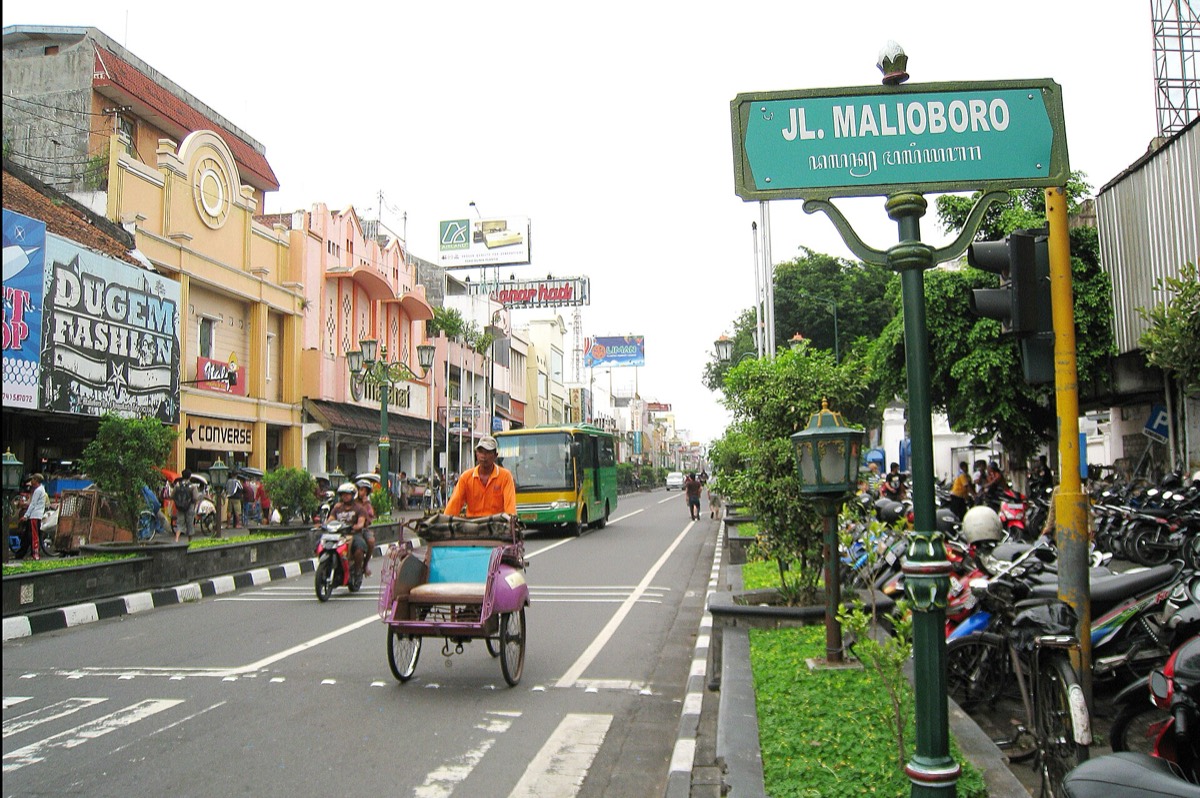
Malioboro is Jogja’s main street and, by day, it can feel like any busy shopping strip. After dark it becomes something else. The pavements fill with families and students, street musicians play keroncong and pop on their guitars, andong horse carts clatter past with their lanterns lit, and the smell of grilled corn and satay drifts across the road. It is loud, warm and very friendly.
Keep walking south and the street turns into the colonial heart of the city: the Dutch fort, the presidential palace and the old post office around the Titik Nol, the ‘zero point’. From there you can thread through the palace quarter to Alun-alun Kidul, the southern square, where the evening crowd is more local and more playful.
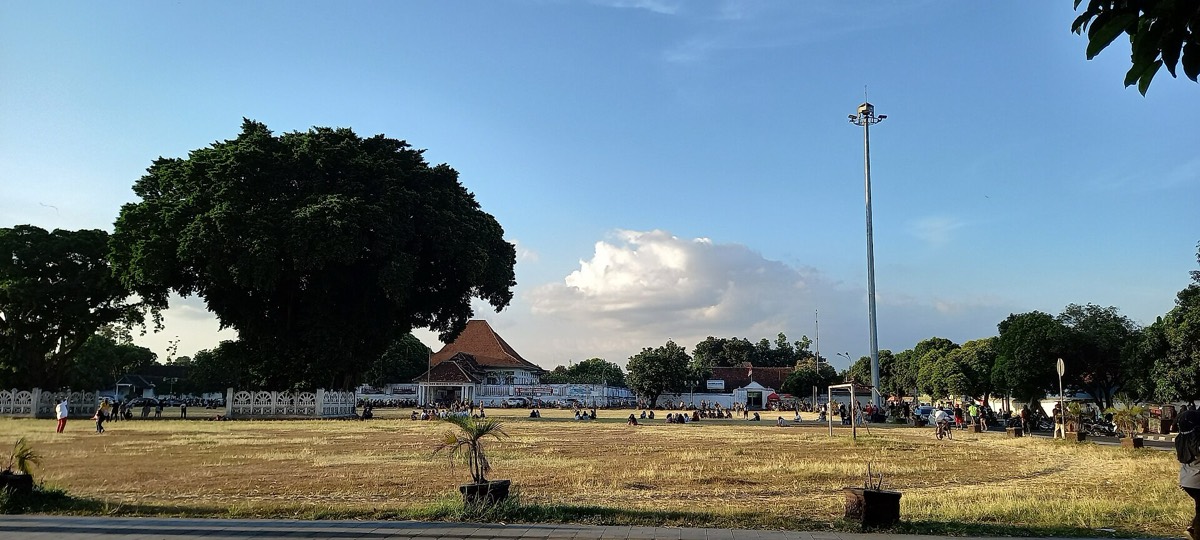
The southern square at night is a small carnival: pedal cars covered in flashing coloured lights circle the square, vendors sell wedang ronde, a ginger drink with sticky rice dumplings, and in the centre people take turns trying to walk blindfolded between two huge banyan trees. It is silly, joyful and completely Jogja.
The story
No one is entirely sure where the name Malioboro comes from. One story links it to the Sanskrit word malyabhara, ‘garland-bearing’, because the road was decorated with flowers for royal processions; another, less likely one, says it is named after the British Duke of Marlborough. Either way, the street was part of the ceremonial route along the philosophical axis between the Tugu and the Kraton, and it has been the city’s commercial artery for two centuries.
Fort Vredeburg, at the southern end, was built by the Dutch in the second half of the eighteenth century, within cannon range of the palace. Opposite it stands Gedung Agung, once the residence of the Dutch governor and later, briefly, the presidential palace when Yogyakarta served as the young republic’s capital in the late 1940s. Few streets in Indonesia pack so much history into so few metres.
The game in the southern square is called masangin, from masuk dua beringin, ‘entering between two banyans’. Legend says that only those with a pure heart can walk straight between the trees blindfolded. Most people veer off at an angle, to the great amusement of their friends. Some say the tradition comes from an old palace test for soldiers or suitors; others say it was simply a way of keeping people out of the space between the trees.
For years Malioboro’s pavements were lined with stalls selling batik, T-shirts and souvenirs. In 2022 most of them were moved into covered markets just off the street, known as Teras Malioboro, and the pavements were widened and given benches. The street feels more open now, though the old crowded energy still bursts out at weekends.

Getting there
Start at Tugu station, which is right at the northern end of Malioboro and easy to reach by ride-hailing app from anywhere in town. The walk down the street to the Titik Nol is about 2 km.
From the Titik Nol it’s roughly another 2 km through the Kraton quarter to Alun-alun Kidul. You can walk it in 25–30 minutes or take a becak. Ride-hailing cars and motorbikes pick up around the square for the trip home.
A suggested plan
- 18:00Begin at the Tugu monument, then walk to Malioboro as the street lights come on.
- 18:30Browse Teras Malioboro and the edge of Beringharjo market, and buy a bag of bakpia.
- 19:30Dinner at a lesehan stall, sitting on mats on the pavement.
- 20:30The Titik Nol, Fort Vredeburg and Gedung Agung lit up at night.
- 21:15Becak or walk to Alun-alun Kidul for wedang ronde and a try at masangin.
Where to stay
Hotels along and just off Malioboro are convenient for this walk but noisy; the Sosrowijayan lanes near the station have budget guesthouses. Prawirotaman is a short ride from the southern square.
Good to know
- At lesehan stalls, ask the price before you order, especially for seafood or anything sold by weight.
- Masangin blindfolds are rented for a small fee near the trees.
- A becak ride is part of the experience; agree on the price and destination clearly.
- Pickpockets work the crowds on weekend evenings; keep your phone in a front pocket.
- Andong horses work long hours in the heat; if a horse looks unwell, choose another cart or skip it.