Kotagede: silversmiths and the first capital of Mataram
Lanes so narrow two bicycles can barely pass, the patient tap of silversmiths’ hammers, and the mossy tombs of the kings who founded Mataram.

- Area
- Kraton & old city
- Start from
- Central Yogyakarta
- Distance
- about 6 km south-east of the centre
- Time needed
- half a day
- Best season
- All year
- Difficulty
- Easy
- Transport
- Ride-hailing car or motorbike, or a hired bicycle
- Tickets & rules
- Small donation at the mosque; Javanese dress, rented on site, to enter the royal cemetery, which opens only on certain days
Why go
Kotagede feels like a different town, even though Jogja has grown all the way around it. The old quarter is a maze of whitewashed walls, carved wooden houses and alleys barely wider than a doorway, including a famous lane known as Between Two Gates, where neighbours talk across their front steps. The pace is slow, and in the afternoon you can hear the quiet tapping of hammers from the workshops.
Silver is the reason most people come. Kotagede has been the silver town of Yogyakarta for generations, and dozens of workshops and showrooms line the main street, Jalan Kemasan. Some let you watch craftsmen at work, shaping wire into fine filigree flowers or hammering repoussé patterns into bowls. A few even run short classes where you can make a simple ring yourself.
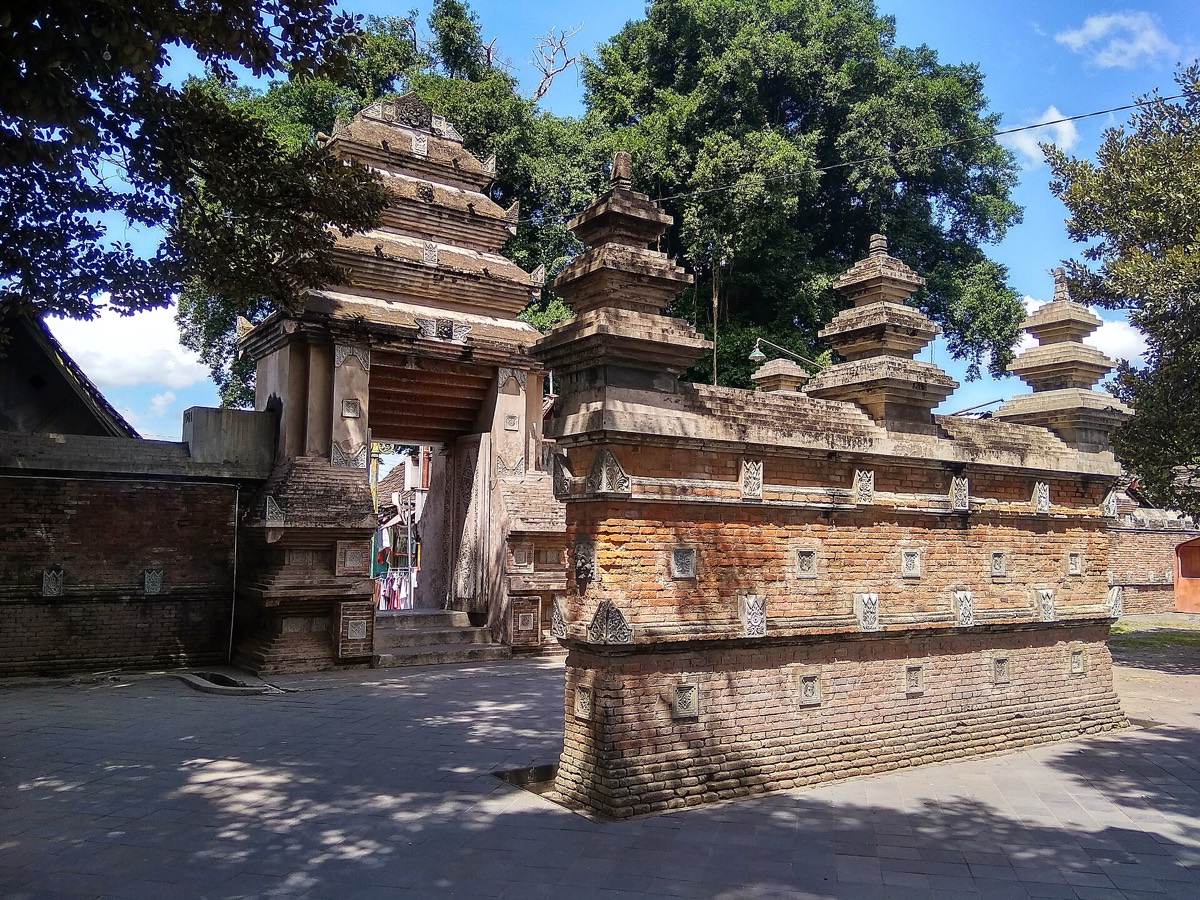
Then there is the history. The Great Mosque of Kotagede, with its Hindu-style gate and walls, is one of the oldest in the region, and behind it lies the royal cemetery of the founders of Mataram, set among old trees and pools with sacred turtles. It is a place of quiet pilgrimage rather than tourism.
The story
In the late sixteenth century, Kotagede was the capital of the new Mataram sultanate. Its founder, Panembahan Senopati, built his court here, and for a few decades this was the seat of the most powerful kingdom in Java. Later rulers moved the capital elsewhere, and after Mataram’s split in 1755 the city of Yogyakarta grew up a few kilometres away. But Kotagede kept its royal graves and its sense of being the ancestral home.
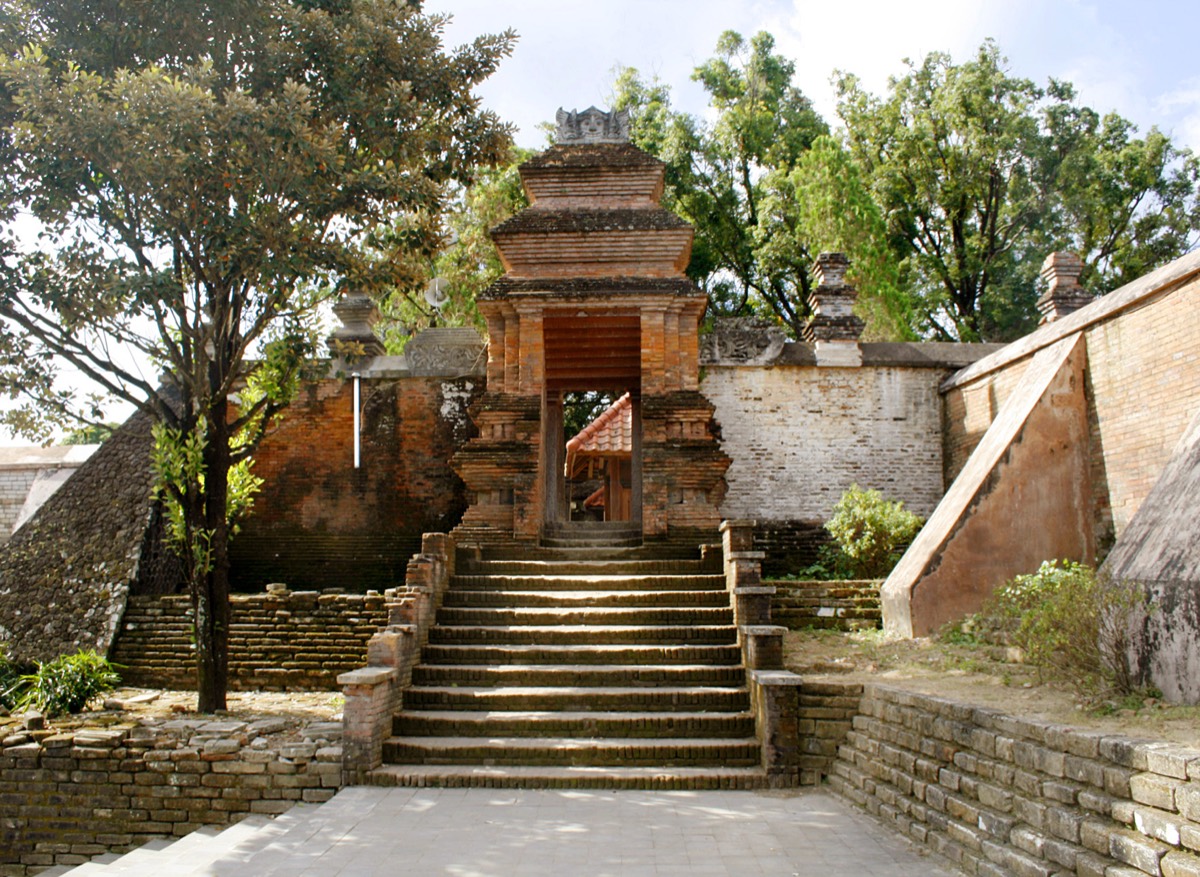
The mosque compound shows how Islam arrived in Java by blending with what came before. The gates are split like Hindu-Balinese candi bentar, the walls are of red brick, and the courtyard holds a small banyan. Inside the cemetery rest Senopati and other early members of the dynasty. Visitors must change into Javanese court dress, with a kemben or jarik for women and a surjan jacket and blangkon for men, rented at the gate.
Kotagede’s silver craft flourished in the colonial era, especially in the early twentieth century, when Dutch residents and visitors ordered tableware and ornaments. Families passed down their techniques, and some workshops still use tools and motifs from that era. The 2006 earthquake hit Kotagede hard, damaging many of its old wooden joglo houses, but residents and conservation groups have rebuilt and protected a good number of them.
Look out also for the Kalang houses: grand homes built by a wealthy community of traders, mixing Javanese, Dutch and Art Deco styles. Their owners grew rich in the early twentieth century, and their houses still stand out among the plain lanes, with coloured tiles, stained glass and tall shuttered windows.

Getting there
Kotagede is 20–30 minutes from the centre by car or motorbike, depending on traffic. Ride-hailing apps are the simplest option. Cycling is pleasant in the early morning, though the main roads are busy.
Ask to be dropped at the market, Pasar Legi Kotagede, or at the mosque; from there everything is on foot.
A suggested plan
- 8:00Pasar Legi Kotagede, the old market, for breakfast and kipo, a small green coconut sweet that is a local speciality.
- 9:00The Great Mosque and, if open, the royal cemetery in rented Javanese dress.
- 10:00Walk the narrow lanes to see the old joglo and Kalang houses.
- 11:00Visit two or three silver workshops along Jalan Kemasan, or join a short silver-making class.
- 12:30Lunch nearby, then return to the city.
Where to stay
There are a handful of homestays and boutique guesthouses in old houses in Kotagede, which make for very quiet nights. Otherwise stay in Prawirotaman, which is about 15–20 minutes away.
Good to know
- The market is busiest on Legi days in the Javanese five-day calendar, which is where it gets its name.
- Ask workshops whether the price is per gram of silver plus a fee for work; it makes comparing easier.
- Respect prayer times at the mosque and dress modestly.
- Drivers who bring you to a particular silver shop may earn a commission; feel free to walk to other workshops too.
- Check opening days for the royal cemetery in advance, as it is not open daily.