The Kraton: a morning inside the sultan’s palace
Pavilions of teak and gold, palace servants in batik and blangkon, and a gamelan orchestra playing for whoever happens to wander in.
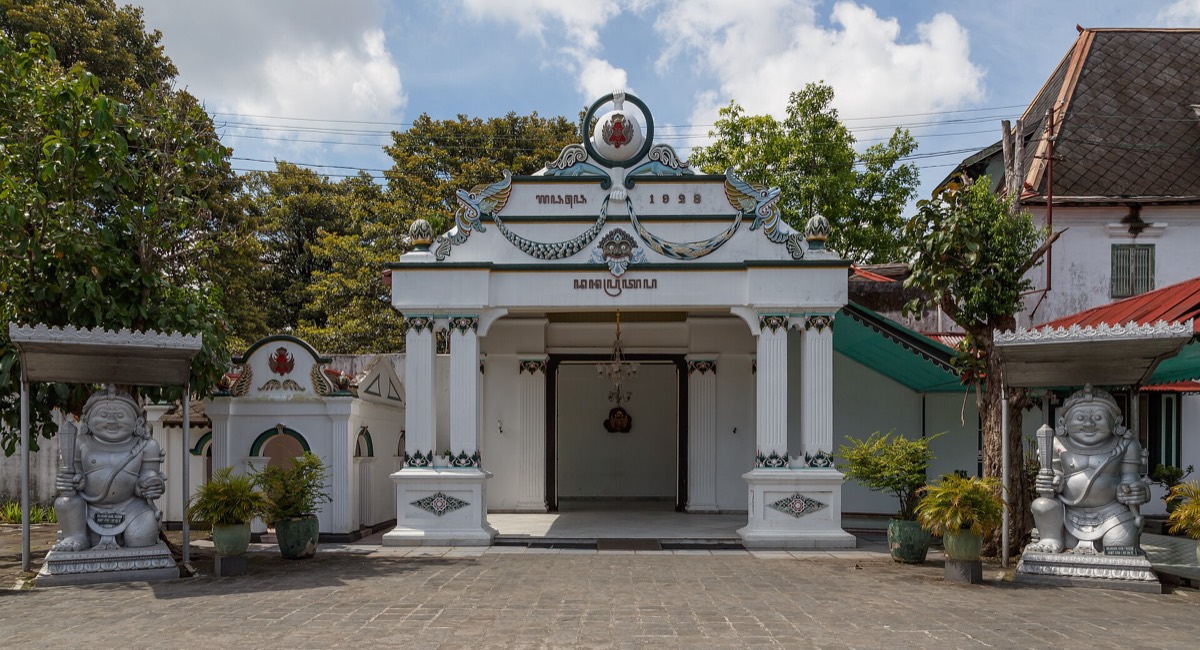

- Area
- Kraton & old city
- Start from
- Central Yogyakarta
- Distance
- walking distance in the old city
- Time needed
- half a day
- Best season
- All year; mornings are cooler
- Difficulty
- Easy
- Transport
- On foot, becak or a short ride-hailing trip
- Tickets & rules
- Ticket for the palace; modest clothing, shoulders and knees covered; check opening days, as it usually closes early afternoon
Why go
The Kraton is not a museum in the usual sense. The sultan of Yogyakarta still lives here, and the palace is run by hundreds of abdi dalem, courtiers and servants who come in their own traditional dress: a batik cloth wrapped around the waist, a short jacket and the folded blangkon headcloth with a little knot at the back. Many of them have served for decades for a token payment, and they move through the courtyards with an unhurried dignity that sets the pace for your whole visit.
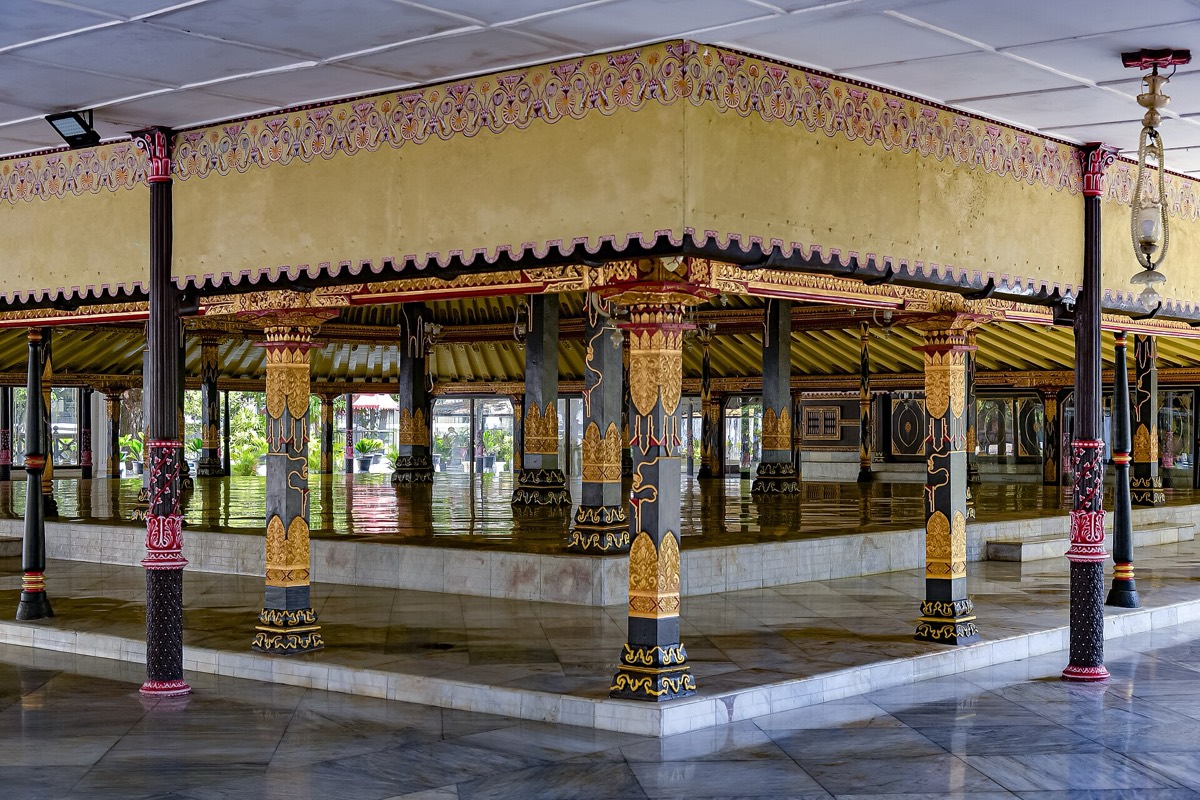
Inside, the buildings are open-sided pendopo pavilions with tiered roofs, carved and painted teak columns, marble floors and Dutch cast-iron details from the nineteenth century. Glass cases hold royal gifts, family photographs, batik patterns once reserved for the court, and the odd surprising object, such as European crystal or a sultan’s collection of clocks. It is quiet, shaded and very Javanese in its restraint.
Come in the morning and you may hear the gamelan. On many days there is a performance in one of the pavilions: gamelan music, classical dance, a wayang shadow play or a recital of macapat poetry. Sitting cross-legged on the cool floor while the bronze gongs and metallophones ripple around you is one of those experiences that stays with you long after the trip.
The story
The palace dates from 1755–1756. In 1755 the Treaty of Giyanti split the old Mataram kingdom in two, and Prince Mangkubumi, who took the title Hamengkubuwono I, chose a site between two rivers to build his new court. The kraton was laid out as a model of the cosmos, with every gate, courtyard and tree carrying meaning, and the city grew around it in rings of servants’ villages, each named after the craft or duty of the people who lived there.
The Kraton sits on what Javanese tradition calls the philosophical axis: an imaginary line that runs from Mount Merapi in the north, through the Tugu monument and the palace, to the Panggung Krapyak hunting pavilion and on to the Indian Ocean in the south. Mountain and sea, male and female, life and its end. In 2023 UNESCO recognised this layout as the Cosmological Axis of Yogyakarta and its historic landmarks.
The sultans were also patrons of the arts. Court dances like the bedhaya, performed by nine women in slow, almost hypnotic movements, were once seen only by the royal household. Some are still sacred and danced only on special occasions. Batik had its own hierarchy too: certain patterns, such as the large parang rusak motif of diagonal knife shapes, were forbidden to commoners.
Yogyakarta’s royal house also played a notable role in Indonesia’s early years as an independent nation, and as a result the region holds a special status within the country, with the reigning sultan serving as its governor. Locals speak of the palace with real affection, and you will see photographs of the royal family in shops and warungs across the city.

Getting there
The Kraton is in the heart of the old city, about 2 km south of the Tugu monument and a short walk from the southern end of Malioboro. From the Prawirotaman guesthouse area it’s about 15–20 minutes on foot or a few minutes by becak.
The main visitor entrance is usually on the side of the Pagelaran, facing the northern square, Alun-alun Lor; a separate ticket sometimes covers the outer Pagelaran and Siti Hinggil halls. Ask at the gate which part you are buying.
A suggested plan
- 8:30Start at Alun-alun Lor, the northern square with its two fenced banyan trees, and look back north along the axis towards the Tugu.
- 9:00Enter the Kraton and walk slowly through the courtyards; ask about the day’s performance.
- 10:00Watch the gamelan or dance in the main pendopo, sitting on the floor with the locals.
- 11:30Visit the nearby Kraton carriage museum, Museum Kereta, with its royal coaches.
- 12:30Lunch on gudeg in the Wijilan street just east of the square.
Where to stay
The streets around the Kraton, especially the old servants’ villages inside the palace walls, hide small guesthouses where roosters and morning prayers wake you up. Prawirotaman, a little further south, has the widest choice of homestays and cafés and is an easy base for walking to the palace.
Good to know
- Wear something that covers shoulders and knees, and avoid flip-flops if you want to fit in.
- Hire one of the official palace guides at the entrance: they are often abdi dalem themselves and explain details you would otherwise miss.
- Don’t take photos during sacred dances unless it is clearly allowed.
- Opening days and performance schedules change around royal ceremonies; check the evening before.
- Men outside the palace may tell you it is ‘closed today’ and offer to take you to a batik ‘exhibition’ instead. It is a well-known trick; walk to the gate and see for yourself.
- The pavilions are shaded, but the courtyards are not; bring water and a hat for the walk between them.