A day of gudeg, angkringan and charcoal coffee
Sweet jackfruit stew at dawn, goat satay grilled on bicycle spokes, and coffee with a glowing lump of charcoal dropped into the glass.

- Area
- Kraton & old city
- Start from
- Central Yogyakarta
- Distance
- around 6–8 km in total, on foot and by short rides
- Time needed
- 1 day
- Best season
- All year
- Difficulty
- Easy
- Transport
- On foot, becak and ride-hailing
- Tickets & rules
- None
Why go
Jogja is one of the cheapest and most generous places to eat in Indonesia, and its food is distinctive: sweeter than elsewhere in Java, based on palm sugar, coconut and slow cooking. You can eat extremely well for very little, sitting on low benches or mats with students, drivers and families, and almost nothing is fancy.
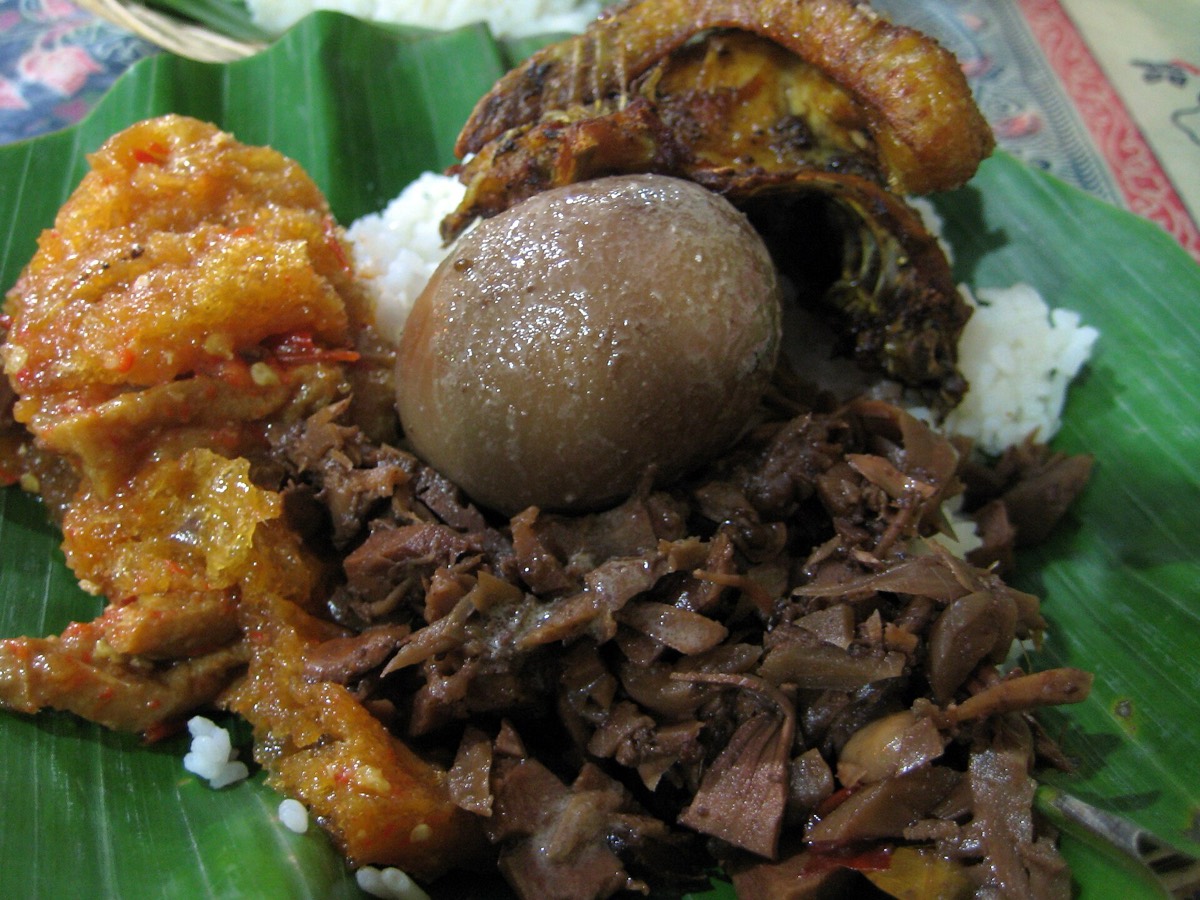
The star is gudeg, young jackfruit stewed for hours with palm sugar, coconut milk and teak leaves, which give it a reddish-brown colour. It comes with rice, a spicy beef-skin stew called krecek, chicken, a hard-boiled egg and tofu. Some versions are dry and sweet, others wet and savoury. Locals argue endlessly about which stall is best.
Then there are the angkringan, mobile carts with a small charcoal stove that appear at dusk on pavements all over the city. They sell tiny parcels of rice called nasi kucing, ‘cat rice’, satay of quail eggs and intestines, fried snacks, and hot drinks. Sitting at an angkringan late at night is how Jogja socialises.
The story
Gudeg has been cooked in Yogyakarta for centuries and is closely tied to the city’s identity; Jogja is sometimes called Kota Gudeg, the gudeg city. The stew was a way to make the most of young jackfruit, which grows abundantly here. Long cooking in clay pots over wood fires preserved it, and the sweetness suited the Javanese palate. Today the Wijilan street east of the northern palace square is lined with gudeg shops, some run by the same families for decades.
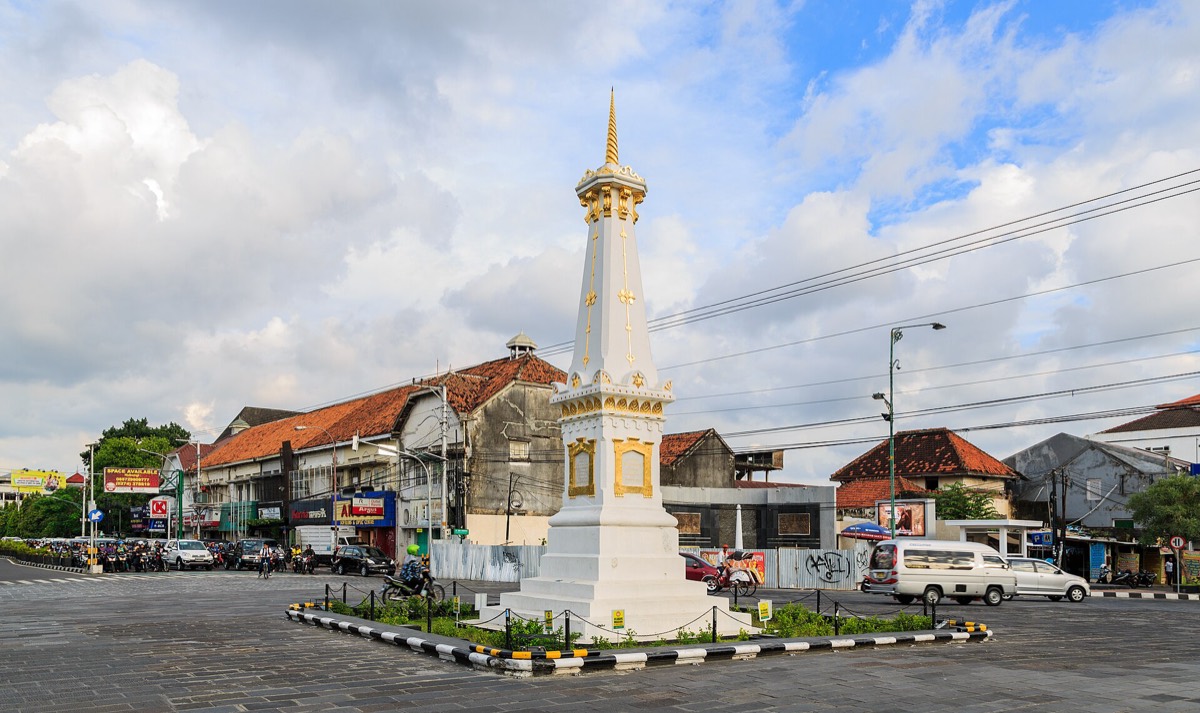
The angkringan culture is said to have arrived from the area around Klaten, between Jogja and Solo, in the mid-twentieth century, when men from the villages came to the city carrying food on shoulder poles. Later they swapped the poles for carts. The most famous cluster is near Tugu station, where in the evening dozens of people sit on mats along the pavement.
It was there that kopi joss was born. The story goes that a vendor started dropping a red-hot piece of charcoal into glasses of strong, sweet coffee, maybe to reduce acidity, maybe just for show. The charcoal hisses (the ‘joss’) and gives the coffee a smoky flavour. Some claim it is good for the stomach. Either way, it became a Jogja signature.
South of the city, near Imogiri, lies the home of sate klathak: chunks of goat meat seasoned only with salt, skewered on iron bicycle spokes and grilled over charcoal. The iron conducts heat into the meat from the inside. It is usually served with a bowl of rich goat curry, and people drive out from the city for it on Friday and Saturday nights.

Getting there
Wijilan is a short walk from the Kraton. The angkringan cluster near Tugu station is reachable by ride-hailing from anywhere. For sate klathak, the stalls are around Jalan Imogiri Timur and the village of Jejeran, roughly 30 minutes south of the centre by car.
Most places close early or open late, so it’s worth planning the order. Gudeg is a breakfast and lunch food; angkringan come alive after dark.
A suggested plan
- 7:30Gudeg for breakfast in Wijilan, or at a morning stall near Beringharjo market.
- 10:00Buy bakpia, small sweet bean-filled pastries, in the Pathok area, where many bakeries make them fresh.
- 13:00Lunch on mangut lele, smoked catfish in a spicy coconut sauce, or a simple nasi campur.
- 16:00Afternoon es dawet, a cold drink of rice-flour jelly, coconut milk and palm sugar.
- 19:30Sate klathak south of the city.
- 22:00Kopi joss and nasi kucing at an angkringan near Tugu station.
Where to stay
Any central base works for this; Prawirotaman and the Kraton area are close to Wijilan, and Sosrowijayan is close to the Tugu angkringan.
Good to know
- At an angkringan, you pick your food and tell the vendor what you took when you pay.
- Gudeg can be very sweet. Ask for extra sambal and krecek to balance it.
- Bring small notes; many stalls can’t change large bills.
- Street food here is generally safe if it’s freshly cooked and hot; avoid raw salads and unboiled ice if your stomach is sensitive.
- Some stalls in tourist areas charge visitors more; check prices or watch what locals pay.