An evening of Kampot food: pepper, crab and noodles
Num banh chok at a market stall, crab stir-fried with fresh green pepper, grilled skewers at the night market and, if you dare, a slice of Kampot durian.

- Area
- Kampot town
- Start from
- Kampot old town
- Distance
- walking distance, about 3 km
- Time needed
- evening
- Best season
- All year; durian season roughly May – August
- Difficulty
- Easy
- Transport
- On foot
- Tickets & rules
- None
Why go
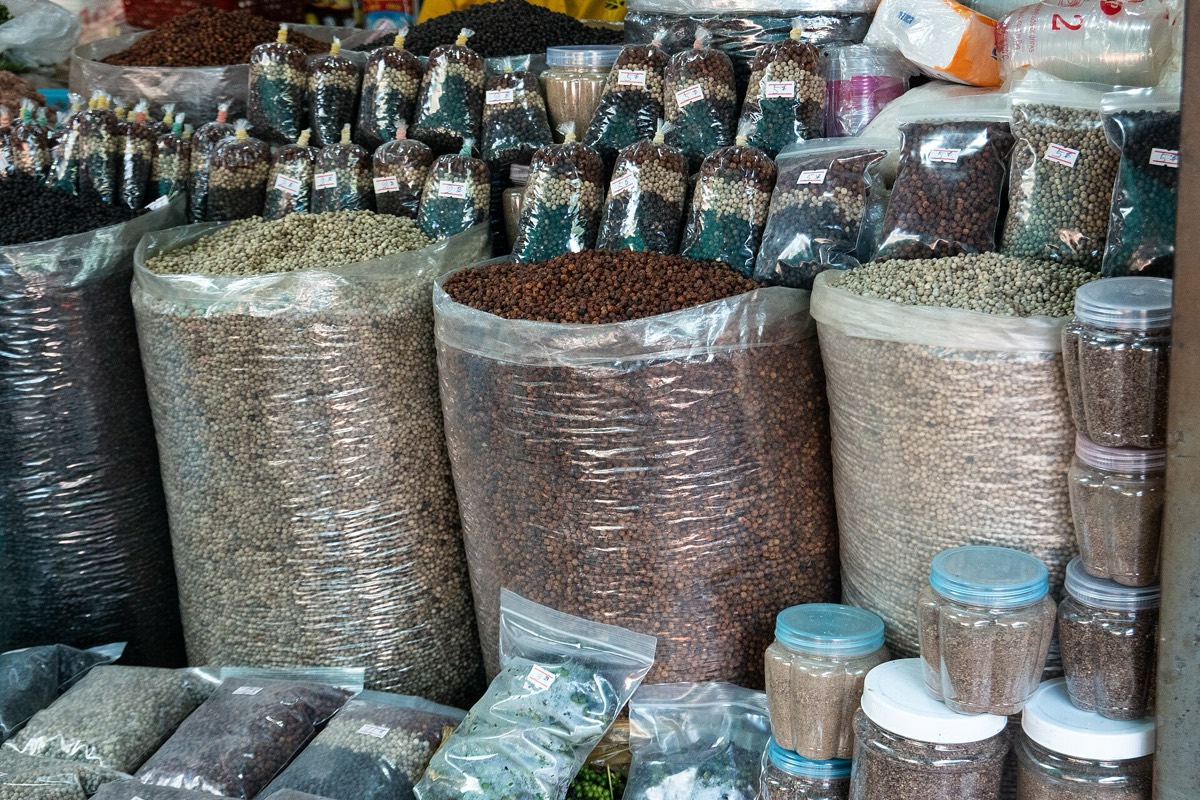
Kampot is a small town with a serious food culture, and its two great ingredients, pepper and seafood, come from a few kilometres away. You can eat very well here for very little if you follow the locals: breakfast noodles at the market, rice and grilled pork at lunch, and in the evening a long, slow meal of crab and fish by the river.
The star dish is crab with green Kampot pepper, where whole fresh pepper sprigs go into the wok with the crab, garlic and a little sauce. The pepper is fresh, not dried, so it tastes bright and fragrant rather than fiery, and you eat the berries straight off the stalk.
This walk strings together a few stops between dusk and late evening, so you can taste a little of everything without committing to one big restaurant meal.
The story
Cambodian food is often described as a gentler cousin of Thai cooking, less fiery but full of fresh herbs, fermented fish paste and sour fruit. Kampot adds something unique to that palette: fresh pepper. In the harvest season, from roughly February to May, you see green bunches in the market and on restaurant plates everywhere.
Num banh chok is the national breakfast. Fresh rice noodles are served cold with a fish-based green curry broth made with lemongrass and turmeric, then piled with raw herbs, banana flower, cucumber and beans. Women sell it from baskets and small stalls early in the morning, and in Kampot you often eat it on a low plastic stool beside the market.
Fish amok, fish steamed in a coconut curry custard, often in a banana-leaf cup, is the dish visitors know best. Lok lak, stir-fried beef with a lime and pepper dipping sauce, is another, and in Kampot the pepper in that sauce is usually local.
Then there is durian. Kampot durian is famous across the country, and in season Phnom Penh families drive down specifically to buy it. Its smell is so strong that many hotels ban it; its creamy, custardy flesh divides people more than any other food I know.
Getting there
Everything on this walk is in the centre. The night market sets up near the river in the evenings, and seafood restaurants line the riverfront and the streets around the old market. Prices are usually written on boards or menus; ask for crab prices by the kilo before ordering.
A suggested plan
- Morning (optional)Num banh chok at a market stall for breakfast.
- 6:00 pmStart at the riverfront with a fresh coconut or sugarcane juice.
- 6:30 pmCrab or squid with green pepper at a riverside or market restaurant.
- 7:30 pmWander the night market: grilled skewers, fried noodles and fruit shakes.
- 8:30 pmFinish with Khmer desserts or, in season, a durian from a fruit stall.
Where to stay
Stay in the old town so you can walk home after dinner. Riverside guesthouses upstream often have good kitchens of their own, but you will need a tuk-tuk to get into town.
Good to know
- Ask for crab with ‘fresh green pepper’ and confirm the price before it is cooked.
- Bring wet wipes; crab and pepper are messy to eat.
- Buy durian already opened from a stall and eat it there; carrying it into a guesthouse is often forbidden.
- Most stalls are cash-only; carry small notes.
- Seafood sits in the heat; choose busy places where the crab is clearly alive or freshly cooked.
- Ice in drinks is usually from factory-made blocks and generally fine, but avoid it if your stomach is sensitive.
- Some riverfront restaurants weigh crab generously; agree the weight and price before cooking.