Sunset and fireflies on the Kampot river
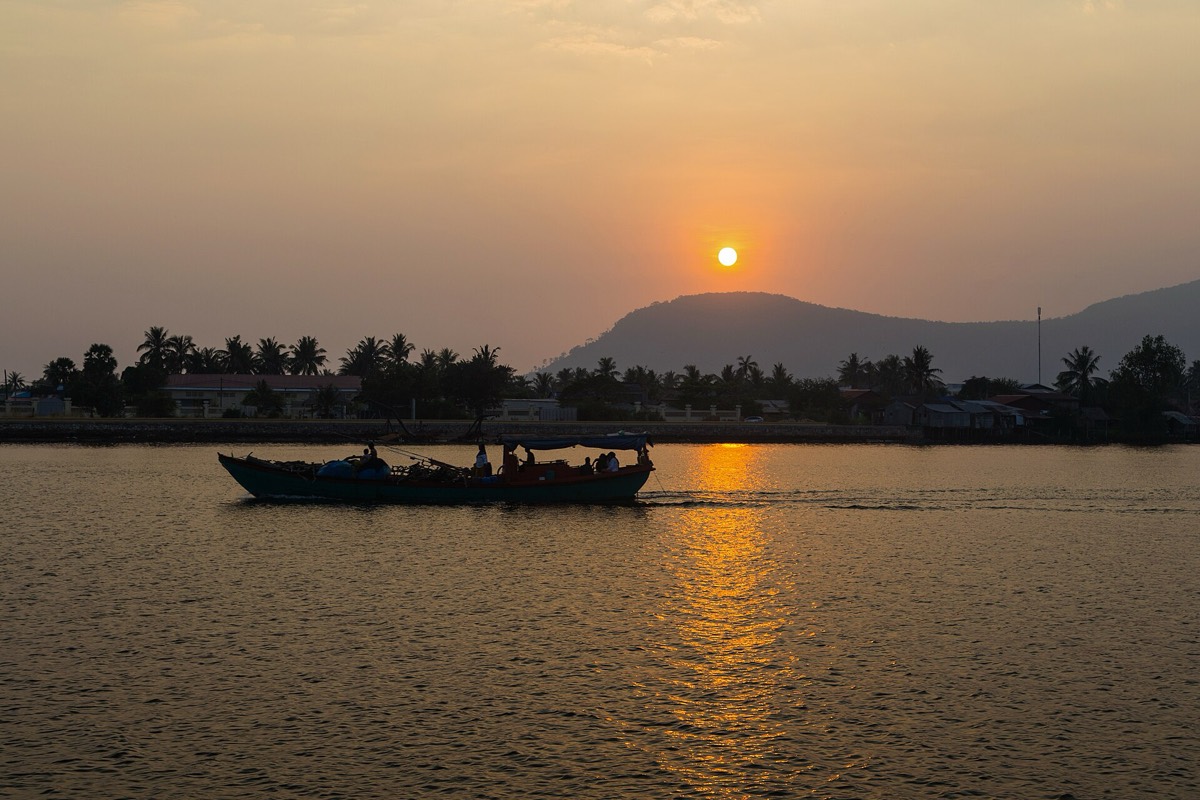
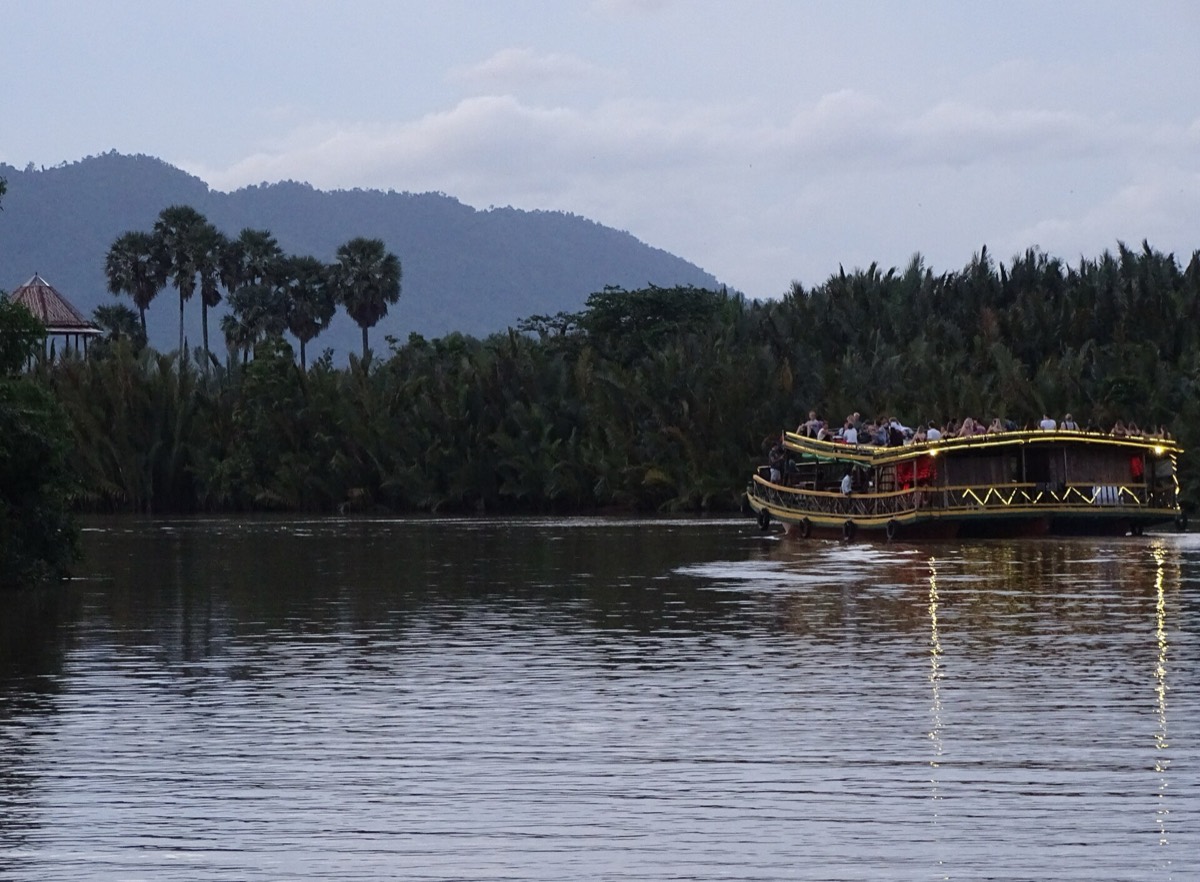
A slow wooden boat upstream at golden hour, with Bokor turning violet behind the palms, and a return in the dark past trees flickering with fireflies.

- Area
- Kampot town
- Start from
- Kampot riverfront
- Distance
- a boat trip of 10–15 km upstream and back
- Time needed
- evening, 2–3 hours
- Best season
- All year; the clearest sunsets are November – April
- Difficulty
- Easy
- Transport
- Wooden river boat from the town wharf
- Tickets & rules
- Boat fare; no permits
Why go
The river is the reason Kampot feels the way it does, and the best way to understand it is to sit on it for an evening. Small wooden boats leave the town wharf in the late afternoon and chug slowly upstream, past fishing boats, stilt houses, riverside bars and long stretches of nipa palm, with the dark shape of Bokor mountain on the left.
As the sun drops, the light changes every few minutes: first gold on the water, then pink on the clouds, then a long blue dusk when the mountain becomes a cut-out against the sky. Fishermen set off downstream for the night, and you hear the radios and the cooking from the houses along the banks.
On the way back the boat often slows near mangrove trees where fireflies gather, and on a good night whole branches pulse with tiny lights. It is quiet, cheap and one of the loveliest things I did in Cambodia.
The story
The river is called the Praek Tuek Chhu, which means something like ‘the stream of fresh water’, and it rises in the Damrei Mountains before winding past Kampot and out to the Gulf of Thailand. In town it is tidal: the water is brackish and rises and falls with the sea, which is why mangroves grow along the lower banks.
For centuries it was the town’s highway. Rice, pepper and salt came down to the wharves, and the fishing fleet still goes out every evening and comes back every morning. Many of the boats are crewed by Cham families, Muslim Cambodians whose villages and small mosques line the lower river; you may hear the call to prayer drift across the water at dusk.
The fireflies are not a tourist invention. In parts of Southeast Asia certain firefly species gather in particular riverside trees and flash together, sometimes almost in rhythm. Along the Kampot river they are fewer than they used to be, because of lights, development and boat traffic, but on a dark, moonless night after rain they can still be magical.
Boatmen have their favourite trees and know where the insects gathered the week before. If you hear a boatman cut the engine and drift, keep your torch off and wait for your eyes to adjust.

Getting there
Boats leave from the riverfront in the centre of town, usually between 4 and 5 pm. Many guesthouses sell places on shared sunset cruises, often for a few dollars per person; you can also negotiate a private boat at the wharf for a small group.
Trips last two to three hours. Some include a stop at a riverside bar upstream; others go straight back after dark for the fireflies.
A suggested plan
- 4:30 pmBoard at the town wharf; find a seat on the side facing Bokor.
- 5:00 pmSlow cruise upstream past stilt houses and fishing boats.
- 5:45 pmSunset behind the mountains; the boat turns or drifts.
- 6:15 pmBlue hour on the water, then quiet stretches near the mangroves to look for fireflies.
- 7:00 pmBack in town for dinner at the night market or along the river.
Where to stay
Any base in Kampot works for this trip, since boats leave from the centre. If you stay at one of the riverside guesthouses upstream, ask whether the cruise can drop you off on the way back.
Good to know
- Bring mosquito repellent and a long-sleeved shirt for the return trip.
- The best firefly nights are around the new moon, when it is fully dark.
- Bring a lens that works in low light, or simply put the camera away for the fireflies; they rarely photograph well.
- Ask whether drinks are included before you go; often there is only a cooler of beer and water.
- Life jackets are not always offered; ask for one, especially with children.
- Storms build quickly in the rainy season (May – October); boatmen will usually turn back, so don’t push them to continue.
- Keep phones and cameras in a dry bag; sudden spray is common when boats pass.