Kampot old town: shophouses, the market and the river
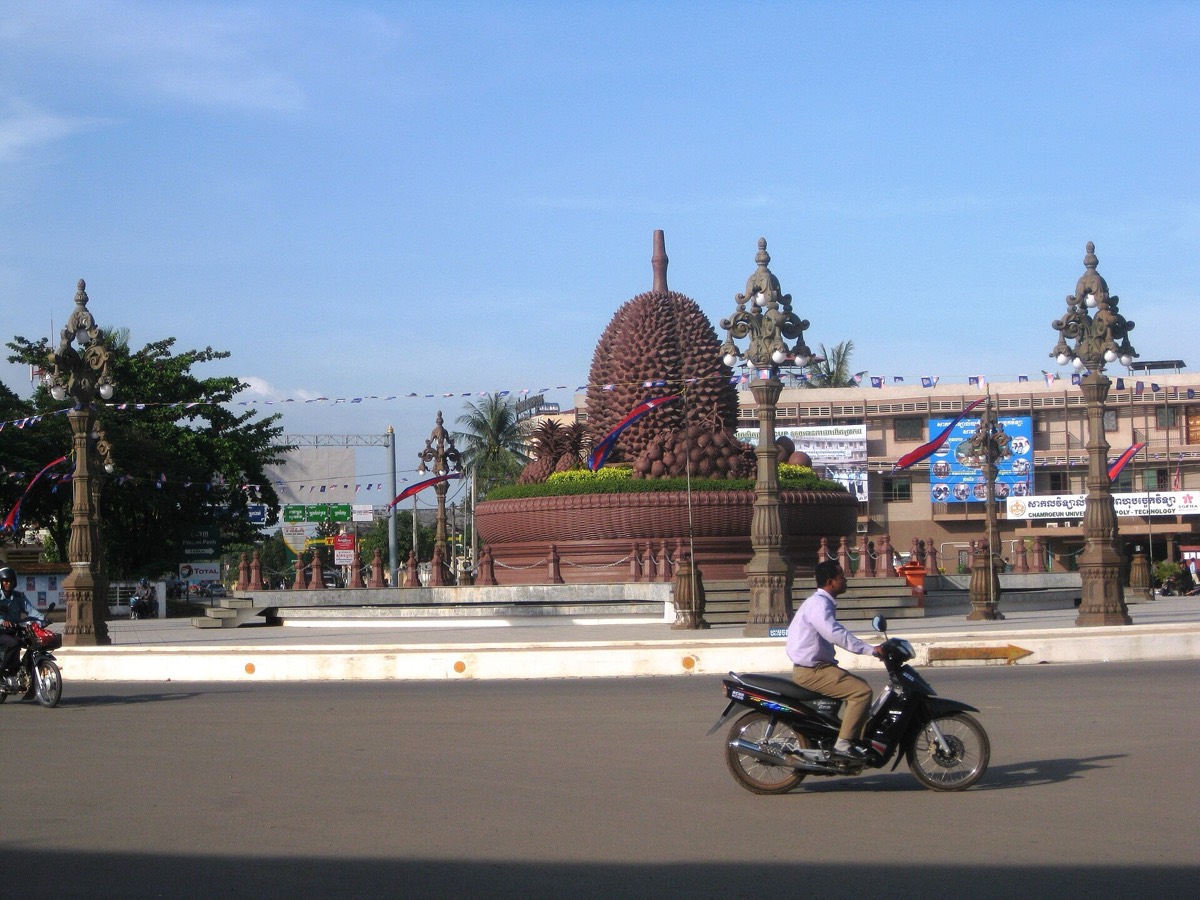
A slow loop through the French-era streets of a provincial river town, past mustard-coloured shophouses, the old market and a roundabout crowned with a giant durian.

- Area
- Kampot town
- Start from
- Kampot
- Distance
- walking distance, about 4 km in all
- Time needed
- half a day
- Best season
- All year; mornings and late afternoons are coolest
- Difficulty
- Easy
- Transport
- On foot or by bicycle
- Tickets & rules
- None
Why go
Kampot is one of the best-preserved colonial towns in Cambodia, not because anyone set out to preserve it, but because for decades nobody had the money to knock it down. The blocks between the river and the old market are lined with two-storey shophouses: shutters on the upper floor, a shop or a noodle stall on the ground floor, and a family living somewhere in between. Some are freshly painted in yellow and pale blue; others are still blotched with damp and moss.
It is a small town and you can walk the whole centre in an hour, but it rewards going slowly. Look up at the balconies and the plasterwork, the old lettering half visible above doorways, the tangle of electrical cable that seems to hold some streets together. Look down and you will see tailors, motorbike mechanics and women grinding pepper outside their doors.
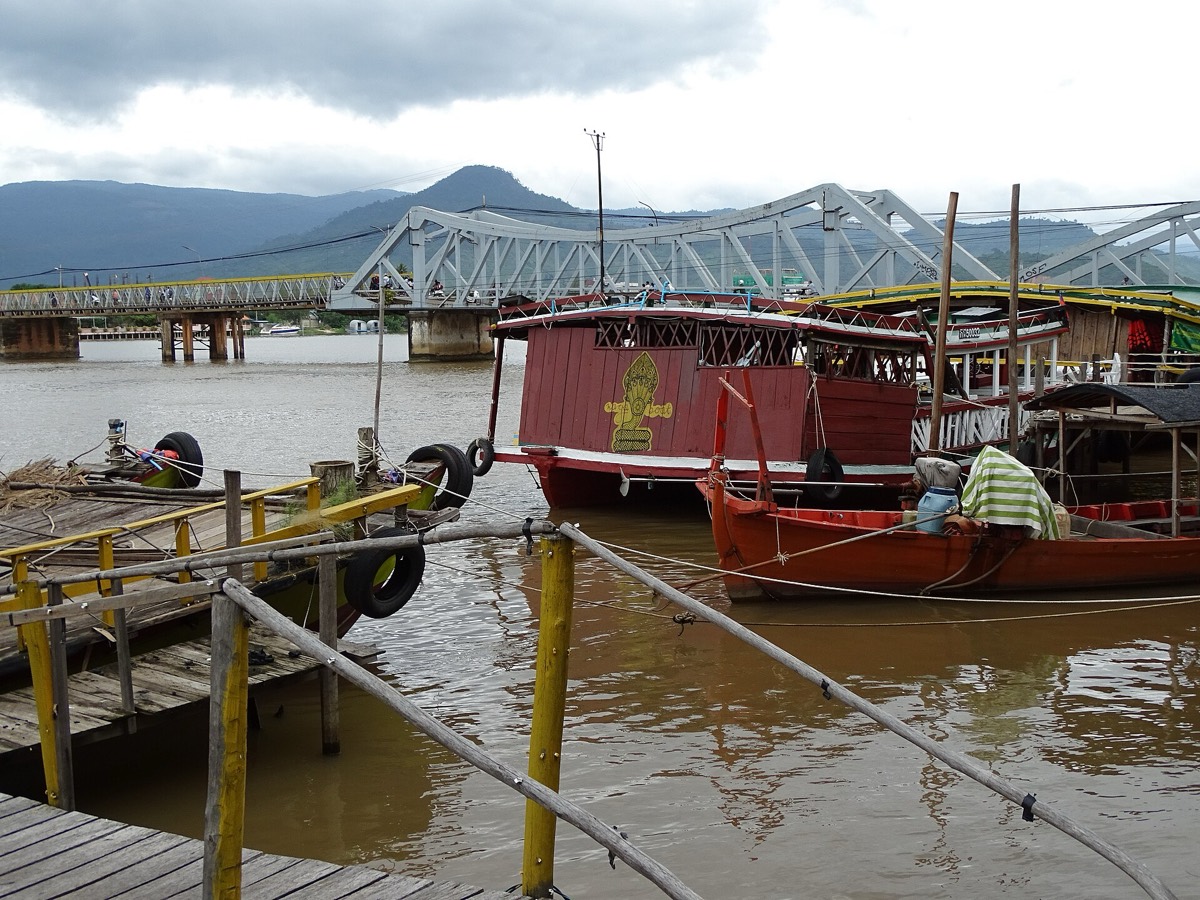
The walk ends, as most days in Kampot do, on the riverfront, where the mountains of Bokor rise behind the water and the light turns gold an hour before sunset.
The story
Kampot was an important port long before the French arrived. In the nineteenth century, before Sihanoukville existed, it was the kingdom’s main outlet to the sea, and goods from the interior came down to its wharves to be shipped on. Chinese traders settled here in numbers, and the shophouse itself, with its narrow front and long interior, is a Chinese form that the French administration adopted and tidied with neoclassical details.
In the colonial period Kampot became a provincial capital with a governor’s residence, a market and a grid of streets near the river. Pepper from the surrounding hills was its great export, and in the early twentieth century Kampot pepper was a familiar name in French kitchens. When the port at Sihanoukville opened in the late 1950s, much of the trade moved there, and Kampot settled into a quieter life.
The Khmer Rouge emptied the town in 1975, as they emptied every Cambodian town, and for years many buildings stood abandoned. Families drifted back in the 1980s and 1990s, often moving into whatever house was standing. That is why some grand shophouses are now shared by several households, and why ownership of old buildings can be complicated.
The big durian statue at the roundabout is a newer landmark, a tribute to the fruit the province is famous for. Locals argue about whether it is beautiful; nobody argues that Kampot durian is anything less than the best in the country.

Getting there
Kampot is roughly 150 km from Phnom Penh, which takes three to four hours by minibus or bus, and about 25 km from Kep. Once in town, everything in the centre is walkable. Bicycles can be rented from many guesthouses for a few dollars a day, and tuk-tuks or ride-hailing apps cover anything further.
A suggested plan
- Early morningStart at the old market area while stalls are setting up; coffee with condensed milk at a street stall.
- Mid-morningWalk the streets between the market and the river, looking at the shophouse façades and colonial buildings.
- Late morningFind the durian roundabout and the old bridge; take photos from the bridge looking upstream to the mountains.
- MiddayNoodle soup in a shophouse café, then a rest in the heat of the day.
- Late afternoonBack to the riverfront promenade for the sunset over Bokor.
Where to stay
Most visitors stay in the old town or along the river just north of it, where there are guesthouses in restored shophouses, small hotels and a few riverside bungalows. The old town is the most convenient base for walking and eating; riverside places a few kilometres upstream are quieter but need a tuk-tuk or a scooter.
Good to know
- Walk early or late: by noon the streets bake and many shops close for lunch.
- Respect people’s homes: many shophouses are private houses, so ask before photographing someone in a doorway.
- Carry small US dollar notes and riel; both are used everywhere.
- Pick up a paper map at your guesthouse; street names and numbers are inconsistent.
- Pavements are broken and often used as parking, so you will walk in the road; watch for scooters coming the wrong way.
- Open drains and missing covers are common, especially after dark.
- Bag snatching from passing motorbikes is rare in Kampot but not unknown; carry your phone on the side away from traffic.