Carbon Market, lechon and a Cebuano food walk
From the city’s oldest market to roast pig with crackling skin and rice in woven pouches: a slow morning eating your way through Cebu.

- Area
- Cebu City
- Start from
- Carbon Market, downtown
- Distance
- about 3 km on foot plus a taxi
- Time needed
- half a day
- Best season
- All year; markets are best early in the morning
- Difficulty
- Easy
- Transport
- On foot and taxi
- Tickets & rules
- None
Why go
Ask anyone in the Philippines what Cebu is famous for and they’ll say lechon: whole roast pig, stuffed with lemongrass, garlic, spring onion and pepper, its skin lacquered amber and so crisp it shatters. Cebuanos insist theirs needs no sauce, and after one mouthful I agreed. A food walk here can easily be a whole morning of lechon, grilled fish, sweet mangoes and strong coffee.
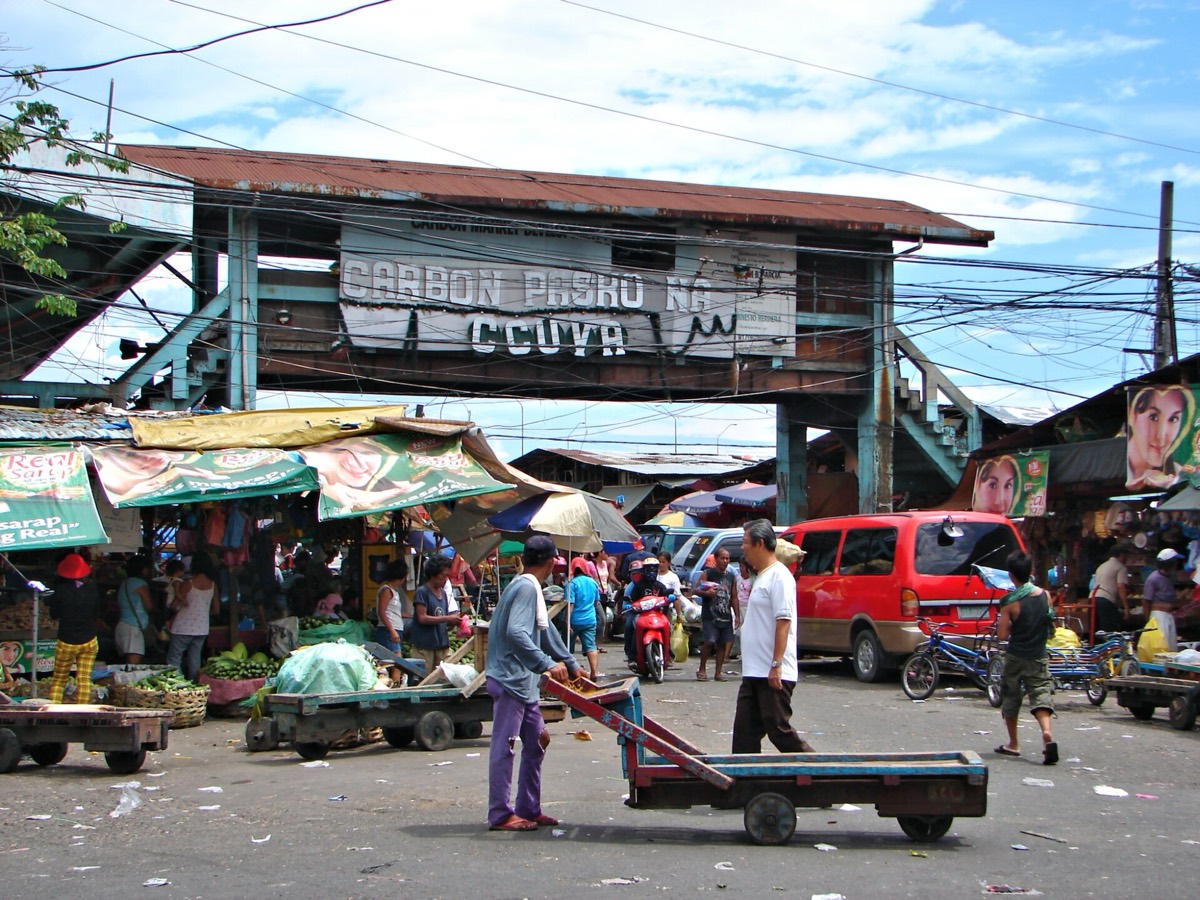
Carbon Market is where to begin. It sprawls over several blocks near the port: mountains of mangoes, bundled vegetables from the highlands, buckets of shellfish, flower stalls, coconut sellers splitting nuts with a machete, women weaving puso, the little diamond-shaped pouches of rice cooked in coconut leaves. It’s loud, hot and endlessly friendly.
From there I head to a lechon house for lunch, then to a sutukil place for the evening. Sutukil is a Cebuano word made of three cooking styles: sugba (grilled), tula (in soup) and kilaw (cured raw in vinegar, like ceviche). You choose your fish and they cook it all three ways.
The story
Carbon Market is often described as the oldest and largest farmers’ market in Cebu. Its name is said to come from the coal depot that once stood nearby, when coal was unloaded here for the old railway and ships in the early 20th century. The railway is long gone, but the market kept the name and became the place where farmers from the mountains and fishermen from the coast met city cooks.
Lechon is cooked across the Philippines, especially for fiestas, but Cebu’s version has its own reputation. Many say the best comes from Carcar and Talisay, south of the city, where families have roasted pigs over charcoal for generations. The pig is turned slowly on a bamboo spit for hours while someone brushes the skin with oil or coconut water. Visitors from Manila often take a whole one home in a box on the plane.
Puso, hanging rice, is pure Cebu. The rice is cooked inside a pouch woven from young coconut leaves, which keeps it portable and clean, ideal for street barbecue. Some weavers can make dozens of shapes. At the stalls you’ll see people eating with one hand, tearing open the puso and dipping grilled pork into vinegar with chilli.
Dried mangoes and danggit, small dried rabbitfish, are the classic things to take home. Taboan Market, not far from Carbon, is the place for dried fish; you’ll smell it a block before you arrive.

Getting there
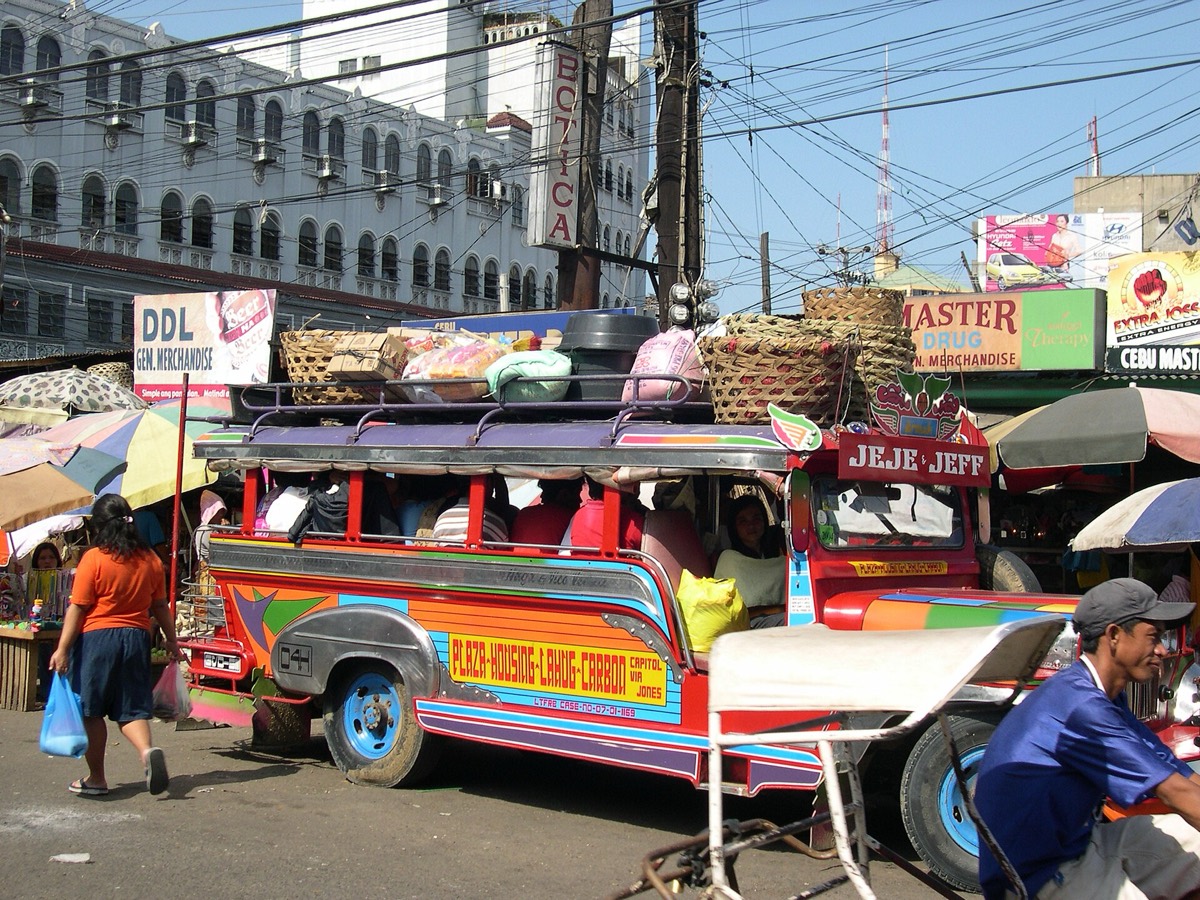
Take a taxi to Carbon Market early. The market is a short walk from Magellan’s Cross and the basilica, so it combines naturally with the old-city route.
For lechon, taxis know the long-established places; for sutukil, the traditional area is near the Mactan Shrine on Mactan Island, a 30–60 minute ride depending on traffic.
A suggested plan
- 6:30Carbon Market while farmers unload; coffee and a sweet bread for breakfast.
- 8:00Watch puso weavers and buy mangoes to eat later.
- 9:30Taboan Market for dried fish and dried mangoes to take home.
- 11:30Lechon lunch with puso and a cold drink.
- EveningSutukil dinner on Mactan, or barbecue skewers around Fuente Osmeña.
Where to stay
Base yourself around Fuente Osmeña or the Capitol if eating is your main plan: you’re close to downtown in the morning and to late-night barbecue stalls in the evening.
Good to know
- Ask for a mix of skin and meat at the lechon counter; the skin goes soft within an hour, so eat it fresh.
- Puso is cheap and sold by the piece; order two or three per person.
- Vacuum-packed dried fish travels best; some airlines restrict strong-smelling food in cabins.
- Bring small notes; market stalls rarely have change for large bills.
- Markets are crowded and slippery; wear closed shoes and keep valuables close.
- Kilaw is raw fish; eat it only where the fish is clearly fresh and busy turnover is obvious.
- Ask prices before seafood is weighed and cooked to avoid surprises.