Magellan’s Cross, the Santo Niño and Fort San Pedro
Where Spanish Asia began: a cross from 1521, a wooden child venerated for five centuries and a small stone fort facing the harbour.

- Area
- Cebu City
- Start from
- Downtown Cebu City
- Distance
- about 2 km on foot
- Time needed
- half a day
- Best season
- All year; very crowded on Fridays, Sundays and in January
- Difficulty
- Easy
- Transport
- On foot; taxi or ride-hailing to Plaza Independencia
- Tickets & rules
- Small ticket for Fort San Pedro; shoulders and knees covered in the basilica
Why go
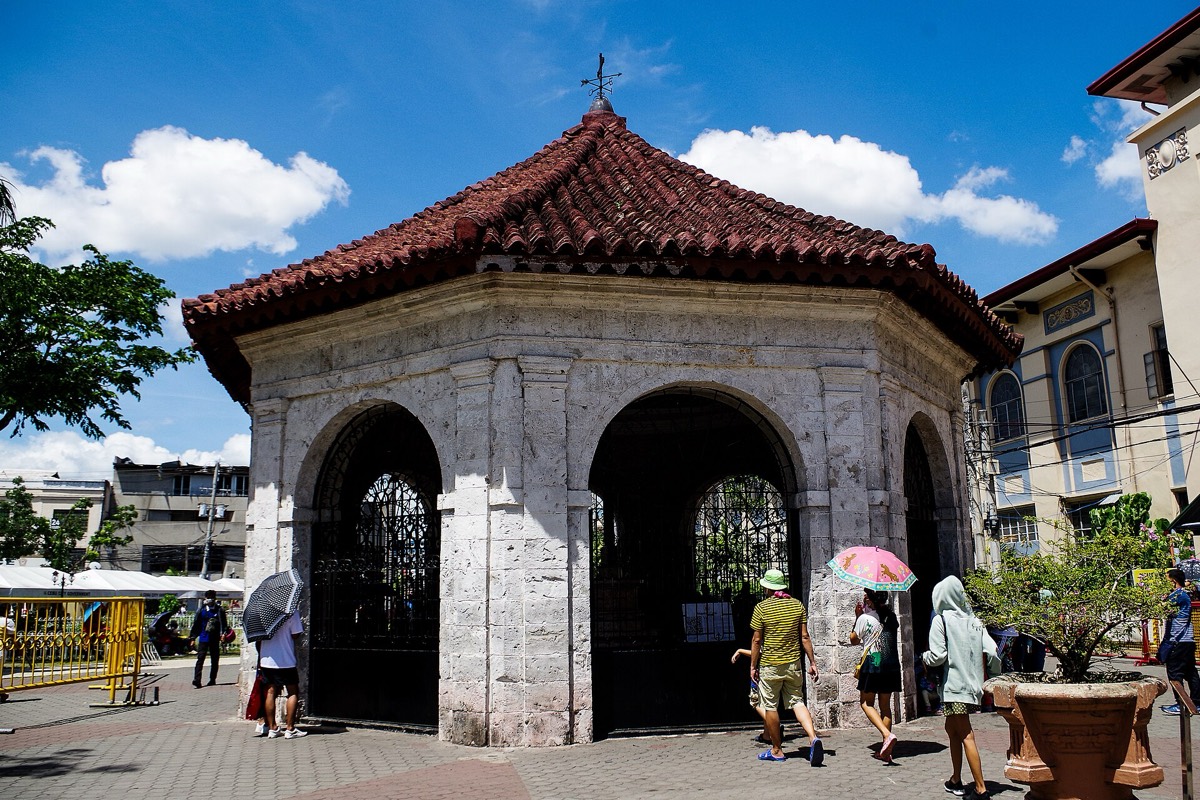
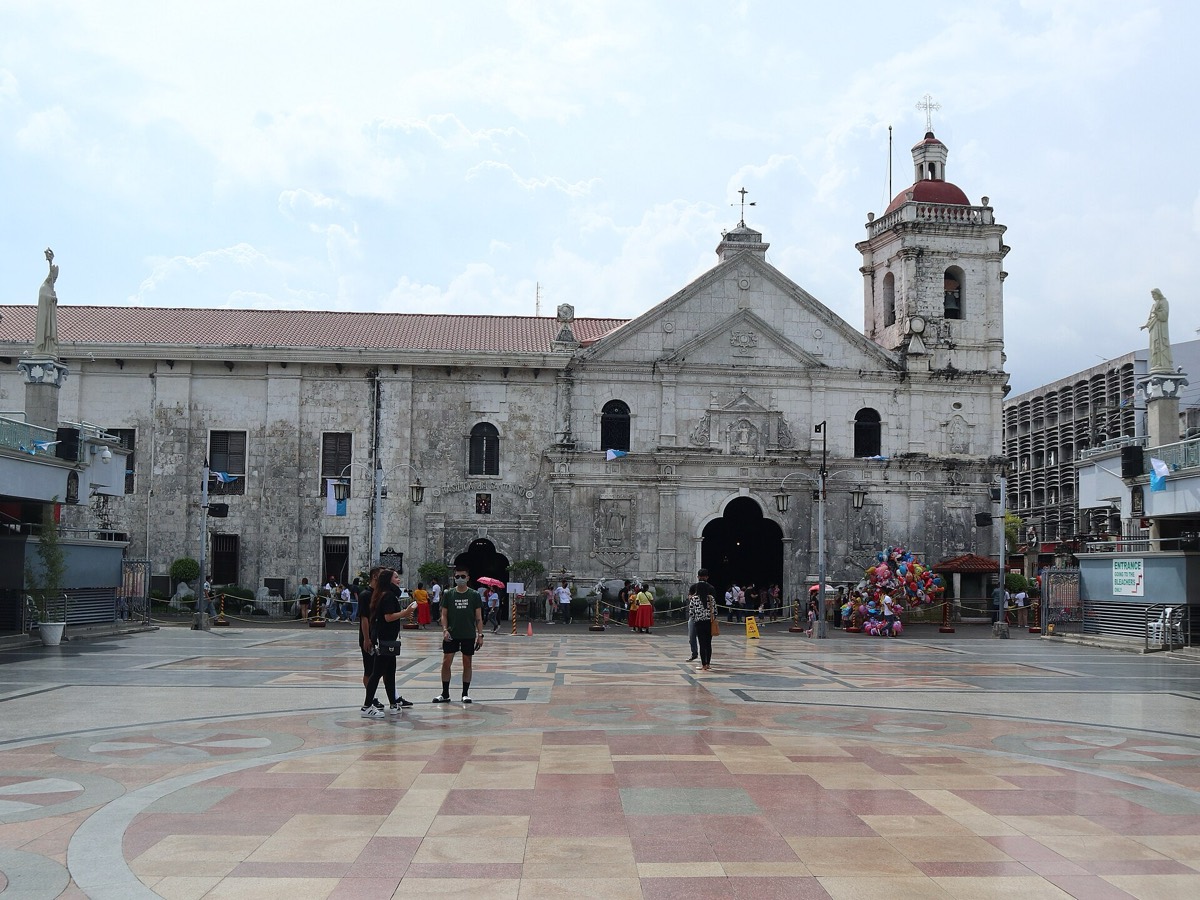
Almost everything that makes Cebu feel different from other Philippine cities starts on a few blocks near the port. Here is the octagonal kiosk that holds Magellan’s Cross, the Basilica Minore del Santo Niño with its endless line of candles, and Fort San Pedro, the little triangular fort that guarded the harbour for centuries. You can walk between all three in ten minutes, but I’d give the area a whole slow morning.
What moved me most wasn’t the stone but the people. At the basilica, women in front of the candle stands dance a short swaying step called the sinulog while praying for someone’s health or a son’s exam, holding bundles of coloured candles, each colour for a different intention. Office workers drop in on their lunch break, schoolchildren crowd around the glass case of the Santo Niño, and on Friday mornings the courtyard overflows into the street.
Fort San Pedro is the quiet counterweight: thick coral-stone walls, a lawn, old cannons, a small museum and views over the plaza and Pier 1. It’s a good place to sit in the shade after the crowds, with the sounds of ships’ horns drifting in from the port.
The story
Ferdinand Magellan’s fleet reached Cebu in April 1521, the first European expedition to sail across the Pacific. The local ruler, Rajah Humabon, made a blood compact with the Spaniards, and on 14 April he, his wife and several hundred of his people were baptised. A wooden cross was raised to mark the event. Tradition says the original is encased inside the tindalo-wood cross you see today, protected because pilgrims once chipped pieces off it as relics. The ceiling of the kiosk shows the baptism in bright painted colours.
As a baptismal gift, Magellan gave Humabon’s wife, christened Juana, a small statue of the Christ Child in Flemish style. Weeks later Magellan was killed on Mactan, the expedition sailed away, and Spain didn’t return for more than forty years. When Miguel López de Legazpi’s expedition arrived in 1565 and burned part of the settlement, a soldier found the same statue intact in a wooden box in a burned house. The finding was taken as a miracle, and the Augustinians built their church on the spot.
The present stone church dates from the 1730s, after earlier ones burned. It was raised to a minor basilica in 1965, the fourth centenary of the finding. The 2013 Bohol earthquake brought down part of the bell tower, which has since been rebuilt. Every January the city celebrates the Santo Niño with the Sinulog, a huge street festival of drumming and dancing that culminates on the third Sunday of the month.
Fort San Pedro began as a wooden stockade under Legazpi and was rebuilt in stone in the 18th century to defend against raids. It has been a garrison, an American school, a Japanese prison camp during the Second World War, a hospital and briefly a zoo, before becoming the small park and museum it is today.

Getting there
From the IT Park or Ayala area, a taxi or ride-hailing car to Plaza Independencia takes 20–40 minutes depending on traffic. Jeepneys marked for Colon or Pier run downtown too, but routes can be confusing at first.
Once there, everything is walkable: Fort San Pedro and Plaza Independencia, then a few streets inland to the basilica and the cross, then on to Colon Street, often called the oldest street in the country.
A suggested plan
- 7:00Arrive at the basilica for early Mass or simply to watch the candle dancers before the heat.
- 8:30Magellan’s Cross in its kiosk next door; look up at the painted ceiling.
- 9:30Walk to Plaza Independencia and Fort San Pedro; see the small museum and walk the ramparts.
- 11:00Colon Street and the Metropolitan Cathedral, then lunch on puso and grilled pork nearby.
- AfternoonRest out of the heat or continue into the Parian heritage district.
Where to stay
For this route, staying anywhere in central Cebu City works: the Fuente Osmeña and Capitol area is close to downtown and full of small hotels, while the IT Park and Ayala areas are quieter, more modern and better for evenings but a taxi ride away from the old city.
Good to know
- Fridays are devotion days at the basilica and very busy; weekdays other than Friday are calmer.
- If you visit during Sinulog in January, book rooms months ahead and expect closed roads.
- Candles are sold by women at the gate; buying a few is a kind gesture even if you just watch.
- Carry small notes and coins; change for large bills can be scarce downtown.
- Downtown streets are crowded and pickpocketing happens; keep phones and wallets in front pockets.
- Be polite but firm with self-appointed guides and sellers; nobody needs to escort you.
- It is a living church: no loud talk, flash or posing during Mass.