Bulabog Beach and the kite season
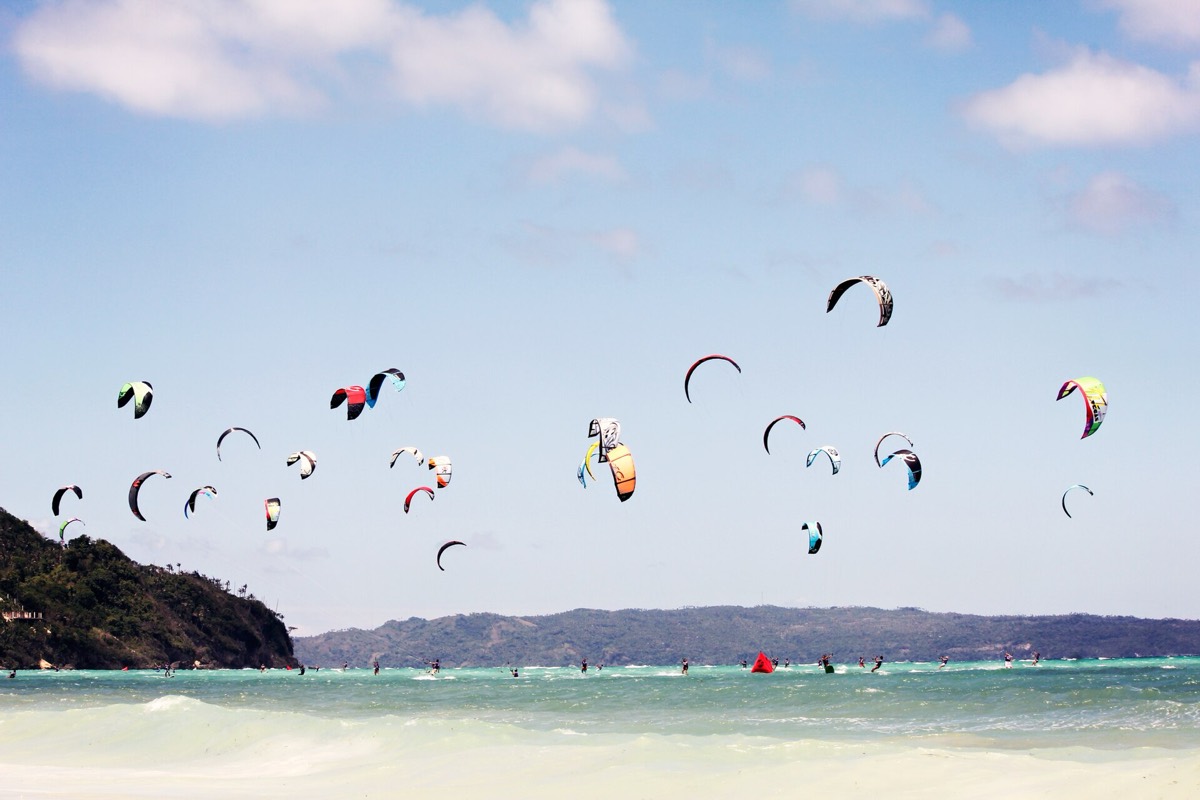
The wind-blown east coast, where dozens of bright kites fill the sky during the north-east monsoon and you can watch, or learn, from a sheltered lagoon.

- Area
- Boracay’s quieter shores
- Start from
- Boracay, Station 2
- Distance
- about 1 km across the island from Station 2
- Time needed
- half a day to several days
- Best season
- Kite season roughly November – April, during the amihan
- Difficulty
- Moderate
- Transport
- On foot or by e-trike
- Tickets & rules
- None to watch; lessons and gear rental paid at kite schools
Why go
Cross Boracay at its narrowest point, ten or fifteen minutes on foot from Station 2, and the island changes character completely. Bulabog Beach faces east into the wind, and from roughly November to April the amihan blows steadily across a wide, shallow lagoon protected by an outer reef. On a good day the sky above it is full of colourful kites and the water below is criss-crossed by riders.
Even if you never touch a kite, Bulabog is a fine place to spend a morning. The beach is long, the atmosphere is relaxed and international, and there is an easy pleasure in sitting with a coffee and watching beginners fall, get up and fall again, while experienced riders jump metres into the air further out.
If you do want to learn, this is one of the best-known places in Asia to try. The lagoon’s shallow, flat water and steady side-shore wind make it forgiving, and several kite schools run courses for beginners.
The story
Kiteboarding arrived on Boracay in the early 2000s, when travelling riders discovered that the east coast had near-perfect conditions for months every year. Windsurfers had been using Bulabog before that, and the two sports grew up side by side, bringing a small community of instructors, schools and long-staying visitors.
The secret is the reef. A barrier of coral offshore breaks the swell, leaving a large area of flat, waist-deep water inside, while the trade-like amihan wind blows across it with remarkable consistency. Riders can learn without fighting waves, and the experts can head out beyond the reef for bigger conditions.
In the opposite season the beach has another job. When the habagat blows from the south-west and White Beach gets rough, Bulabog becomes the sheltered side of the island, and boats and fishermen move here. So the same strip of sand serves the kiteboarders half the year and the boatmen the other half, a small example of how wind organises life on Boracay.
Bulabog also played a part in the 2018 rehabilitation. Drainage problems that had sent wastewater into the lagoon were among the issues authorities tackled, and the water quality on this side of the island was closely watched afterwards.

Getting there
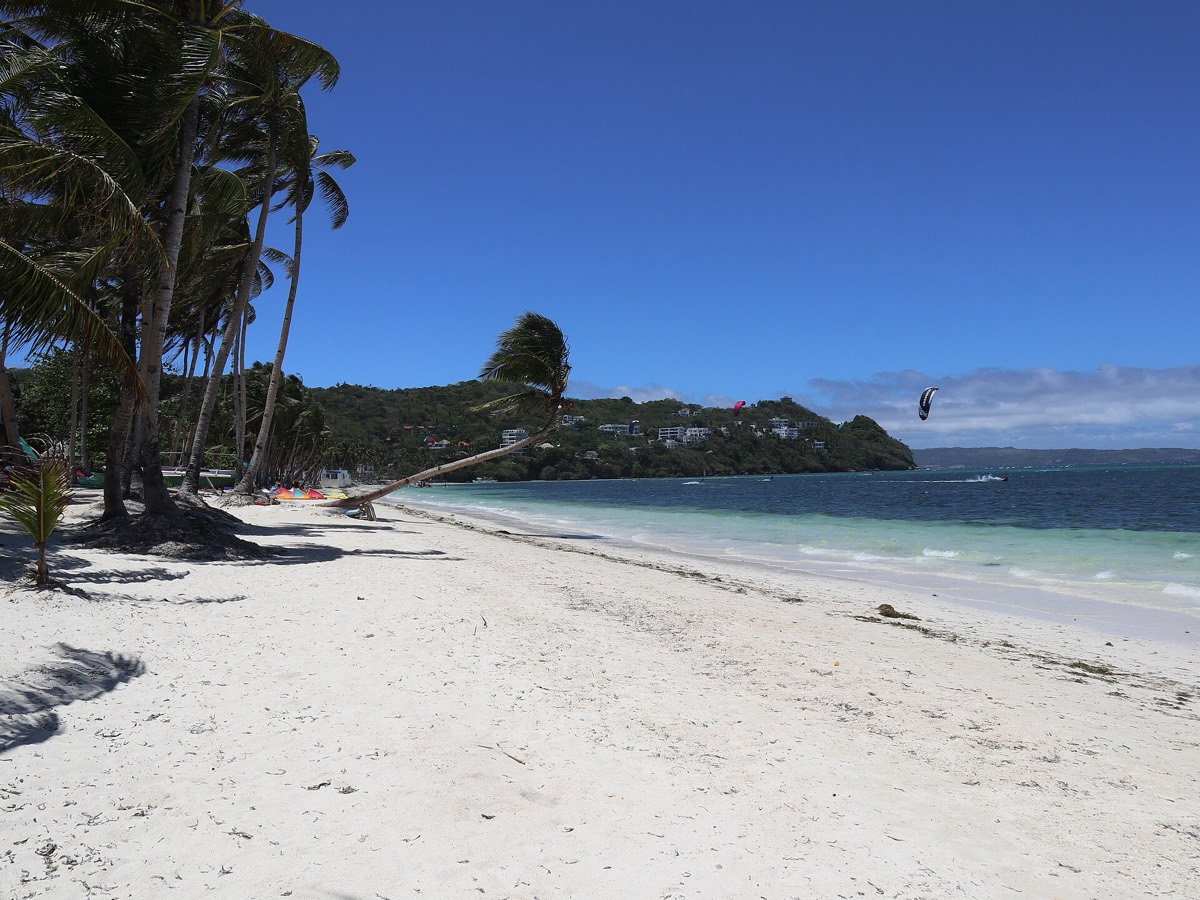
From Station 2 on White Beach, walk east along any of the small roads that cross the island; you will be at Bulabog in ten to fifteen minutes. E-trikes also run along the main road nearby.
Kite schools are lined up along the beach; walk along and talk to a few before choosing.
A suggested plan
- 8:00Walk across the island from Station 2 and have breakfast facing the lagoon.
- 9:00Watch the first riders go out as the wind picks up.
- 10:00If you want to try, an introductory lesson with a licensed school.
- NoonLunch in the shade and a look at the windsurfers further along.
- AfternoonReturn to White Beach for a calmer swim and the sunset.
Where to stay
Kiteboarders usually stay on the Bulabog side, where guesthouses are often simpler and cheaper and the beach is a few steps away. Others stay on White Beach and walk across.
Good to know
- A full beginner course usually takes several sessions; do not expect to ride on the first day.
- Choose a school with certified instructors, radio helmets and proper safety gear.
- Bring a rash guard; hours in the sun and wind burn quickly.
- Watching is free; the best show is in the late morning and afternoon when the wind is strongest.
- Do not swim in the kite zone; riders move fast and lines are dangerous.
- Lagoon water quality can vary; avoid swimming near drain outlets.
- Out of kite season, the beach is quieter and may have boats moored close to shore.