Jomblang Cave: descending to the light from heaven
Lowered on a rope sixty metres into a collapsed sinkhole full of ancient forest, you walk through darkness into a column of sunlight falling from the sky.

- Area
- South coast & karst
- Start from
- Yogyakarta
- Distance
- about 50 km south-east
- Time needed
- 1 day
- Best season
- Best in the dry season, April – October; tours may stop after heavy rain
- Difficulty
- Moderate
- Transport
- Car with driver; tours often include transport
- Tickets & rules
- Tour fee, including ropes, harness, boots and guide; booking ahead is strongly recommended
Why go
Jomblang is one of the most extraordinary places I’ve been in Indonesia. It is a vertical cave, a huge round hole in the limestone plateau of Gunungkidul, where the roof collapsed thousands of years ago. At the bottom grows a small primeval forest, with ferns and mossy trees, quite different from the dry farmland above.
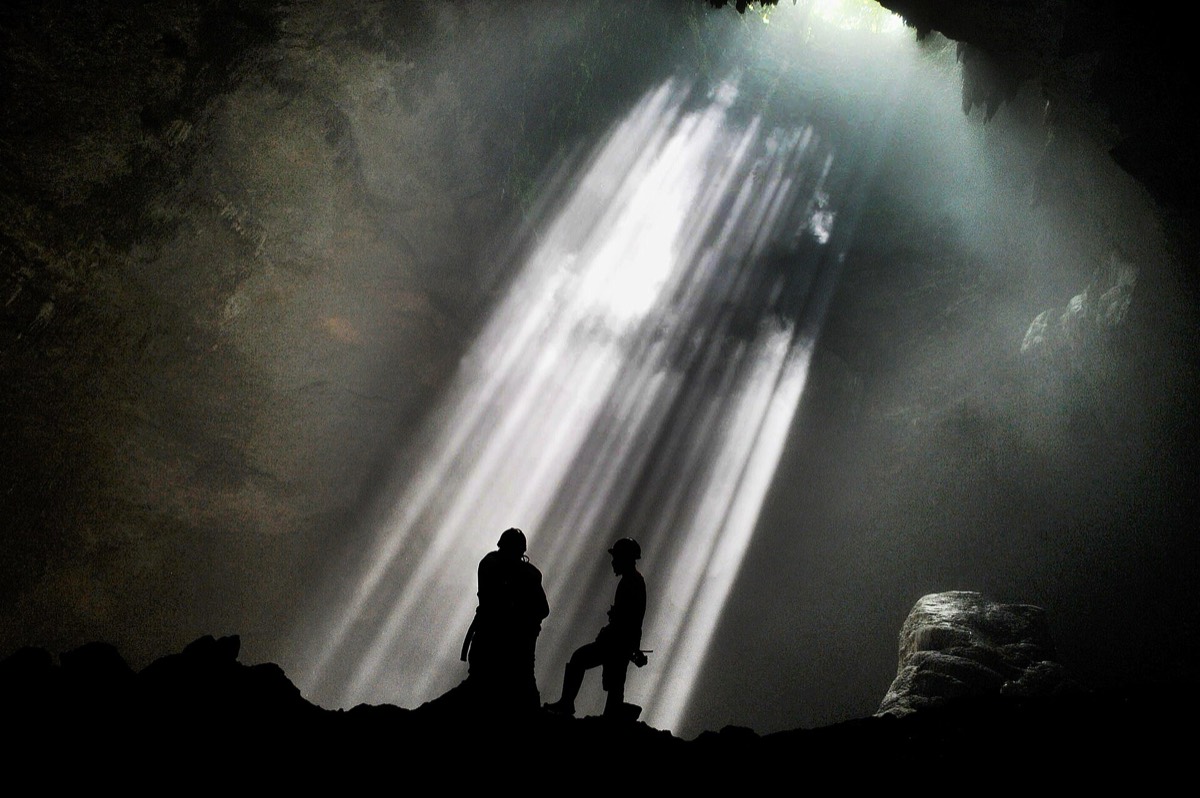
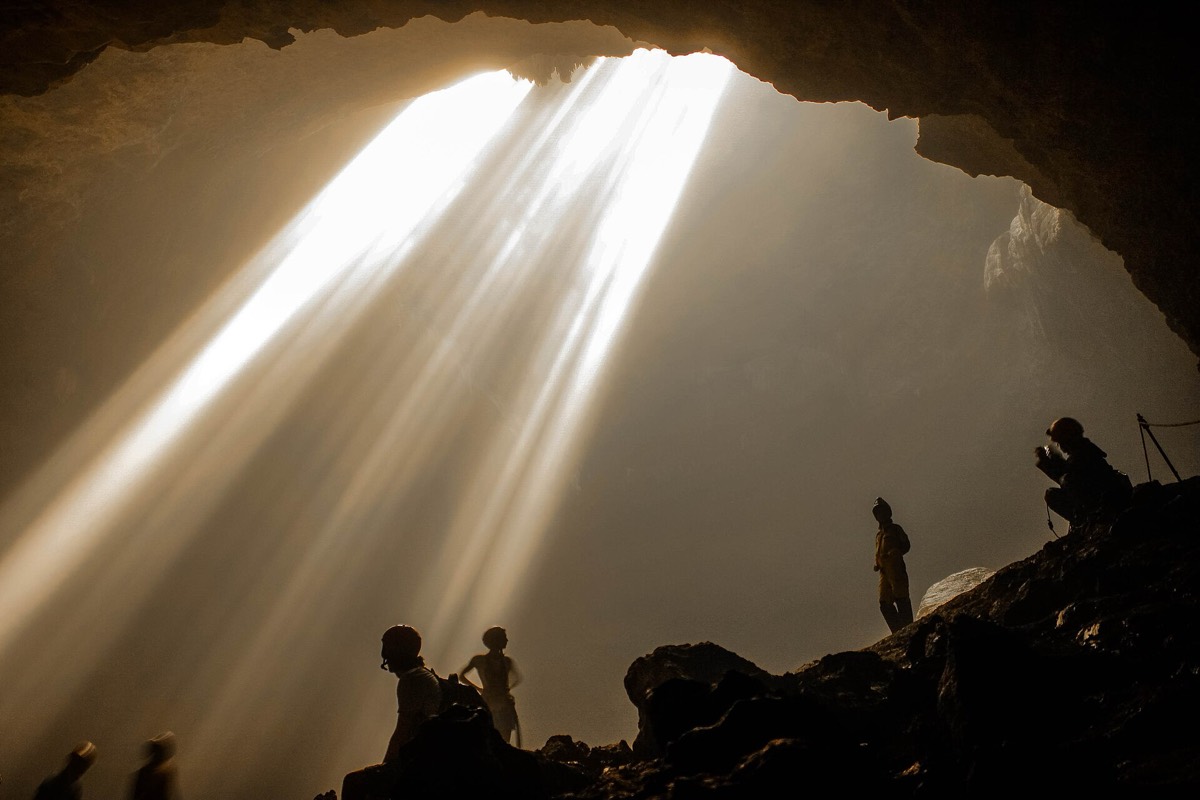
Getting down is half the adventure. You are fitted with a harness and lowered on ropes by a team of local men, about 60 metres to the floor of the sinkhole. Then you walk through a dark, muddy tunnel to Grubug Cave, where a great hole opens in the roof and, around the middle of the day, a shaft of sunlight pours down onto the cave floor.
The locals call it cahaya surga, the light from heaven. In the beam, the drifting mist and water droplets glow, and below you can hear an underground river. You stand in silence, watching the column shift slowly with the sun, until the guides call you back to be hauled up again.
The story
Gunungkidul, the ‘southern mountains’, is a karst plateau of limestone hills, caves, dolines and underground rivers. Water disappears quickly into the porous rock, which makes life on the surface hard. For a long time it was one of the poorest parts of Yogyakarta, known for drought and the dry-season water shortages that forced villagers to walk long distances to underground springs.
Jomblang was explored by cavers in the late twentieth century, and in the 2000s a local caving enthusiast began to develop it for small-group tourism, working with the villagers who now operate the ropes and guide visitors. The rope team still hauls visitors up mostly by hand, with a system of pulleys and a lot of teamwork.
The light effect in Grubug Cave depends on the sun’s angle. It is strongest around late morning and midday, especially in the dry season, when the sun is high and the air carries dust and moisture. On cloudy days the beam may be faint or absent.
Caves in this region have long been tied to local beliefs and stories of spirits and ascetics who meditated in them. Some were used as shelters in wartime. Today, the cave tourism of Gunungkidul provides an income to villages that once struggled, and it has helped people see their dry limestone hills as something valuable.

Getting there
Jomblang is about 1.5–2 hours by car from Jogja, past Wonosari and into the hills. Most visitors book a tour including transport, but you can also arrange a car with driver and book the cave directly.
Tours usually run once a day in the morning, timed so that visitors are in Grubug Cave when the light is strongest. Daily numbers are limited, so book well ahead in holiday periods.
A suggested plan
- 7:00Leave Jogja for Gunungkidul.
- 9:00Arrive, register and change into the provided boots and harness.
- 10:00Rope descent into the Jomblang sinkhole, then walk through the forest and tunnel.
- 11:00Grubug Cave and the column of light.
- 12:30Haul back up, wash off the mud and eat lunch, often included in the tour.
- 14:00Continue to the Gunungkidul beaches or return to Jogja.
Where to stay
Most people visit from Jogja. Combining with the Gunungkidul beaches is possible with a night in a homestay near the coast.
Good to know
- Wear clothes you don’t mind ruining; the mud can be thick.
- Bring a waterproof bag for your phone and a change of clothes for afterwards.
- A camera with good low-light performance helps capture the beam without flash.
- The descent is safe with the professional team, but tell them about any heart problems, injuries or fear of heights beforehand.
- After heavy rain the tour may be cancelled because of flooding risk in the tunnels.