Imogiri’s royal tombs and the misty hills of Mangunan
Climb hundreds of stone steps to the hilltop graves of Java’s kings, then watch the Oyo valley fill with mist from a pine forest above the clouds.

- Area
- South coast & karst
- Start from
- Yogyakarta
- Distance
- about 17–25 km south
- Time needed
- 1 day
- Best season
- Dry season mornings for mist and views, May – October
- Difficulty
- Moderate
- Transport
- Car with driver or motorbike
- Tickets & rules
- Javanese court dress, rented on site, and a donation to enter the royal tombs, which open on limited days; small fees at Mangunan viewpoints
Why go
Imogiri is one of the most important sacred sites in Central Java: the burial ground of the sultans of Yogyakarta and the susuhunan of Surakarta, high on a hill south of the city. The approach is a long, steep staircase of more than four hundred steps, shaded by frangipani and old trees. At the top, behind several gates, lie the tombs.
Entering requires Javanese court dress, rented at the gate, and a quiet, respectful manner. Inside, pilgrims sit cross-legged in the dim light, murmuring prayers, burning incense and laying flowers. It is not a show, and that is what makes it special.
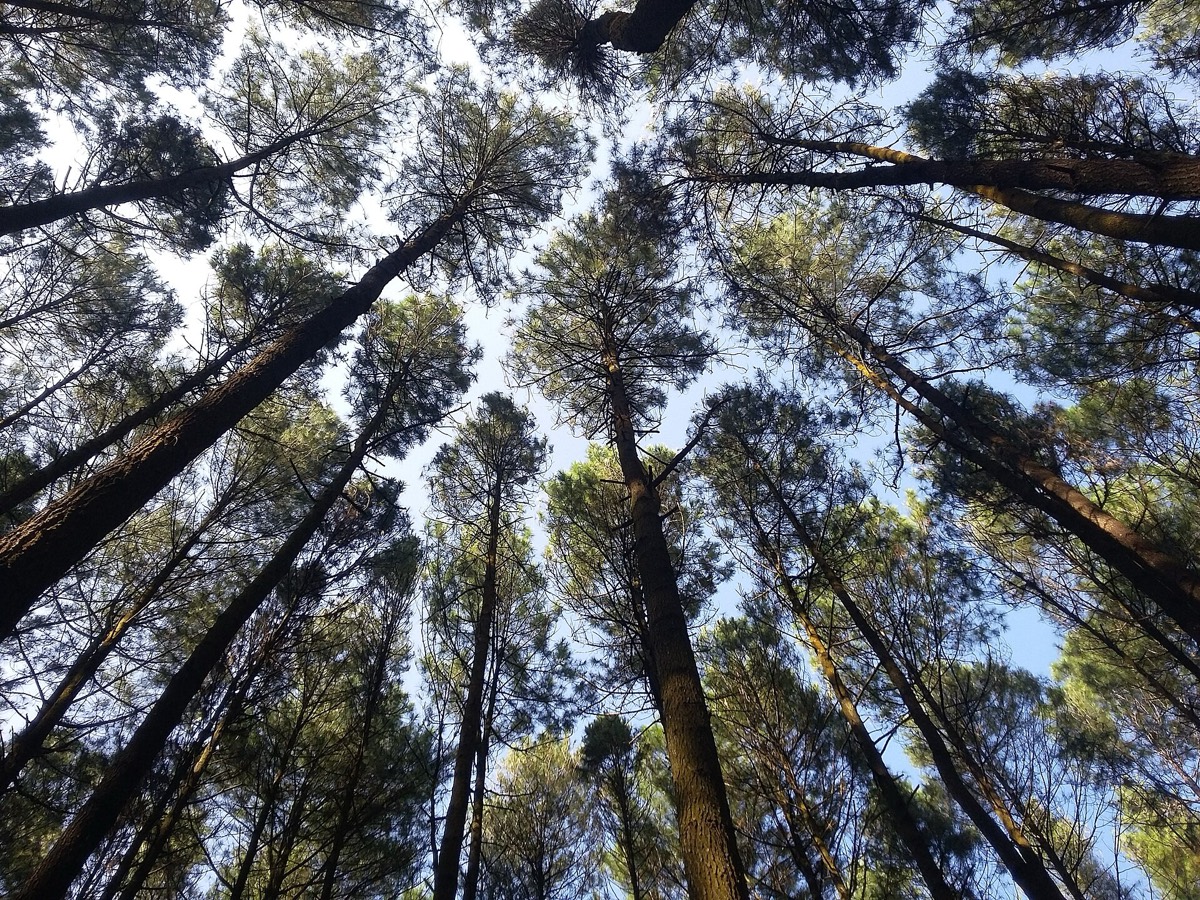
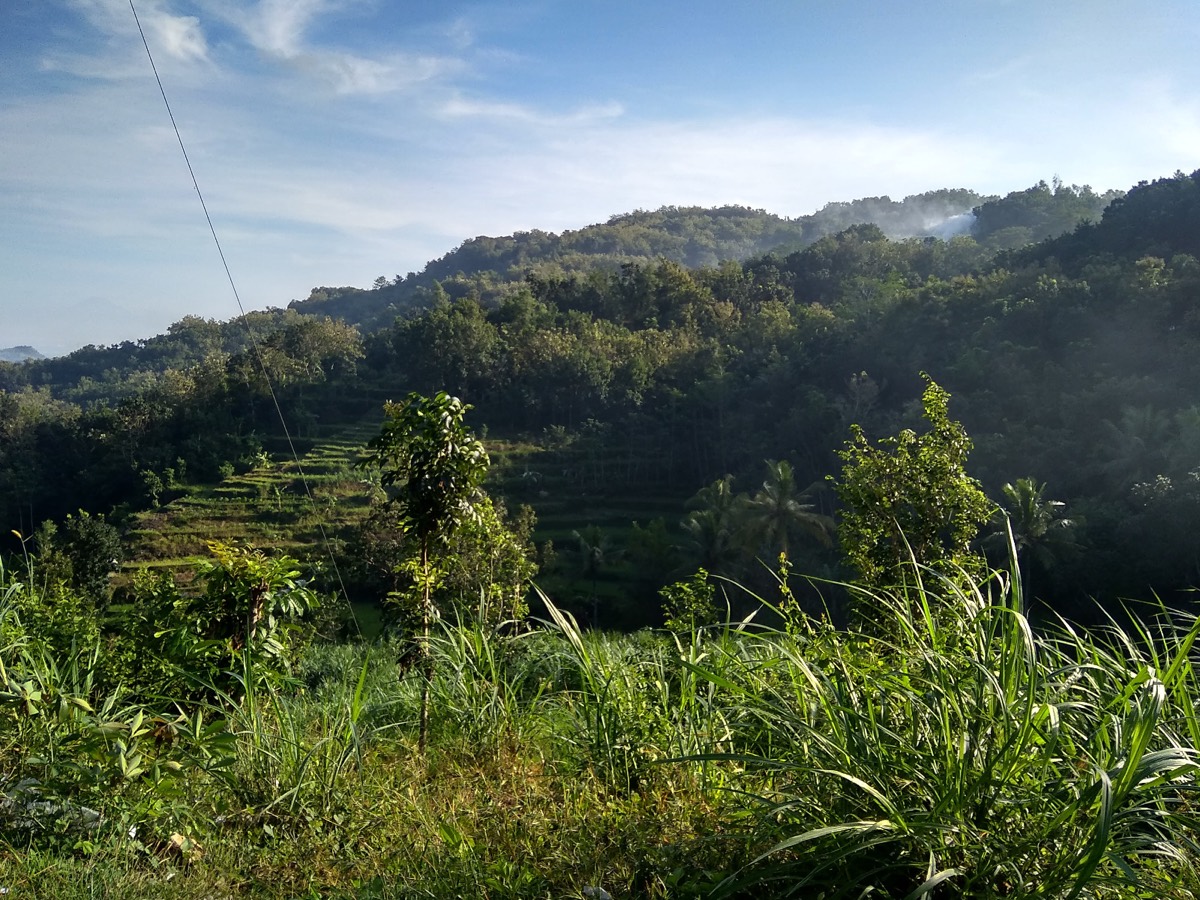
Afterwards, drive up into the hills of Mangunan. Here, pine forests and viewpoints look over the winding Oyo river and the plain. On early dry-season mornings, mist fills the valleys and the hills appear as islands. It’s one of the loveliest sunrises near Jogja, and it feels a world away from the city.
The story
The cemetery at Imogiri was founded in the 1630s by Sultan Agung, the greatest ruler of the Mataram sultanate, who is buried at the top. According to legend, he wanted to be buried in Mecca, but was told that Java needed him; so he threw a handful of sand from Mecca, and where it fell he built his tomb. The story is told with pride by the caretakers.
After Mataram split into Yogyakarta and Surakarta in 1755, both royal houses continued to bury their rulers here, in separate sections. The tombs are still looked after by abdi dalem, palace servants, who guard the gates and maintain the rituals. Four great bronze water jars, called kong, stand near the top; their water is refilled ritually once a year and is believed to bring blessings.
Mangunan, in the hills nearby, became popular in the 2010s, when local villagers turned a pine plantation and fruit gardens into a cluster of viewpoints and walking areas. The Kebun Buah Mangunan, a fruit orchard on a ridge, has one of the best views of the Oyo river bend in the morning mist.
On the way back, you can stop in Wukirsari, a batik village around Imogiri, where women still draw batik tulis by hand on their porches. Some workshops let you watch or buy directly from the makers.

Getting there
Imogiri is about 45 minutes south of central Jogja by car. Mangunan is a further 20–30 minutes up winding hill roads. A car with driver for the day is the most practical choice, especially for a pre-dawn start.
Check the opening days of the royal tombs before going; visits are only allowed on certain days of the week and closed during some ceremonies and the month of Ramadan.
A suggested plan
- 4:30Leave Jogja for Mangunan to catch the sunrise over the Oyo valley.
- 6:00Sunrise at Kebun Buah Mangunan, then breakfast at a stall.
- 8:00Walk among the pines at Hutan Pinus Mangunan.
- 10:00Imogiri: climb the steps, rent Javanese dress and visit the tombs.
- 12:30Batik village of Wukirsari, then sate klathak for lunch on the way back.
Where to stay
Jogja is the usual base. There are a few homestays in the Mangunan area if you want to be there at dawn without the early drive.
Good to know
- The steps at Imogiri are steep and tiring in the heat; go slowly and bring water.
- Women may need to wear a kemben, a wrapped cloth leaving the shoulders bare; men wear a jacket and headcloth. The caretakers help you dress.
- Pine forest spots get very busy on weekends; weekdays are far calmer.
- Photography is not allowed inside the tomb enclosures.
- Mountain roads near Mangunan are steep with tight bends; if riding a motorbike, use low gears.