Parangtritis: sand dunes and the Queen of the Southern Sea
A wide black-sand shore where giant waves pound the beach, rippled dunes glow at dusk, and every Javanese knows not to wear green.

- Area
- South coast & karst
- Start from
- Yogyakarta
- Distance
- about 28 km south
- Time needed
- half a day
- Best season
- All year; the dry season, May – October, gives the clearest sunsets
- Difficulty
- Easy
- Transport
- Ride-hailing car, motorbike or hired car
- Tickets & rules
- Small entrance fee to the beach area
Why go
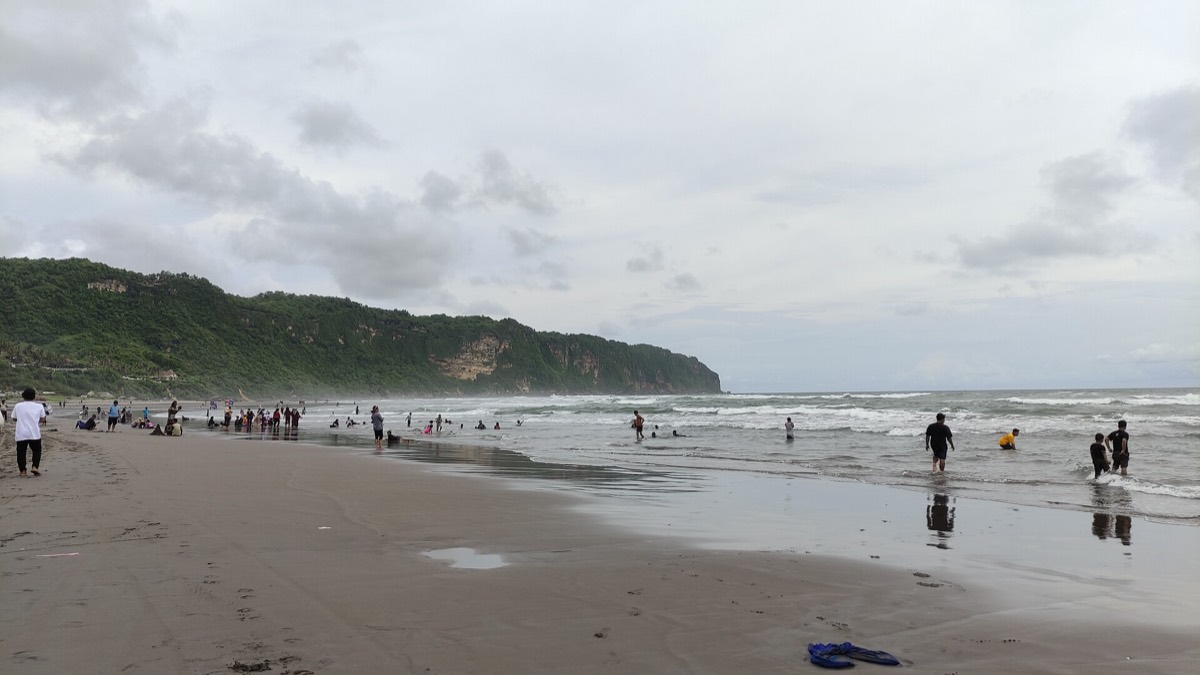
Parangtritis is not a swimming beach. It is something wilder: a long strip of dark volcanic sand where the Indian Ocean breaks in huge, rolling waves, framed by limestone cliffs to the east. In the late afternoon, families come to walk, ride horse carts along the water’s edge, fly kites and watch the sun sink into the haze.
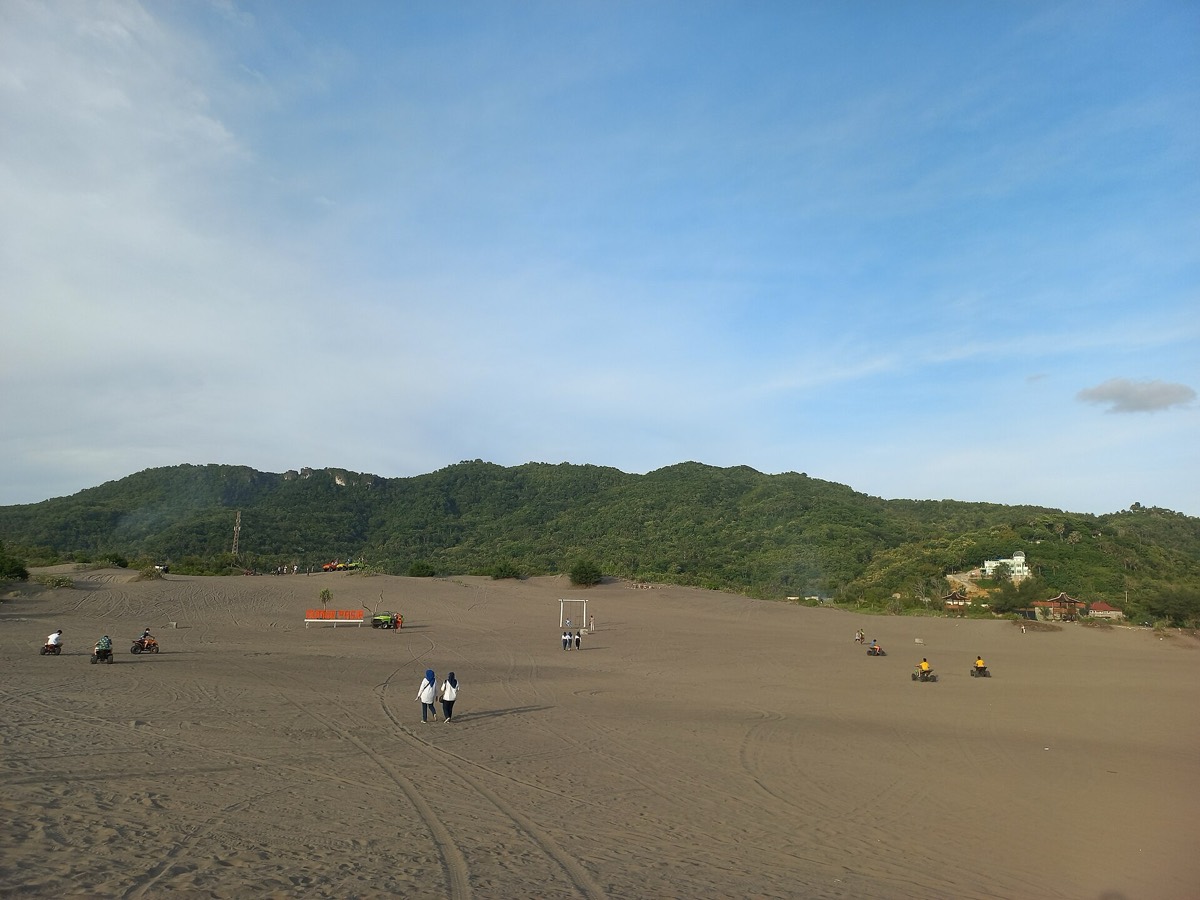
Just west lie the Parangkusumo dunes, a rare landscape in tropical Asia: ripples of grey sand formed by winds blowing from the sea, with views of the hills behind. Local operators rent sandboards and the dunes are a favourite for photo shoots. In the golden hour, they are beautiful.
But the real reason to come is the atmosphere. This is the shore of Nyai Roro Kidul, the Queen of the Southern Sea, a figure who looms large in Javanese belief. Offerings are left on the sand, people come to meditate at night, and the sea feels very present.
The story
Nyai Roro Kidul is the spirit queen of the southern ocean, the Indian Ocean off Java’s south coast. In court tradition, she is the spiritual consort of the rulers of Mataram and their descendants. Legend says that Panembahan Senopati, founder of Mataram, meditated at Parangkusumo and met the queen, who promised to support his dynasty. The meeting is said to have taken place on a stone, Watu Gilang, now inside a small walled enclosure.
Because of this bond, the palace holds the labuhan ceremony at Parangkusumo every year, offering clothes, hair and nail clippings of the sultan and other items to the sea. Crowds gather and try to catch the offerings as they wash back to shore, believing they bring good luck.
Many Javanese believe that Nyai Roro Kidul favours the colour green, and that people wearing green on the beach risk being taken by the waves to serve in her undersea court. Behind the legend lies a real danger: the southern coast has strong rip currents and sudden large waves, and drownings happen every year. Lifeguards and signs warn visitors not to swim.
The dunes of Parangkusumo formed over thousands of years from sand carried down by rivers from Merapi and pushed inland by the sea wind. They are studied by geographers as a rare coastal dune system. In recent years, conservation efforts have tried to keep the dunes from being overgrown or built over.

Getting there
Parangtritis is about 45 minutes to an hour by car from the centre, along Jalan Parangtritis. Ride-hailing cars get you there, but for the return it can be easier to arrange a driver to wait.
Depok beach, a few kilometres west, has a fish market where you can choose seafood and have it cooked at simple restaurants.
A suggested plan
- 14:00Leave Jogja, stopping at the Imogiri road for a snack if you like.
- 15:00The Parangkusumo dunes, with a sandboard if you want to try.
- 16:30Walk along Parangtritis beach or take a horse cart along the water’s edge.
- 17:30Watch the sunset from the beach or the cliffs to the east.
- 18:30Seafood dinner at the Depok fish market, then back to Jogja.
Where to stay
There are simple hotels at Parangtritis, but most people come for the afternoon from Jogja. The southern part of the city, around Prawirotaman, is the closest base.
Good to know
- Go in the late afternoon to avoid the midday heat and catch the best light.
- Agree on prices for horse carts, ATVs and sandboards before starting.
- At the Depok market, ask about weight and price before your fish is cooked.
- Do not swim. Rip currents are deadly, even for strong swimmers.
- Keep a respectful distance from people making offerings or meditating, and don’t touch offerings on the sand.