The white beaches and rope bridges of Gunungkidul
Small coves of white sand between limestone headlands, rock pools full of tiny fish, and a wobbly rope bridge swinging over the surf to a lobster fishers’ island.

- Area
- South coast & karst
- Start from
- Yogyakarta
- Distance
- about 65–75 km south-east
- Time needed
- 1 day, or overnight
- Best season
- Dry season, April – October; waves are big all year
- Difficulty
- Easy
- Transport
- Car with driver or motorbike
- Tickets & rules
- Regional entrance fee for the Gunungkidul beaches; extra fees for the Timang gondola or bridge
Why go
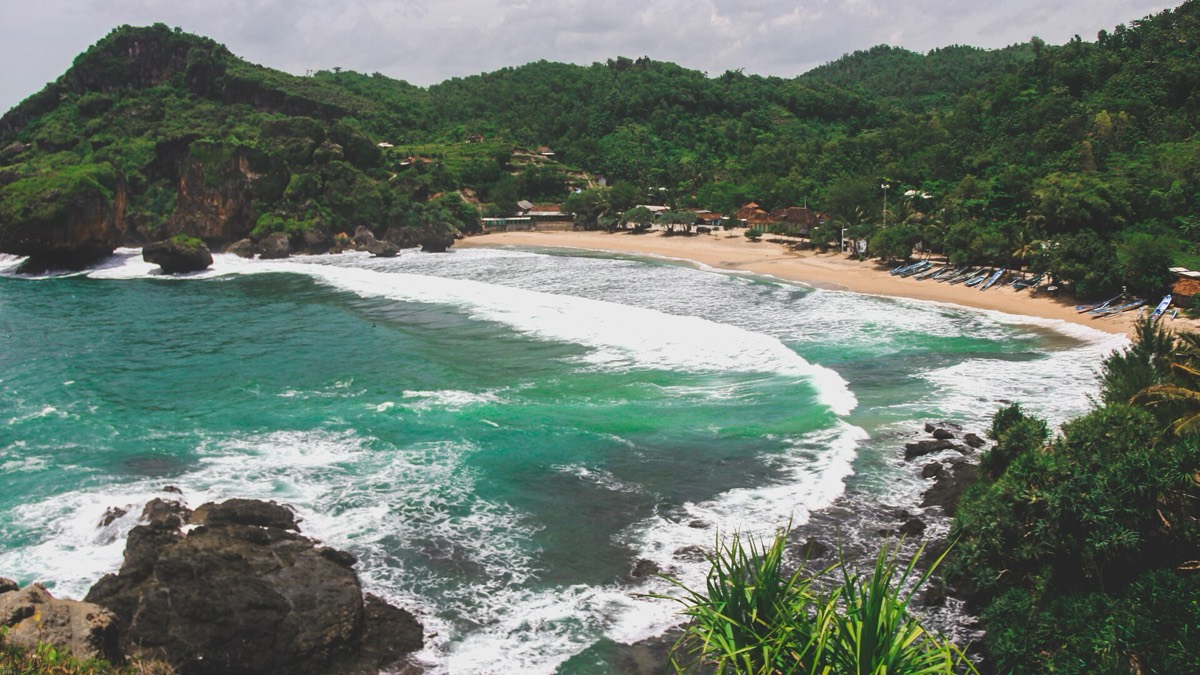
If Parangtritis is wild and dark, the beaches of Gunungkidul are their opposite: small bays of pale sand, enclosed by jagged limestone rocks and green hills, with turquoise water in the pools at low tide. There are dozens of them along a coastline of about 70 km, each with a slightly different character.
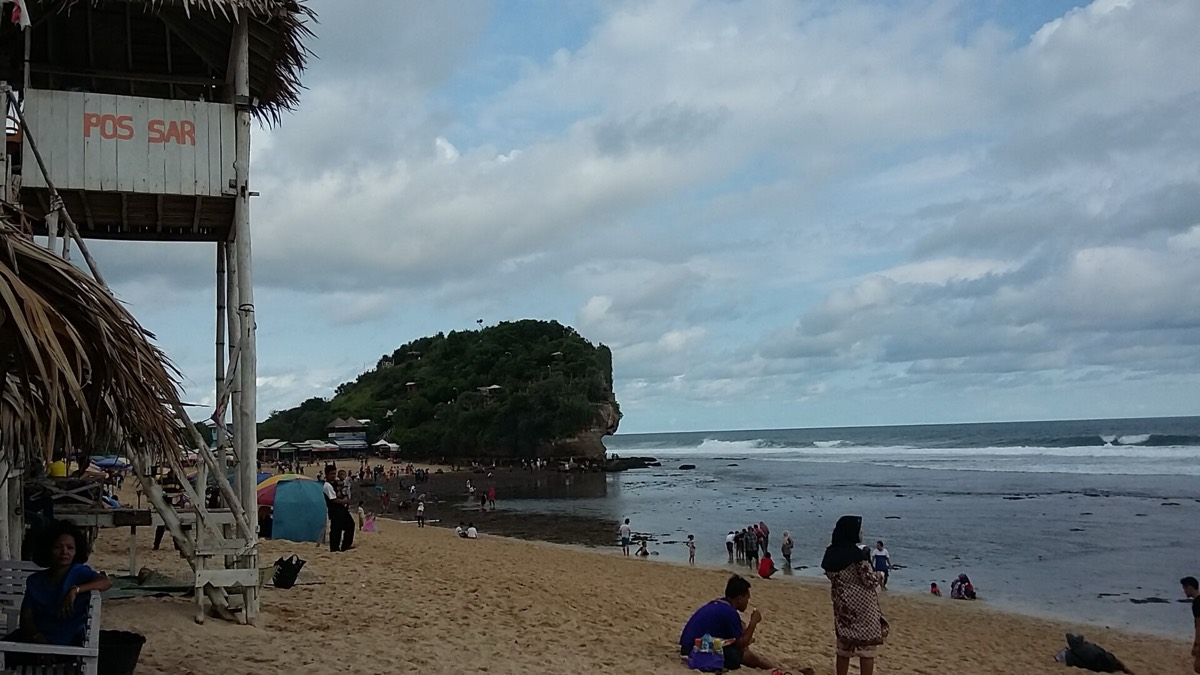
Some, like Indrayanti, have cafés, umbrellas and loud weekend crowds; others, like Sadranan or Nglambor, are good for watching marine life in the rock pools; and some are reached only by foot down a steep path. The best day is a slow hop from one to another, ending with fried fish and a cold drink as the sun goes down.
And then there is Timang. Here, local fishermen built a rope bridge and a wooden cable car to get to a rock island where they catch lobsters. Today, visitors can ride the gondola, a small wooden box pulled across the surf on ropes, or cross the bridge. It’s scary, exhilarating and wonderfully improvised.
The story
Gunungkidul’s coast is part of the Gunung Sewu karst, the ‘thousand mountains’, a vast limestone landscape of conical hills stretching along Java’s south coast. It is recognised as a UNESCO Global Geopark. Rivers here run mostly underground and emerge at the coast, sometimes in springs right on the beach.
For generations, life here centred on farming dry land and fishing in dangerous waters. Fishermen at Timang learned to harvest lobsters from the rocks of a small island separated from the coast by a channel of crashing waves. They built a pulley system with ropes to cross it, and only later did tourism discover the spot. Many fishermen now earn more from visitors than from lobsters, though they still fish in season.
Seaweed collecting is another traditional activity. At low tide you’ll see women and children gathering it from the reefs; it is dried and sold for food and cosmetics. Beaches like Sepanjang and Kukup have small seaweed and seafood stalls selling fried crabs and shrimp snacks.
Tourism in Gunungkidul grew very rapidly after the 2010s, with new roads and hundreds of homestays. It has brought income to once poor villages, but also rubbish and crowds on holidays. Choosing smaller beaches and weekdays makes a big difference.

Getting there
From Jogja, the drive to the coast takes about 2–2.5 hours via Wonosari. A car with driver is the most comfortable option; motorbikes are fine for experienced riders, but the roads are winding and hilly.
There is a regional entrance fee to the beach area, paid at a checkpoint on the road. Timang is reached by a rough final stretch; drivers often transfer visitors to local jeeps or motorbikes for the last part.
A suggested plan
- 6:30Leave Jogja early, with breakfast in Wonosari.
- 9:00Timang: gondola or rope bridge, depending on your nerve.
- 11:00Sadranan or Nglambor for snorkelling and rock pools.
- 13:00Lunch of fried fish and seaweed at Kukup or Sepanjang.
- 15:00Indrayanti or Pok Tunggal for the afternoon and sunset.
- 18:00Drive back to Jogja or stay the night.
Where to stay
There are homestays and small hotels near the beaches, especially around Indrayanti and Krakal. Staying a night lets you see the coast in the early morning, before the day-trippers arrive.
Good to know
- Combine this with Jomblang Cave, which lies on the way.
- Low tide is the best time for rock pools; check tide tables.
- Bring small notes for entrance fees, toilets and parking.
- Waves on the southern coast are powerful; swim only in sheltered spots and never go beyond the reef edge.
- The Timang gondola and bridge are run by locals with simple equipment; decide for yourself whether you feel comfortable.