The Dieng Plateau: temples in the clouds
Java’s oldest standing temples on a cold volcanic plateau at 2,000 metres, with bubbling craters, coloured lakes and a sunrise above a sea of clouds.

- Area
- Beyond Jogja
- Start from
- Yogyakarta
- Distance
- about 120 km north-west
- Time needed
- 2 days
- Best season
- Dry season, May – September; July – August nights can be near freezing
- Difficulty
- Moderate
- Transport
- Car with driver, or bus via Magelang and Wonosobo
- Tickets & rules
- Entrance tickets for the temple complex, Telaga Warna and the craters
Why go
Dieng is a high plateau in the heart of Central Java, about 2,000 metres above sea level, surrounded by volcanic peaks. It feels completely different from the hot plain: the air is cold and thin, terraced potato fields climb impossibly steep slopes, and in the mornings mist drifts across the valley floor.
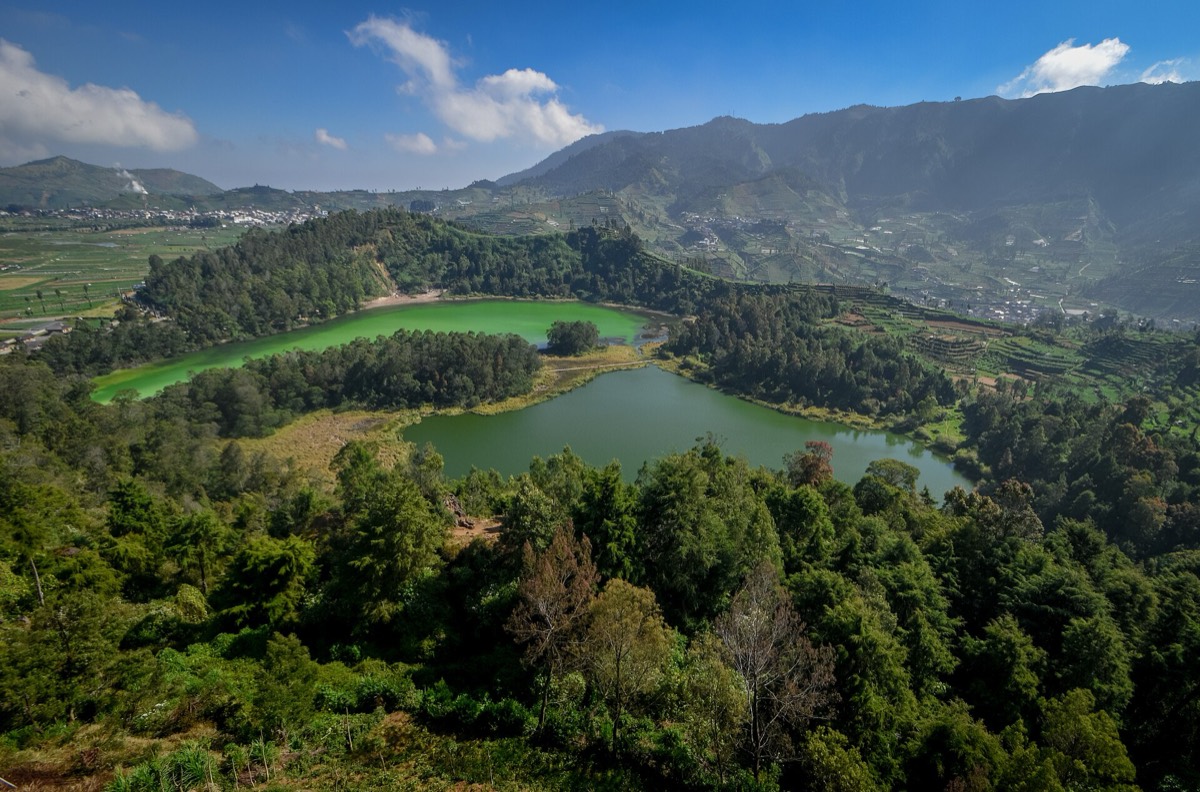
The landscape is full of volcanic oddities. At Kawah Sikidang, a crater of boiling mud pools and steam vents, the ground hisses and sulphur stings your nose. At Telaga Warna, a lake changes colour from turquoise to green to grey depending on the light and the minerals in the water. And around the plateau stand small stone temples, some of the oldest in Java.
The great finale is the sunrise from Sikunir hill: a short climb before dawn to a viewpoint where Sindoro, Sumbing, Merbabu and Merapi rise one after another above the clouds. It’s cold, crowded on weekends and completely worth it.
The story
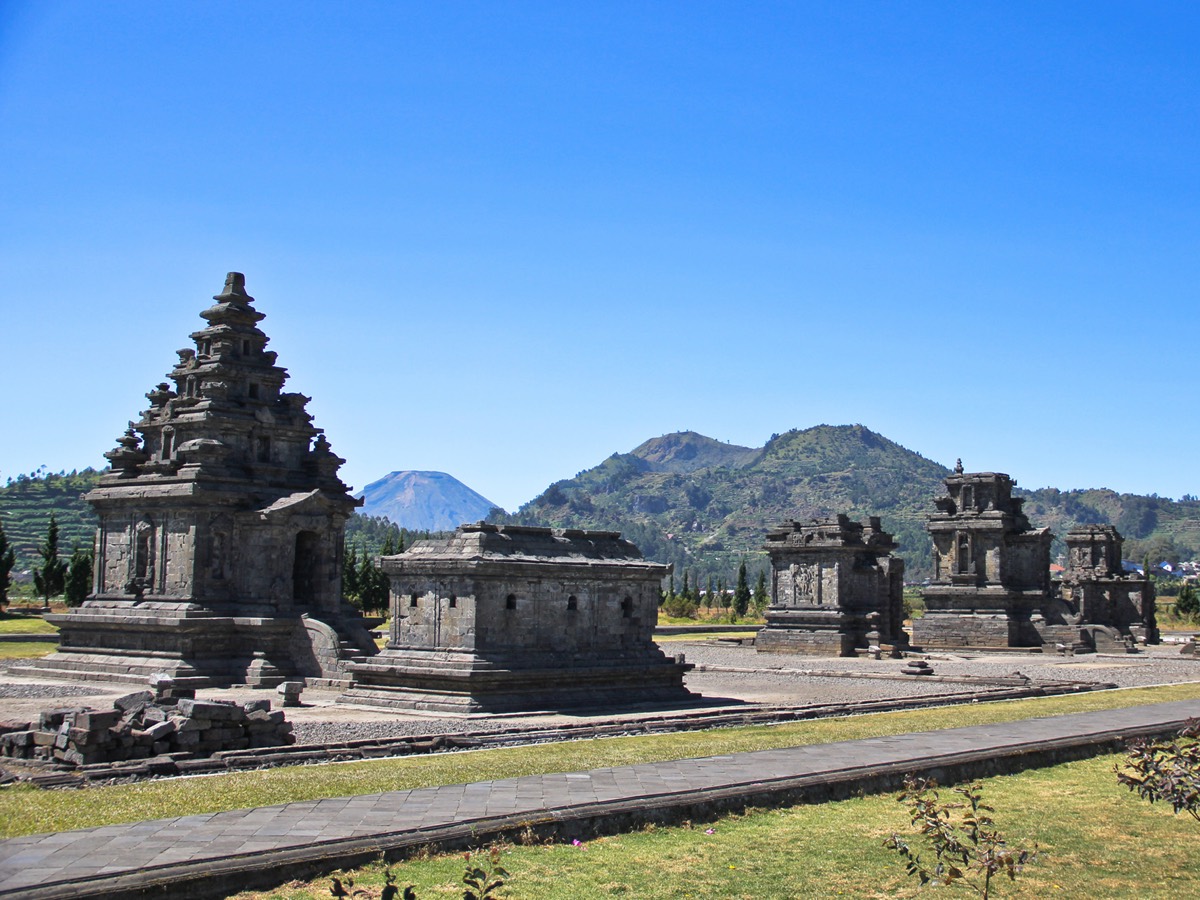
The name Dieng is often explained as coming from old Javanese words meaning ‘abode of the gods’. The Arjuna temple complex, a group of small Hindu temples dedicated to Shiva, dates from around the seventh and eighth centuries, making it among the oldest standing Hindu structures in Java, older than Borobudur and Prambanan. The temples are named after heroes from the Mahabharata, names given much later by local people.
There were once many more temples here, possibly hundreds, and Dieng was probably an important religious centre. Many buildings collapsed or were buried. When Dutch explorers came in the nineteenth century, the plateau was partly flooded, and the temples had to be drained before they could be studied.
Dieng is famous for its ‘dreadlocked children’. Some local children grow naturally matted hair, believed to be a sign of being chosen by the spirits. When the child asks, a ceremony called ruwatan is held to cut the hair, and the child’s request, often a simple gift, must be granted. Today, the ceremony is part of the Dieng Culture Festival, usually held in August.
The plateau is also an active volcanic area. In 1979, a gas release from a crater killed more than a hundred villagers, and volcanic gas remains a risk in certain areas, which is why some craters are closed when gas levels rise. Monitoring stations keep an eye on the activity.

Getting there
By car, Dieng is about 3.5–4.5 hours from Jogja via Magelang and Wonosobo, with the last part climbing steeply into the mountains. Many people hire a car with driver for two days.
By public transport, take a bus from Jogja to Magelang and on to Wonosobo, then a minibus up to Dieng village. It takes most of a day but is cheap and scenic.
A suggested plan
- Day 1, 7:00Leave Jogja; stop in Wonosobo for lunch with mie ongklok, a local noodle dish.
- Day 1, 13:00Arrive in Dieng; visit the Arjuna temples and the Dieng museum.
- Day 1, 15:00Kawah Sikidang crater and Telaga Warna lake.
- Day 2, 3:30Walk up Sikunir hill for sunrise.
- Day 2, 8:00Breakfast with carica, a small mountain papaya, then return to Jogja.
Where to stay
Dieng village has many simple homestays with thick blankets; the hot water can be unreliable, so ask. Nights are very cold, so pack accordingly.
Good to know
- Bring a warm jacket, hat and gloves; dry-season mornings can drop close to zero.
- Try purwaceng, a herbal drink sold as a local tonic, and carica sweets.
- The Dieng Culture Festival brings big crowds; book accommodation far in advance if you go then.
- Respect closures at craters: volcanic gases can be deadly.
- Altitude and cold can tire you more than expected; take the Sikunir climb slowly.