Kampung Ujung: grilled fish by the water at night
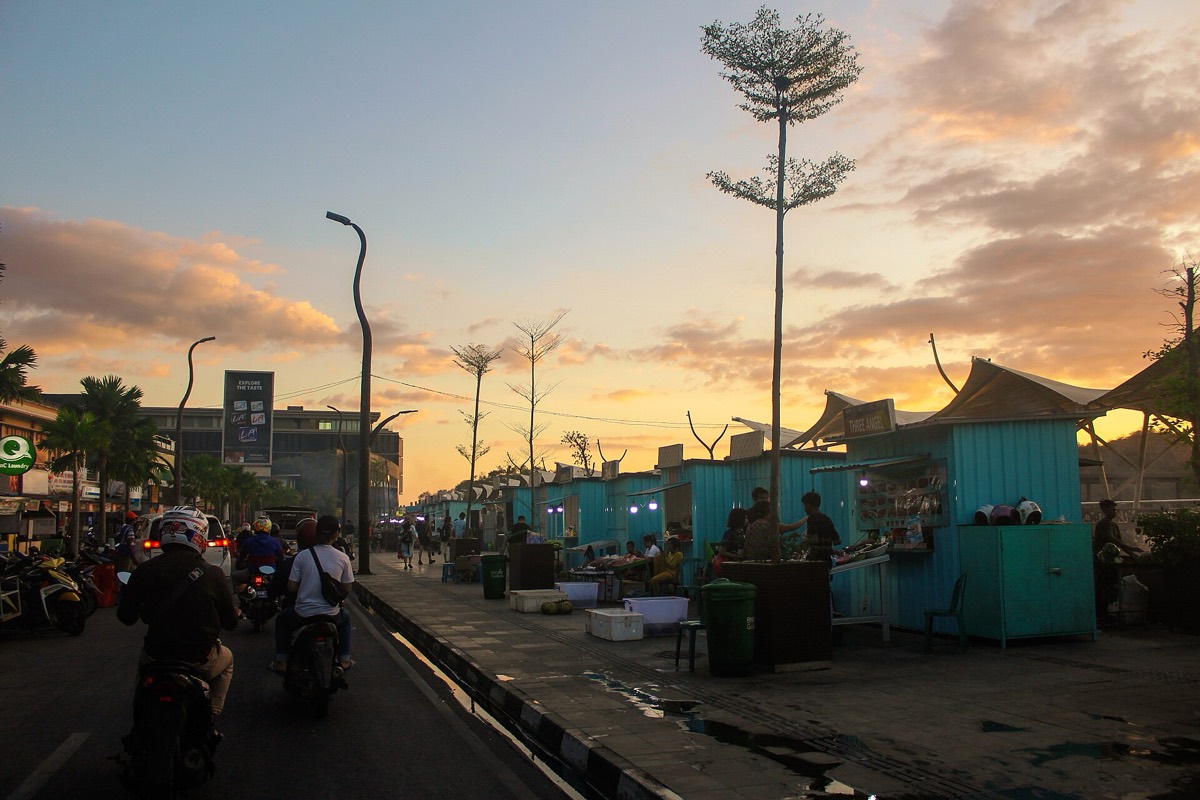
When the boats come home, the waterfront fills with smoke and lamplight: pick a fish from the ice, point at the sauces, and eat at a plastic table facing the harbour.

- Area
- Labuan Bajo
- Start from
- Labuan Bajo
- Distance
- walking distance on the waterfront
- Time needed
- evening
- Best season
- All year
- Difficulty
- Easy
- Transport
- On foot
- Tickets & rules
- None
Why go
Kampung Ujung, on the waterfront near the harbour, is where Labuan Bajo eats after dark. Every evening, stalls set out ice trays of the day’s catch: red snapper, grouper, barracuda, squid, prawns, sometimes lobster. You choose your fish, agree on the price by weight, and it goes onto a charcoal grill while you sit at a long table under bare bulbs, with the masts of the harbour swaying just behind.
The food is simple and very good. Fish comes with steamed rice, a plate of greens like water spinach, and a set of sambals that are the real point of the meal. Sambal matah is raw shallot, chilli and lemongrass; sambal tomat is cooked and sweeter; and many stalls make a sharp, sour colo-colo with lime and tomato that is perfect with grilled fish.
It is also one of the few places where locals, boat crews, backpackers and families all end up at neighbouring tables. Children run between the stalls, someone plays guitar, and the air smells of smoke, lime and the sea. It isn’t polished, which is exactly why it is worth an evening.
The story
The night stalls started as a few carts serving fishermen and ferry passengers, and grew as tourism did. The local government has moved and rebuilt the waterfront more than once, adding a promenade and more permanent stalls, so the exact layout changes. What doesn’t change is the basic idea: fish brought in that day, cooked in front of you.
Much of the cooking here comes from Bugis and Bimanese traditions rather than Manggarai ones, reflecting who settled the coast. The grilled fish style, ikan bakar, is common across eastern Indonesia; each family has its own marinade of turmeric, garlic, candlenut and sweet soy, brushed on with a stalk of lemongrass as it cooks.
Inland, Manggarai cooking is quite different: more corn, cassava and pork, and dishes such as se’i, smoked meat, which spread from Timor and is now popular across Flores. You will find a few se’i places in Labuan Bajo too, and they make a good contrast with a seafood night on the harbour.
Getting there
From most hotels in the centre, the waterfront is a short walk downhill. If you are staying on the hillsides or south of town, take an ojek and walk back along the promenade if your legs allow.
Stalls usually open from late afternoon and are busiest from about seven.
A suggested plan
- SunsetWatch the boats come in from the promenade.
- Early eveningWalk the length of the stalls and look at the fish before choosing.
- DinnerAgree the price by weight, choose a cooking style, and sit facing the water.
- After dinnerAn iced drink or a coconut, and a slow walk back along the harbour.
Where to stay
Anywhere in central Labuan Bajo puts you within walking or short ojek distance. Hillside rooms are quieter but mean a steep climb home after dinner.
Good to know
- Ask the price per kilo and the weight before the fish goes on the grill, so there are no surprises.
- Try a mix: one grilled fish, a plate of squid and some kangkung is plenty for two.
- Ask for sambal on the side if you are not used to chilli.
- Bring cash; card machines are rare at the stalls.
- Choose busy stalls with fish that looks bright-eyed and firm; reef fish such as large grouper can occasionally carry ciguatera toxins.
- Watch your bag in the crowds and on the darker stretches of the waterfront.