Labuan Bajo: harbour mornings and a hilltop sunset
Before the boats, give the town itself a day: fish landing at dawn, a waterfront that is changing fast, and a hill where the whole archipelago turns orange at dusk.

- Area
- Labuan Bajo
- Start from
- Labuan Bajo
- Distance
- walking distance in town, plus a short ride uphill
- Time needed
- 1 day
- Best season
- All year (driest April – November)
- Difficulty
- Easy
- Transport
- On foot; ojek motorbike taxi or car for the hills
- Tickets & rules
- None; small entrance or parking fees at some viewpoints
Why go
Most people treat Labuan Bajo as a departure lounge for boats, which is a shame. The town is small enough to understand in a day, and it is one of the few places in Indonesia where you can watch a fishing harbour turn into a tourist port almost in real time. Old wooden phinisi schooners tie up beside new concrete promenades, and the same bay that once held only fishing boats now fills each evening with masts and deck lights.
Early morning is the best hour. The heat hasn’t arrived, the light is soft on the water, and the fish landing near the harbour is busy with skipjack, snapper, squid and the occasional small shark being weighed and argued over. Women sell bananas and cassava from baskets, and the call to prayer drifts over from the harbour mosque while church bells answer from up the hill. It is a very Flores mix.
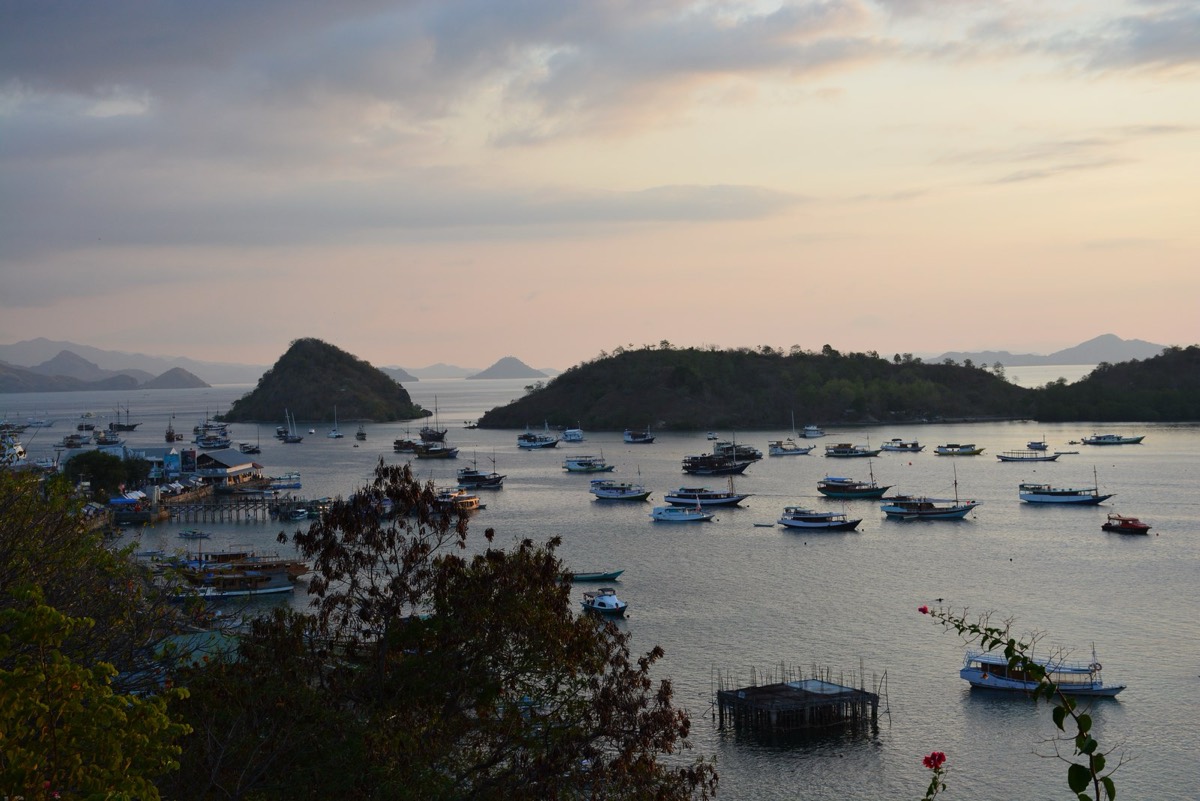
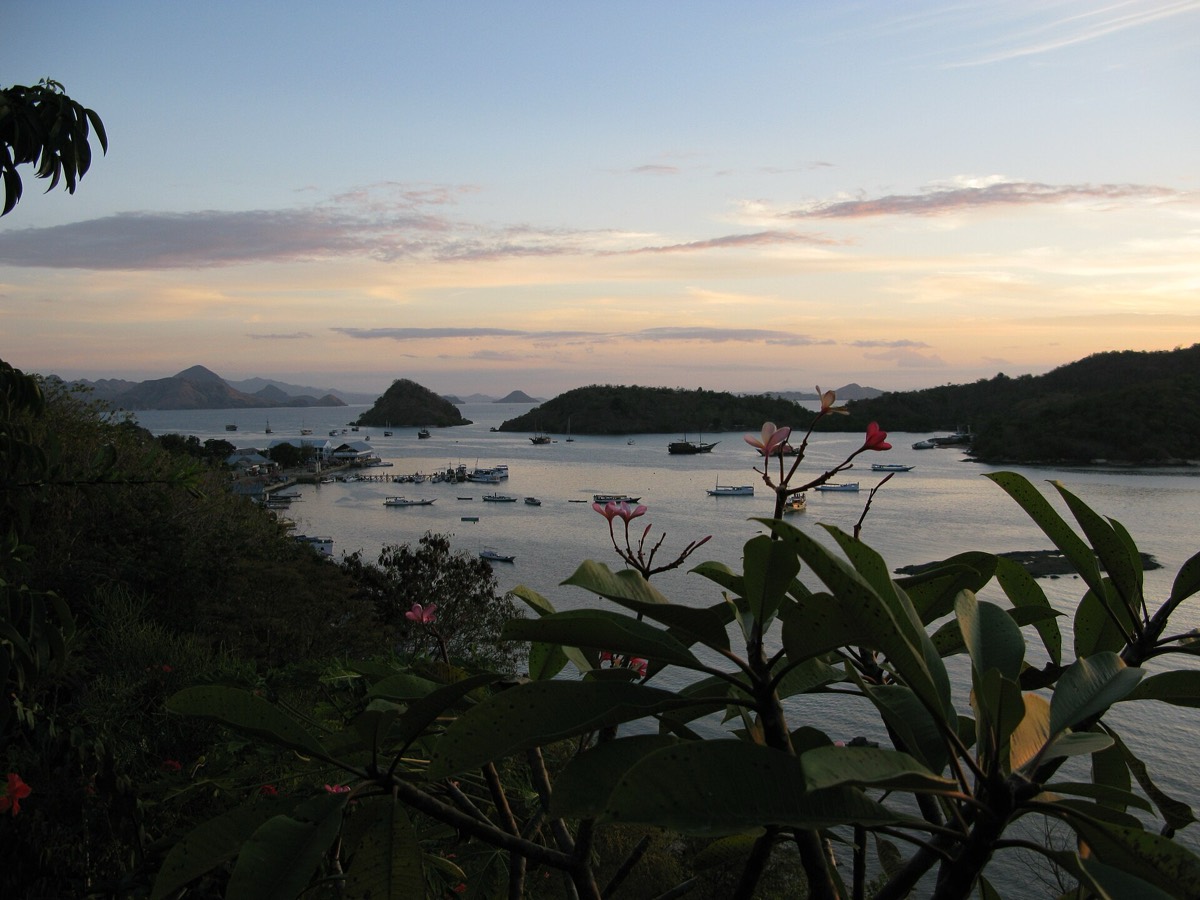
In the afternoon, climb or ride to one of the hills behind town. Puncak Waringin, a short ride from the centre, looks straight down on the harbour and the islands beyond, and has become a small hub for local crafts and woven ikat. Bukit Sylvia, a little further south, gives a wider, wilder view. Either way, the sunset over the islands is the reason many people fall for this place.
The story
The name explains a lot. Labuan means anchorage or harbour in Malay, and Bajo refers to the Bajau, the sea people who have sailed and fished across eastern Indonesia for centuries, often living in stilt houses over the water. For a long time the settlement here was a quiet mix of Bajau, Bugis from Sulawesi, Bimanese from Sumbawa and Manggarai people from the Flores highlands, with fishing boats and a weekly rhythm set by the ferry.
For centuries western Flores looked towards the sultanate of Bima on Sumbawa, which claimed tribute along this coast. Inland, the Manggarai highlands had their own clans and customs. Portuguese and later Dutch Catholic missionaries worked mostly inland, which is why the mountain towns are overwhelmingly Catholic while the harbour communities on the coast are largely Muslim.
Change came fast in the 2010s. The airport grew, the government named Labuan Bajo one of its priority tourism destinations, and hotels, cafés and dive shops spread along the main road. Older residents will tell you that the hill behind the harbour was once just scrub and goats. The scale of the building is surprising, but the harbour at dawn still looks much as it must have done fifty years ago.

Getting there
Komodo Airport is a few minutes’ drive from the harbour, with direct flights from Bali and Jakarta. Inside the centre you can walk along the main street and waterfront, though pavements come and go and the hills are steep.
For the viewpoints, take an ojek or ask your guesthouse to call a car. Ride-hailing apps work in town, with fewer drivers than in Bali; agree on waiting time if you want a ride back after dark.
A suggested plan
- DawnWalk to the fish landing and harbour while boats unload, then coffee from a street stall.
- MorningStroll the new waterfront promenade and look at the phinisi boats at anchor.
- MiddayRest out of the sun; book boat trips for the coming days and compare offers.
- Late afternoonRide up to Puncak Waringin and browse the ikat weaving on display.
- SunsetBukit Sylvia or another hilltop for the light over the islands.
- EveningDown to the waterfront for grilled fish and a slow walk back.
Where to stay
Most visitors stay along the main road and the slopes above the harbour, close to boat departures and restaurants. Hillside guesthouses have better views and breezes but mean steep walks; the strip south of town is quieter and closer to beaches but needs transport.
Good to know
- Walk early or late; the midday heat on the main road is fierce in the dry season.
- Bring small notes for ojek rides, viewpoint fees and street food.
- Compare several agencies before booking a boat; prices for the same trip can vary a lot.
- Carry a reusable bottle; many cafés and guesthouses offer refills.
- Traffic on the narrow main road is heavy and pavements are patchy, especially after dark.
- Some hilltop viewpoints are on private land and charge a small fee; pay without arguing, as it usually supports the family who keeps the path open.