Kalong Island: flying foxes at dusk
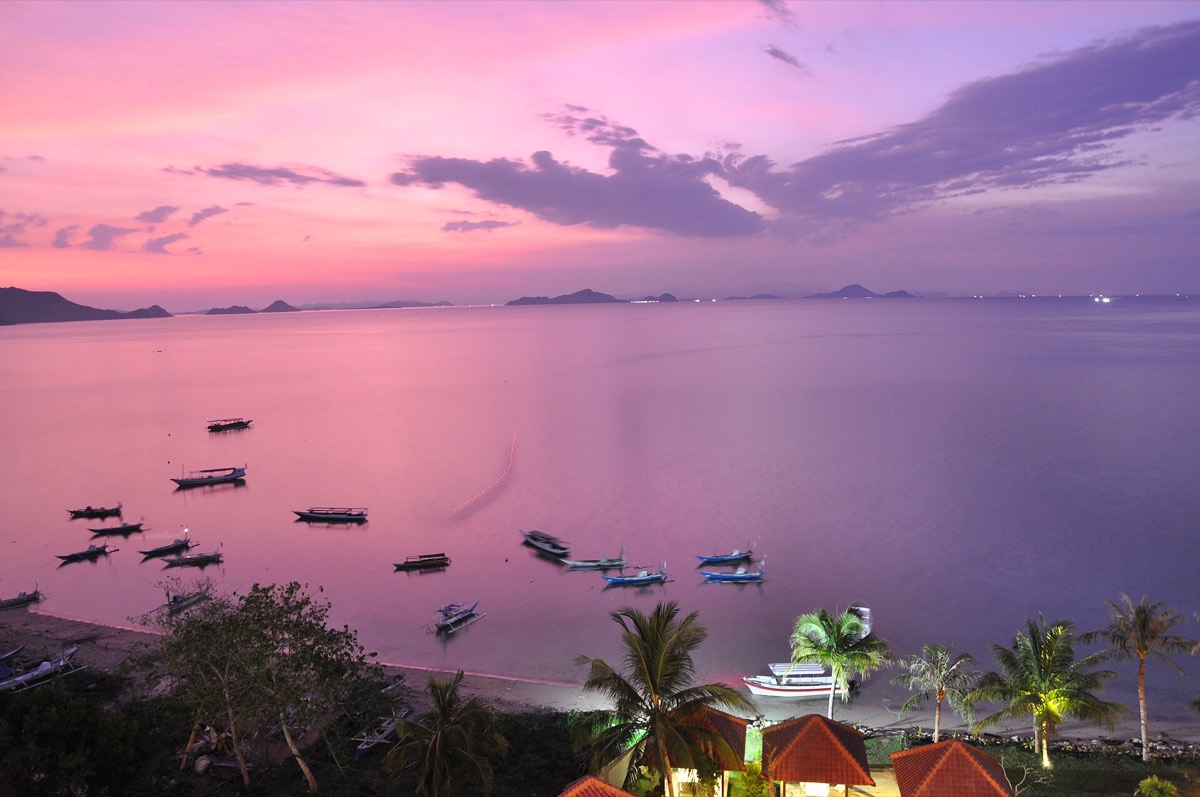
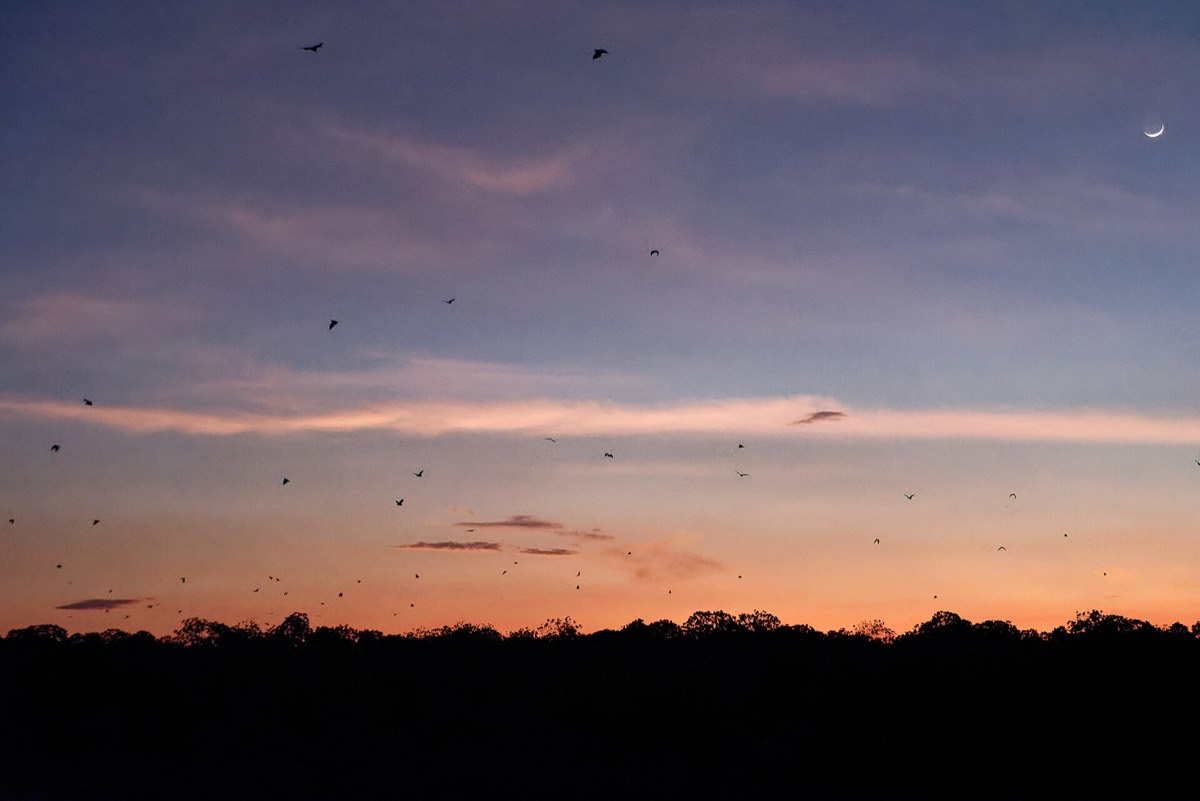
As the sun goes down, thousands of fruit bats rise out of a mangrove island and stream across a red sky towards Flores, one of the strangest spectacles in the park.

- Area
- Komodo National Park
- Start from
- Labuan Bajo
- Distance
- about 25 km by boat
- Time needed
- evening (often the end of a boat day)
- Best season
- All year; calmest seas April – November
- Difficulty
- Easy
- Transport
- Wooden boat from Labuan Bajo or as part of a liveaboard
- Tickets & rules
- Usually covered by national park fees; check with your boat
Why go
This is the one I tell people not to skip. Your boat drops anchor off a small mangrove island as the light fades. At first nothing happens. Then a few dark shapes lift out of the trees, then dozens, then a slow river of them flowing out over the water, wings beating heavily, silhouetted against an orange and pink sky. It goes on for twenty or thirty minutes.
These are flying foxes, large fruit bats with a wingspan of around a metre. They spend the day hanging in the mangroves on Kalong, which simply means fruit bat in Indonesian, and fly every evening to feed on fruit and flowers in the forests of the bigger islands and Flores, returning before dawn.
It is a quiet route: you just sit on the deck with a drink and watch. Many overnight boats anchor nearby, and later, if there is no moon, you may see bioluminescent plankton sparkling in the water when you dip your hand or a fish passes.
The story
Flying foxes are important pollinators and seed dispersers. A single colony can carry seeds for kilometres overnight, which helps forests regenerate on islands where there are few other large animals to do the job. Without them, many trees on the dry islands of Nusa Tenggara would struggle to spread.
Across eastern Indonesia, flying foxes are also hunted for food, and colonies outside protected areas have declined. In Komodo National Park the roost is protected, which is one reason it remains so large.
Boat crews have a small ritual: they usually cut the engine and switch off the lights as the bats begin to fly, so everyone can hear the soft rush of wings. Ask your captain to do the same if he forgets.

Getting there
Kalong is a standard stop on overnight wooden boat trips and on some sunset cruises from Labuan Bajo. Speedboat day trips usually return too early to see it.
You don’t land on the island; the boat anchors offshore and you watch from the deck.
A suggested plan
- Late afternoonLast snorkel of the day, then move to Kalong.
- SunsetAnchor offshore and wait on the deck.
- DuskWatch the bats stream out for twenty minutes or so.
- NightDinner on board; look for bioluminescence and stars.
Where to stay
Sleep on the boat if you are on an overnight trip; otherwise the return to Labuan Bajo takes one to two hours after dark.
Good to know
- Bring insect repellent; mosquitoes come out from the mangroves at dusk.
- Use a fast shutter speed or simply watch; bats are hard to photograph in low light.
- Ask your captain to cut the engine and lights as the bats leave.
- Boats should not get too close to the mangroves; noise and lights disturb the colony.
- Night crossings back to Labuan Bajo can be rough; check the boat has life jackets and lights.