Manta Point and Taka Makassar
In a fast, shallow channel in the middle of the park, reef manta rays glide over a rubble bottom, and a short ride away a tiny sandbar rises from turquoise water.

- Area
- Islands & reefs
- Start from
- Labuan Bajo
- Distance
- about 30 km by boat
- Time needed
- half a day to 1 day
- Best season
- All year; often best December – March, but varies
- Difficulty
- Moderate
- Transport
- Speedboat, wooden boat or dive boat
- Tickets & rules
- National park fees; diving and snorkelling fees may apply
Why go
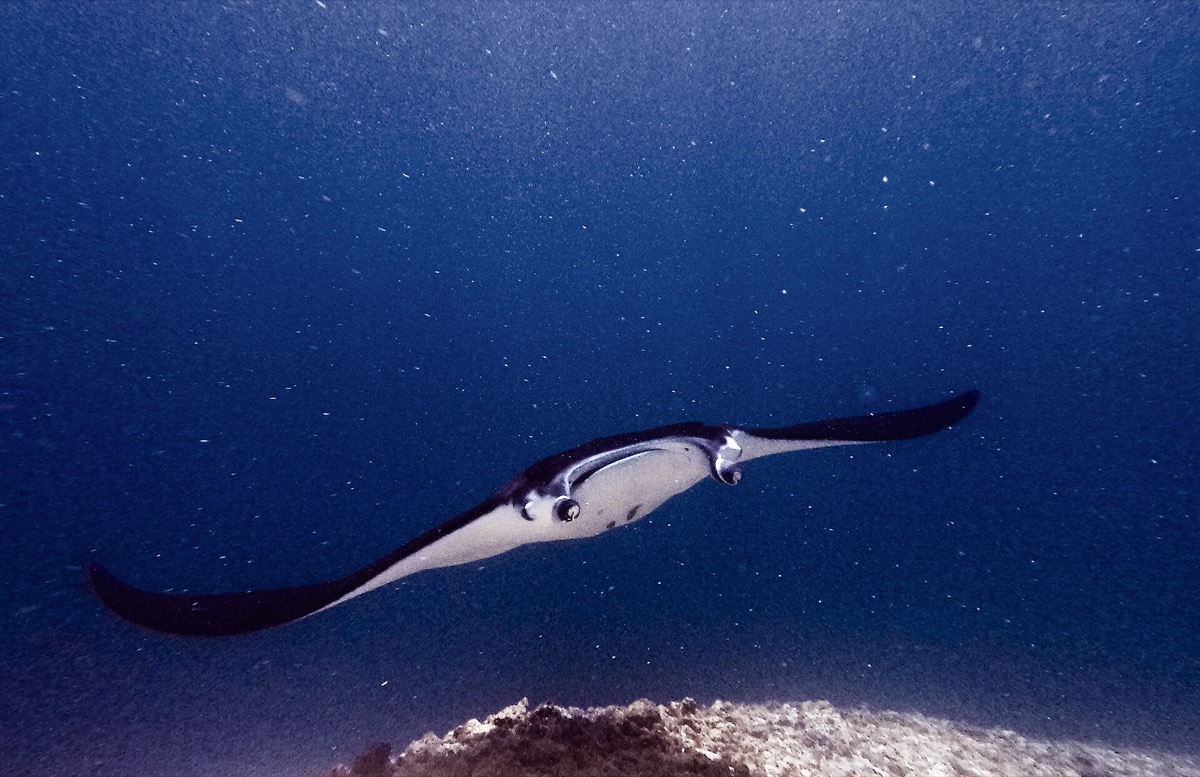
Manta Point, known locally as Karang Makassar, is a long shallow reef in the channel between Komodo and the smaller islands to its east. Strong tidal currents push plankton through it, and reef manta rays come to feed and visit cleaning stations, where small wrasse pick parasites off their skin. On a good day you can float above five, ten or more of them.
It is a drift snorkel: the boat drops you upstream, you lie still on the surface and let the current carry you along, and the boat collects you at the other end. Mantas pass beneath you with a few slow wing beats, mouths open, some of them three or four metres across. The bottom is mostly rubble and sand, so the colour comes from the animals themselves.
Nearby, Taka Makassar is a crescent of white sand that appears at lower tides in the middle of a turquoise lagoon. Many boats combine the two, and swimming from a sandbar in the middle of the sea is a good way to dry off after the current.
The story
The name Makassar, a city in South Sulawesi, recalls the Bugis and Makassarese sailors who traded and fished through these waters for centuries. Their boats came south with the monsoon winds, and many of their descendants settled on the coasts of Flores and the islands of the park.
Reef mantas are long-lived and slow to reproduce; a female may have a single pup every two to several years. Researchers and dive operators in Komodo have built up photo-identification catalogues of individual mantas, recognised by the unique spot patterns on their bellies, and some animals have been seen here again and again over many years.
Indonesia declared all of its waters a manta sanctuary in 2014, banning fishing and trade of mantas, after studies showed that a live manta is worth far more to local economies through tourism than a dead one. Komodo is one of the places where that argument is most obvious.
Getting there
Manta Point is included in many speedboat day trips and liveaboards. Divers can join day trips from the many dive centres in Labuan Bajo.
Sightings depend on tide and season; good boat crews time the drift for the right part of the tide.
A suggested plan
- MorningLeave Labuan Bajo; the ride to Manta Point is about an hour by speedboat.
- Late morningTwo or three drift snorkels along the channel.
- MiddayMove to Taka Makassar for a swim and a walk on the sandbar.
- AfternoonContinue to Siaba or another sheltered reef to look for turtles, then return.
Where to stay
Labuan Bajo is the base; liveaboards visit Manta Point several times in a trip if conditions are good.
Good to know
- Stay horizontal and calm on the surface; mantas come closer when you don’t chase them.
- Fins make a big difference in the current.
- A long-sleeved rash guard protects from sun and the occasional jellyfish.
- Currents here are strong and can change quickly; snorkel only with a boat watching and stay with your group.
- Never touch the mantas; it removes the protective mucus on their skin.
- Too many boats crowd the site at peak hours; ask your crew to keep a respectful distance.