Three days on a phinisi: a liveaboard through the park
Sleep on deck under a sky full of stars, wake at anchor beside a dragon island, and let the boat carry you between the park’s best walks, reefs and sunsets.

- Area
- Islands & reefs
- Start from
- Labuan Bajo
- Distance
- roughly 150–200 km of sailing in total
- Time needed
- 2–4 days
- Best season
- April – November; calmest seas usually May – September
- Difficulty
- Easy to Moderate
- Transport
- Wooden phinisi schooner or smaller motorboat
- Tickets & rules
- National park fees, usually paid per day; check what your trip includes
Why go
A liveaboard is the slow way to see Komodo, and in my view the best. Day trips race between sights and spend hours on the water; a boat that stays out for two or three nights lets you arrive at Padar before sunrise, be first on Komodo’s trails, snorkel when the tides are right and watch the bats leave Kalong with a drink in hand.
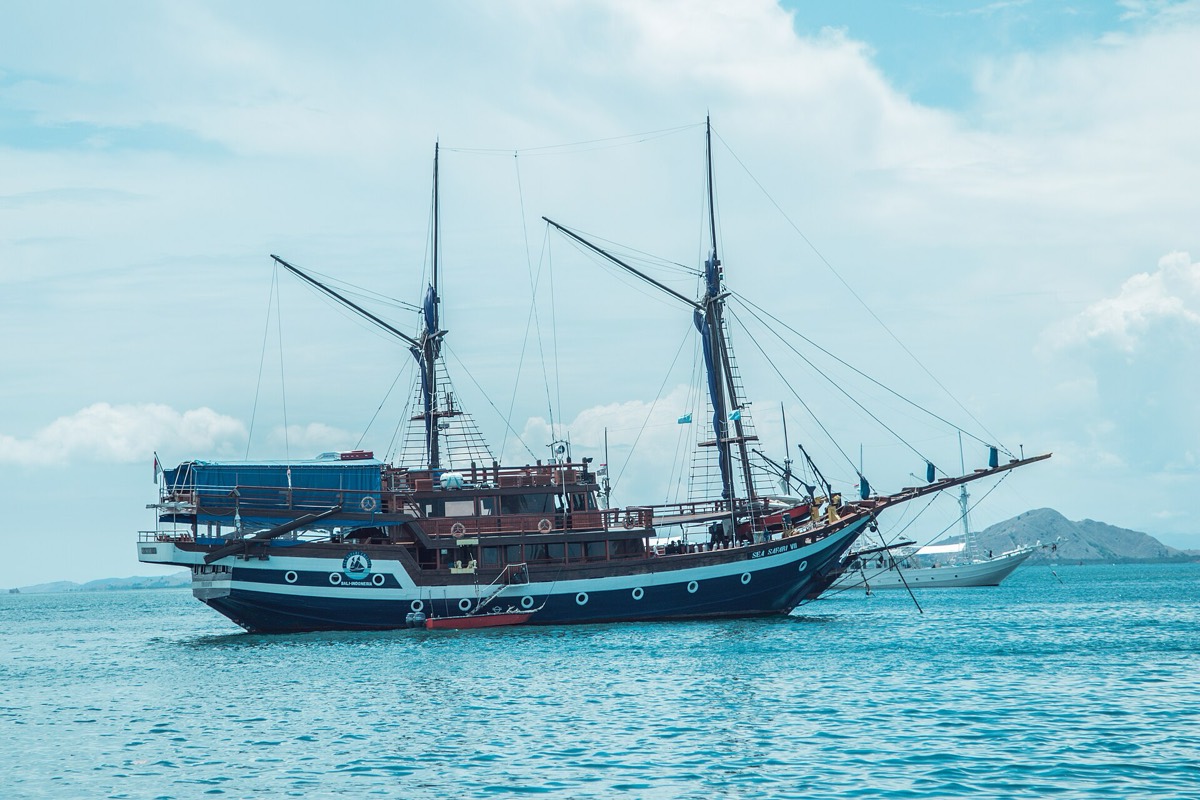
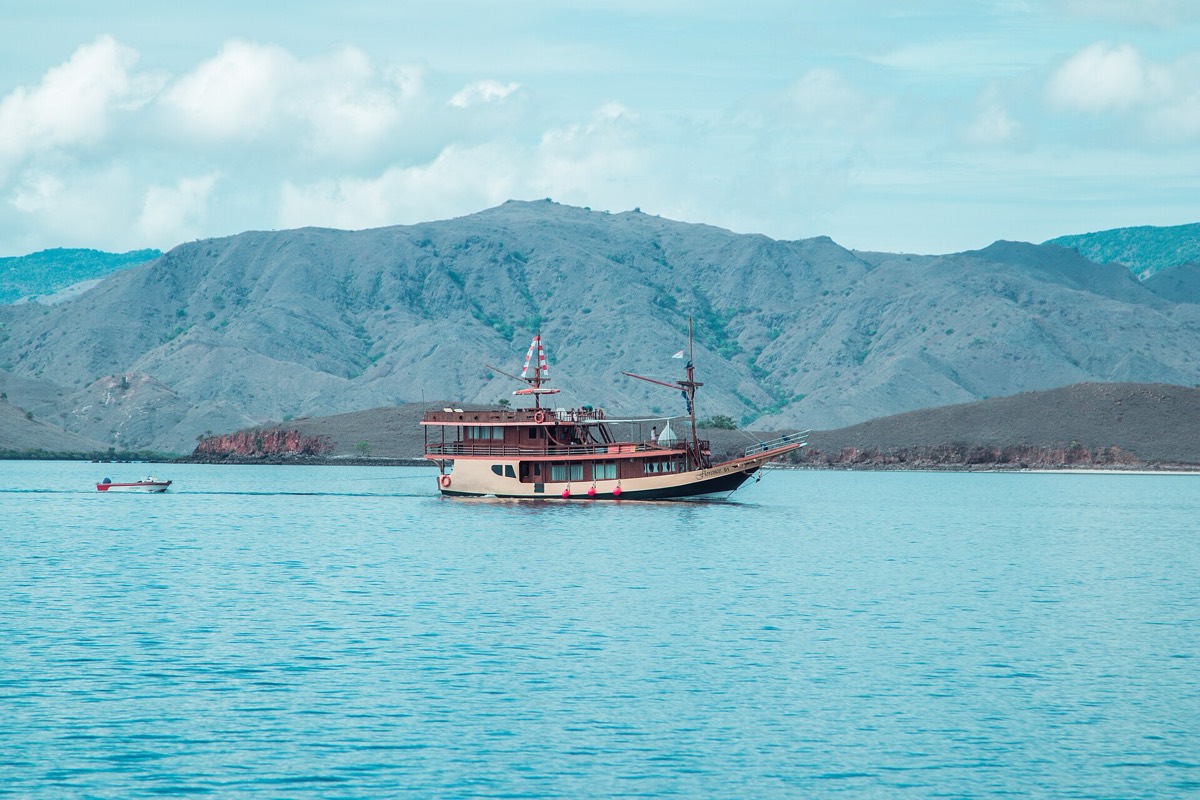
The boats range widely. Simple local boats have a shared mattress deck and a basic bathroom; mid-range phinisi schooners have small cabins, a dining area and a top deck for lying in the sun; at the top end there are polished teak yachts with air-conditioned suites. Most include all meals, cooked by a crew member in a tiny galley, usually rice, grilled fish, vegetables, tempeh and fruit, and endless sweet tea.
A typical three-day loop includes Kelor, Rinca, Kalong at sunset, Padar at dawn, Pink Beach, Komodo, Manta Point, Taka Makassar and one or two turtle-rich reefs such as Siaba Besar. Longer trips go further south to the colder, richer waters of southern Rinca and Nusa Kode, mainly for divers.
The story
The phinisi is the traditional two-masted sailing ship of South Sulawesi. Built by hand from ironwood and teak by Konjo and Bugis shipwrights, especially in the village of Tana Beru in Bulukumba, these schooners carried timber, spices and goods across the archipelago for generations. In 2017 the art of phinisi boatbuilding was added to UNESCO’s list of Intangible Cultural Heritage.
Boatbuilders still work largely without written plans, laying the keel and building up the hull plank by plank from inherited knowledge. Ceremonies mark key moments: the laying of the keel, the cutting of the navel point at the bow, and the launching, when the whole village helps pull the boat into the sea.
In Labuan Bajo, many old cargo phinisi have been converted for tourism, and new ones are built specifically for it. Their crews are often from Sulawesi, Sumbawa or Flores and spend months at sea, sending money home. Ask them about their villages and families on a long evening at anchor, and you will learn more than any guidebook can tell you.

Getting there
Liveaboards depart from Labuan Bajo’s harbour. Book through an established agency or directly with a boat, ideally after reading recent reviews and, if possible, seeing the vessel.
Check exactly what is included: park fees, ranger fees, snorkel gear, drinking water and transfers. Prices vary widely by season and by cabin type.
A suggested plan
- Day 1 morningBoard in Labuan Bajo; snorkel at Kelor and visit Rinca.
- Day 1 eveningAnchor near Kalong for the flying foxes; dinner and stars on deck.
- Day 2 dawnClimb Padar for sunrise, then swim at Pink Beach.
- Day 2 middayTrek on Komodo, then a snorkel at a nearby reef.
- Day 2 eveningAnchor in a quiet bay; look for bioluminescence.
- Day 3Manta Point and Taka Makassar, then return to Labuan Bajo by afternoon.
Where to stay
You sleep on board. Spend a night in Labuan Bajo before and after so that a delayed flight doesn’t cost you the trip.
Good to know
- Pack light, in a soft bag; storage space on boats is tiny.
- Bring seasickness tablets, a headtorch, a light jacket for the night breeze and a dry bag.
- Ask how much drinking water is carried and whether you can refill your bottle.
- Tip the crew at the end if you are happy; they work long hours.
- Check for life jackets, a working radio and fire extinguishers; there have been boat fires and sinkings in the park.
- Avoid boats that sail in rough weather despite warnings; a reputable captain will change the route.
- Night crossings can be bumpy; secure your belongings and stay off the bow.