Padar: sunrise over three bays
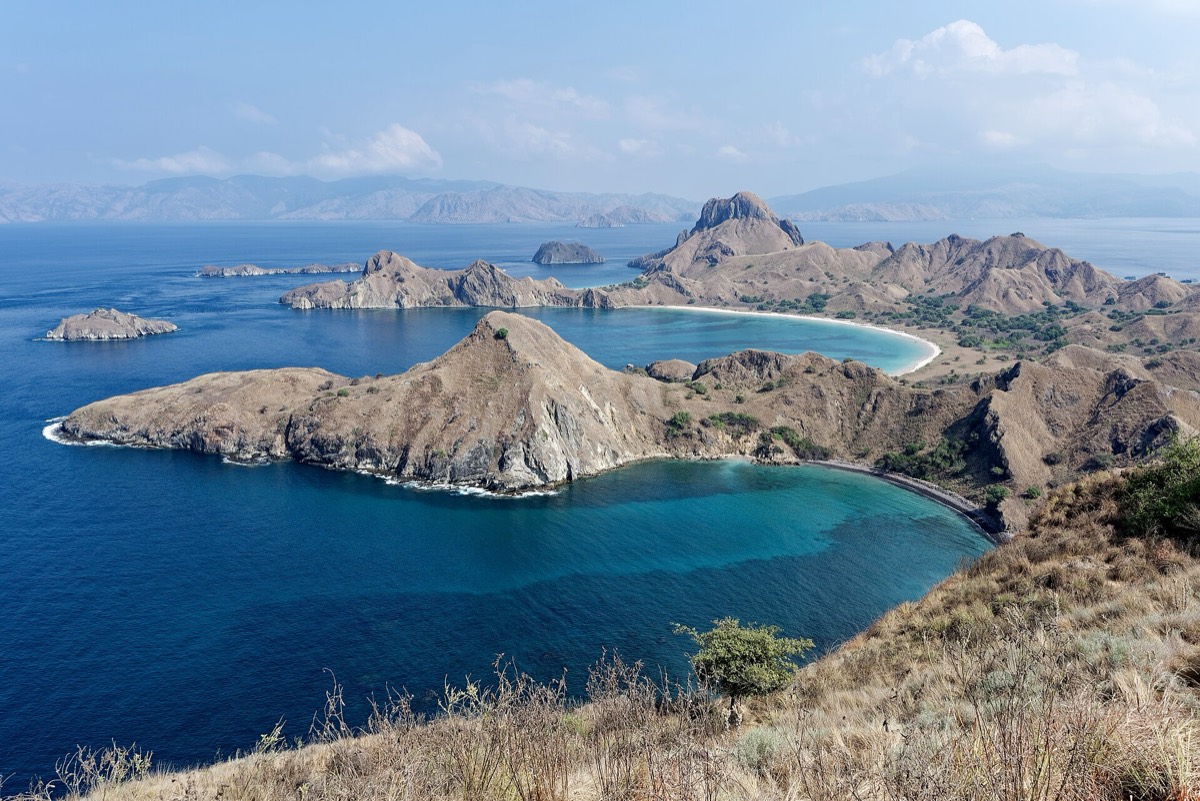
A steep climb in the half-dark brings you to the most famous view in eastern Indonesia: three curved bays, one white, one pink and one black, wrapped around a ridge of grass.

- Area
- Komodo National Park
- Start from
- Labuan Bajo
- Distance
- about 40 km by boat; a 30–45 minute climb
- Time needed
- 1 day (or the first morning of a boat trip)
- Best season
- April – November; clearest skies June – September
- Difficulty
- Moderate
- Transport
- Speedboat or overnight wooden boat, then a steep path on foot
- Tickets & rules
- National park fees; check current rules and any visitor limits
Why go
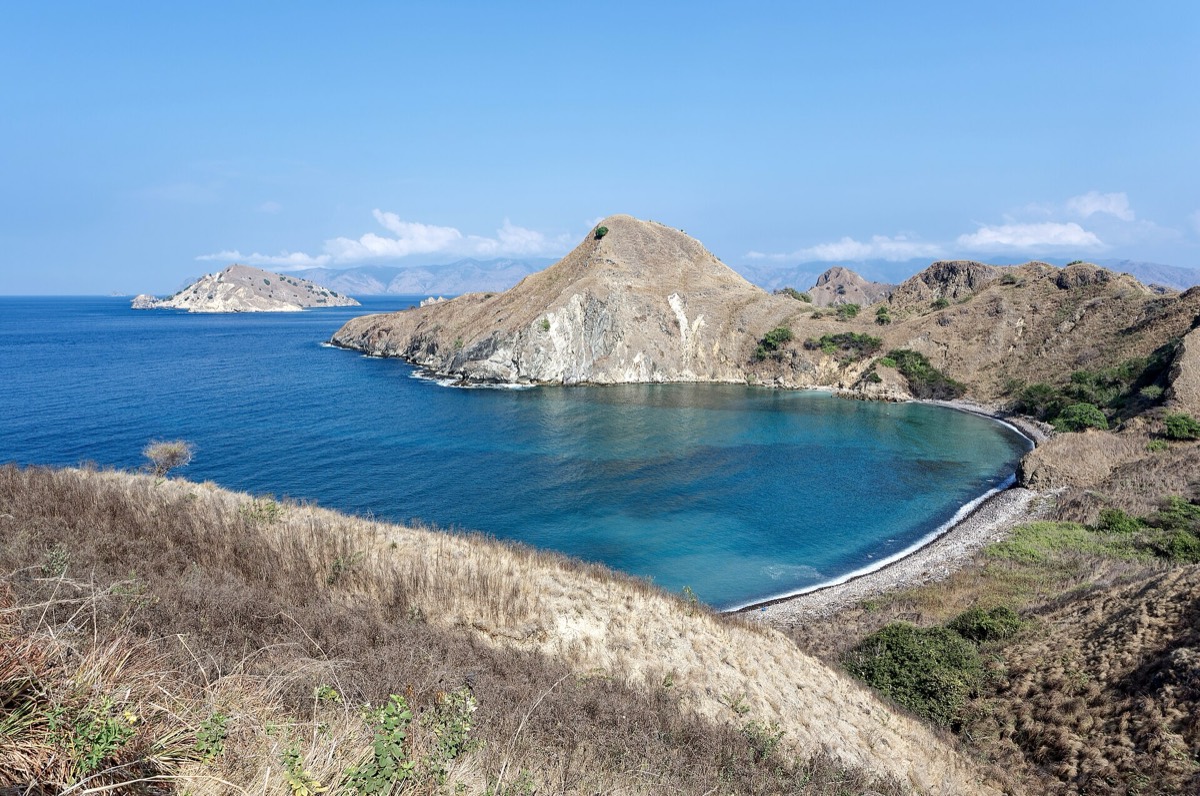
Padar is the picture on every poster of Komodo, and it really does look like that. From the top of the ridge, the island narrows into a twisting spine of grass and rock, with bays scooped out on both sides. On a clear morning the sand in the coves shows three colours, white, faintly pink and grey-black, and the sea around them is every shade from turquoise to ink.
The climb is short but steep, on a path of steps and loose gravel that rises straight up from the landing bay. Most people take thirty to forty-five minutes to reach the main viewpoint, with plenty of stops to breathe and look back. Going up in the dark with a headtorch and watching the sky lighten over Flores is one of those mornings you remember.
The view changes with the light. At dawn the hills are soft and blue; an hour later they turn gold and then brown. In the wet season the grass goes green, which many photographers prefer, though the sea is choppier and the sky less reliable.
The story
Padar is the third-largest island in the park, between Komodo and Rinca, and it is uninhabited. It once had dragons too, but they disappeared, most likely after their prey, the deer and wild pigs, were hunted out decades ago. Without prey, the dragons couldn’t survive, which is a quiet lesson in how fragile even a top predator can be.
The island’s shape comes from volcanic rock lifted and eroded over a very long time, and from the sea biting into its softer sides. The coloured sands are a mix of black volcanic grains, white coral sand and, on the pink beach, fragments of red organisms from the reef.
Padar became famous only quite recently, in the age of photo-sharing. A decade or so ago, few boats stopped here; now it is on almost every itinerary, and the park has built steps, rails and a viewing platform to cope. Rules about where you can walk and how many people can climb at once are adjusted from time to time to protect the slopes from erosion.

Getting there
For sunrise you need to be at the landing bay before dawn. That means either sleeping on a boat anchored nearby or taking a very early speedboat from Labuan Bajo, leaving around 4am.
Day trips that reach Padar later in the morning still get a beautiful view, but the climb is hot and busier.
A suggested plan
- Before dawnLand at Padar and start climbing with a headtorch.
- SunriseWatch the light from the main viewpoint, then walk a little further along the ridge.
- MorningClimb down before the heat and the day boats; breakfast on board.
- Late morningSwim at Pink Beach nearby.
- AfternoonContinue to Komodo or a snorkel site.
Where to stay
An overnight boat trip is the most comfortable way to see Padar at sunrise; boats anchor in a sheltered bay nearby. Otherwise sleep in Labuan Bajo and accept a very early start.
Good to know
- Wear shoes with grip; the gravel on the descent is slippery.
- Bring at least a litre of water and something to eat for after the climb.
- Go a little beyond the first crowded platform for a quieter view.
- Don’t step off the marked paths; the slopes are eroding.
- There is no shade on the ridge; by 9am the sun is harsh.
- Drones may need permission in the national park; check the rules before flying.