Pepper farms in the hills behind Kep
A ride through red-earth hills to farms where pepper vines climb tall posts in neat rows, and you taste berries straight from the plant.

- Area
- Countryside & caves
- Start from
- Kampot or Kep
- Distance
- about 20–35 km each way
- Time needed
- half a day to 1 day
- Best season
- February – May for harvest; all year for visits
- Difficulty
- Easy
- Transport
- Scooter, tuk-tuk or car with driver
- Tickets & rules
- Usually free farm tours; tasting and purchases optional
Why go
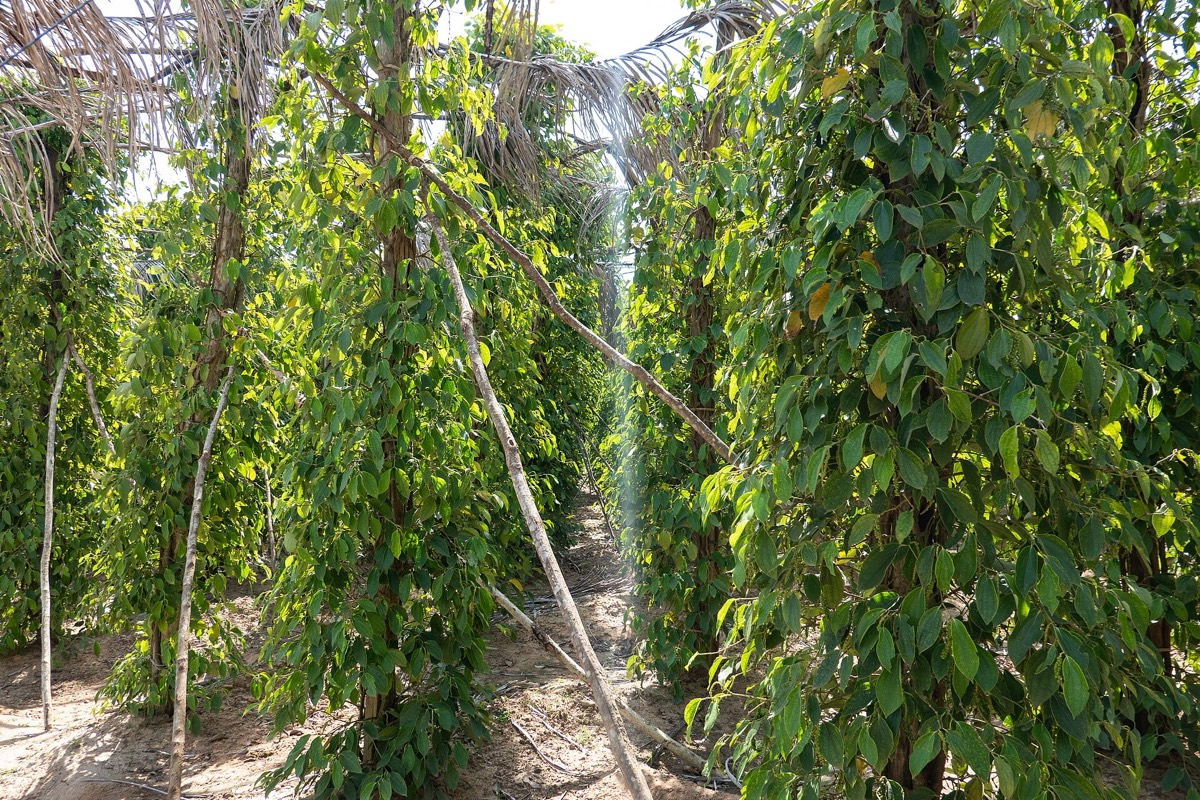
You cannot leave Kampot without understanding its pepper, and the best way is to visit a farm. In the low hills between Kampot, Kep and the Vietnamese border, the soil is rich and reddish, and pepper vines climb wooden posts in tidy, shaded rows like a vineyard in miniature.
Most farms that welcome visitors offer short tours explaining how pepper is grown, picked, sorted and dried, followed by a tasting of the different kinds. Picking a fresh green berry off the vine and biting into it is a small revelation: bright, almost citrusy, and then the heat arrives.
The ride itself is lovely, through villages, cashew and durian orchards and rice fields, with limestone hills on the horizon.
The story
Pepper has been grown in this region since at least the thirteenth century, according to the Chinese envoy Zhou Daguan’s account of Angkor, though large-scale cultivation came with Chinese planters and then French colonists. In the early twentieth century Kampot pepper was prized in France, and production reached thousands of tonnes a year.
The Khmer Rouge period nearly destroyed it. Farms were abandoned or turned over to rice, and the knowledge survived in only a handful of families. Revival started in the 1990s and 2000s, when a few growers replanted and began to fight for recognition.
That effort led to Kampot pepper’s geographical indication in 2010 and EU protected status in 2016. Under the rules, pepper must be grown in specific areas of Kampot and Kep, using traditional varieties and methods, including organic fertilisers, and it must be hand-picked and sorted.
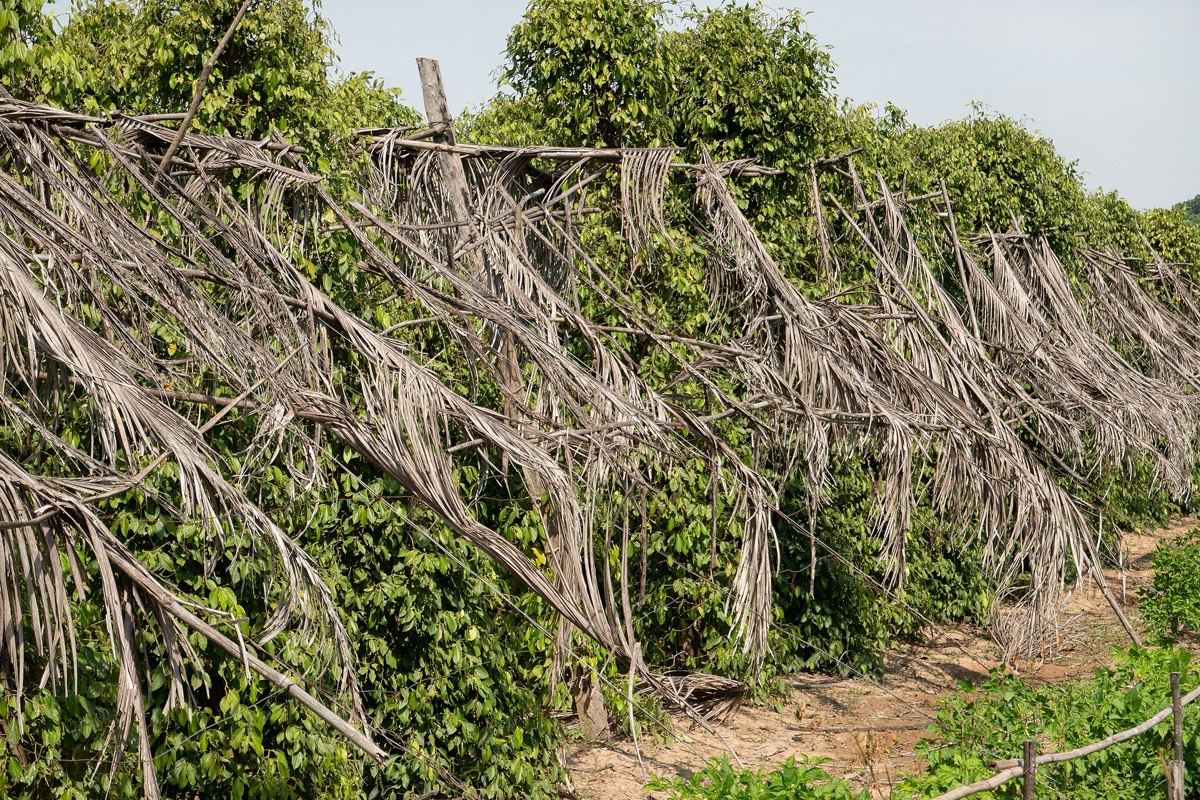
Today pepper is again one of Cambodia’s most famous exports, and visiting a farm you can see the care that goes into it: young vines shaded with palm fronds, picked berries spread on mats to dry, and women sorting them by hand at long tables.

Getting there
Most visitor-friendly pepper farms are in the countryside between Kep and the border area around Kampong Trach, roughly 30–50 minutes from Kampot by road. Tuk-tuk drivers in both towns offer half-day countryside tours that include a farm, often combined with the salt fields or caves.
Roads to some farms are unpaved red dirt, dusty in the dry season and slippery in the rains.
A suggested plan
- 8:00 amLeave Kampot or Kep; ride through villages and fields toward the farms.
- 9:00 amFarm tour: vines, drying mats and sorting tables.
- 10:00 amTasting of green, black, red and white pepper; buy directly from the farm.
- 11:00 amContinue to the Kampong Trach caves or Kep for lunch.
Where to stay
Kep is a little closer to most farms, and its quiet guesthouses in gardens suit this route well. Kampot works too, as a longer half-day trip.
Good to know
- Visit in the dry-season harvest months to see picking and drying.
- Buy at the farm; prices are fair and you know the origin.
- Bring cash in small notes; card payment is not always possible.
- Ask about red pepper, which is rarer and loved by chefs.
- Don’t pick berries or touch vines without permission; they are delicate.
- Red dirt roads are slippery after rain; ride slowly.
- The sun in the open hills is strong; bring water and a hat.