Oslob’s whale sharks, honestly, and the southern tip
The most famous animal encounter in Cebu is also its most debated: what happens at Oslob, why I skipped the feeding, and what to do in the south instead.

- Area
- South coast
- Start from
- Oslob, south Cebu
- Distance
- about 120 km from Cebu City
- Time needed
- 1–2 days
- Best season
- All year; seas calmest roughly March – June
- Difficulty
- Easy
- Transport
- Bus or car from Cebu City; tricycle locally
- Tickets & rules
- Fees for the whale shark area, Tumalog Falls and Sumilon; strict rules in the water
Why go
Every morning in Tan-awan, a barangay of Oslob, fishermen paddle small boats a short way offshore and hand-feed krill to whale sharks, the largest fish in the world. Dozens of boats full of snorkellers float nearby, and the sharks, which can be five to ten metres long, swim almost vertically at the surface with mouths open. For many people it’s a dream sight, and I understand why.
I went to Oslob, watched from the shore and chose not to get in. This route is my honest attempt to explain the issue and offer alternatives, without lecturing anyone who has done it. The southern tip of Cebu is beautiful in its own right, and there’s plenty to fill a day or two without the feeding.
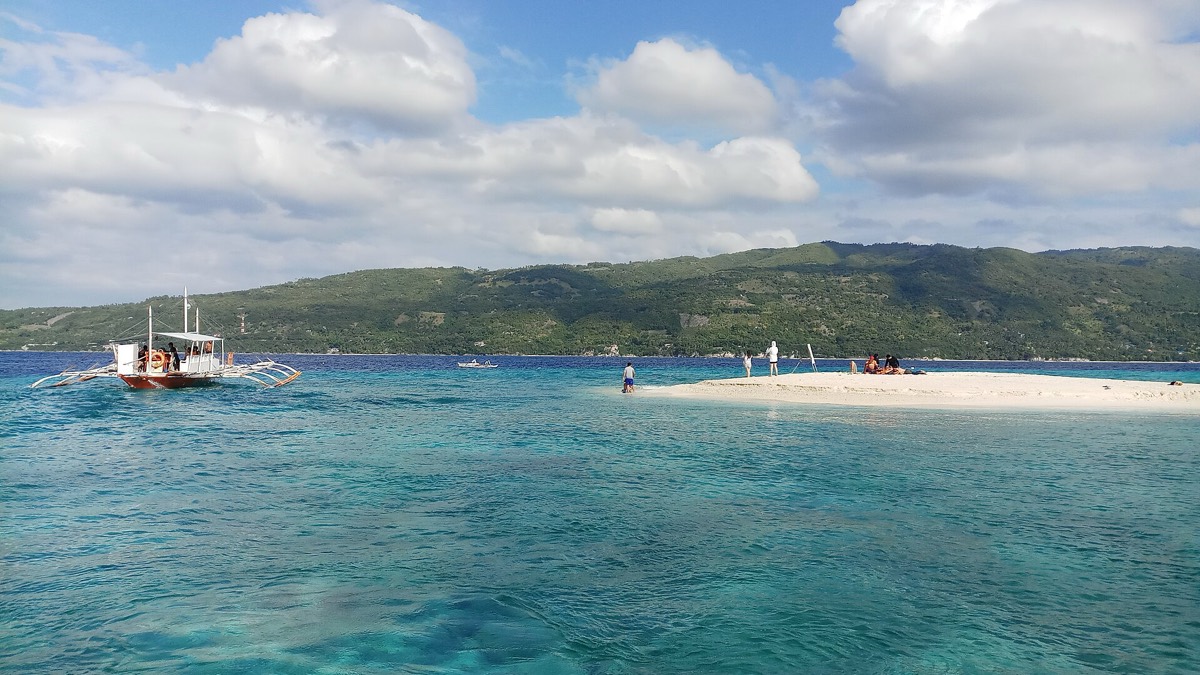
Tumalog Falls, a short ride inland, is a tall, delicate curtain of water spreading over mossy rock, almost like a veil. Sumilon Island, just offshore, has a shifting white sandbar and one of the oldest marine reserves in the country. And Oslob town has a coral-stone church and the roofless ruins of a Spanish-era barracks by the sea.
The story
Whale sharks have always passed through these waters, and fishermen once saw them as a nuisance that ate the small shrimp they caught. Around 2011, some fishermen began feeding them to keep them away from their nets, and visitors started coming to see. Within a few years, Oslob became one of the busiest whale shark sites in the world, drawing hundreds of thousands of people a year and transforming the local economy.
Researchers and conservation groups have raised concerns. Daily feeding changes the sharks’ natural behaviour: some individuals stay in the area for months instead of migrating, and they associate boats with food, which may put them at risk elsewhere. Many sharks at Oslob show scars from contact with boat hulls and propellers. Others argue that the money has given fishermen a strong reason to protect the animals rather than hunt them. Both things can be true.
Rules have been introduced: no touching, keep a few metres away, no flash photography, no sunscreen in the water, limited time per group and feeding only in the morning. Enforcement varies, and with so many people in the water at once, contact still happens.
If you want to see whale sharks in a more natural way, places like Donsol in Sorsogon, typically visited from around February to May, and Southern Leyte’s Sogod Bay, often in the cooler months, offer unfed encounters, where sightings are not guaranteed but the animals behave naturally. Nearer to Oslob, Sumilon’s reserve was one of the Philippines’ first, set up in the 1970s with Silliman University scientists, and showed how quickly fish return when protected.

Getting there
Buses from Cebu South Bus Terminal to Oslob via the east coast take about three to four hours; private cars a little less. Many people combine Oslob with Moalboal by crossing the island via Badian and Dalaguete.
Boats to Sumilon leave from the shore opposite the island; ask locally about fees and day access. Tumalog Falls is reached by habal-habal up a steep road, or by a short walk down from the road.
A suggested plan
- 7:00If you decide to see the whale sharks, go early and follow every rule; or simply watch from the shore.
- 9:00Habal-habal to Tumalog Falls; swim in the shallow pool.
- 11:00Boat to Sumilon Island; walk the sandbar and snorkel.
- 15:00Oslob town: the church and the cuartel ruins by the sea.
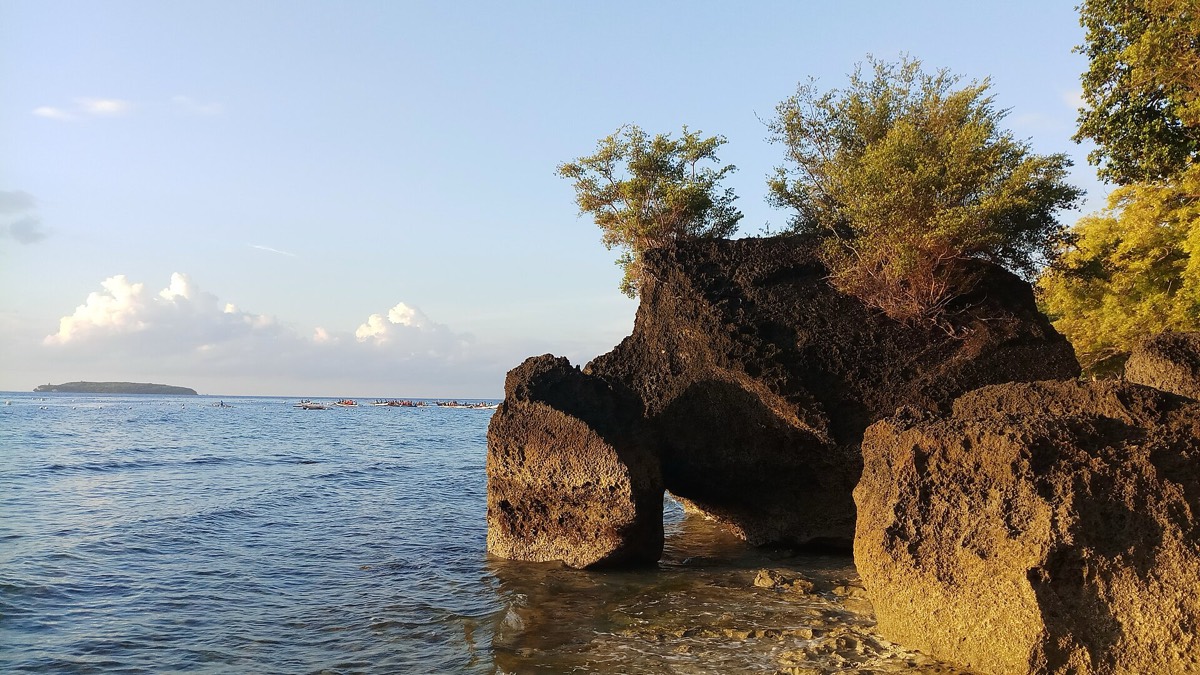
- EveningSunset over the strait, with Negros and Siquijor on the horizon.
Where to stay
Oslob has simple guesthouses and resorts along the coast. Staying overnight lets you avoid the long bus ride in one day and catch the quieter morning light.
Good to know
- If you join the whale shark activity, keep your distance, don’t touch, and don’t use flash.
- Skip sunscreen before entering the water; wear a rash guard instead.
- Sumilon’s sandbar changes with tide and season; ask before you go.
- Combine with the Boljoon and Argao churches on the drive back north.
- Never touch, ride or block a whale shark; fines apply and it harms the animals.
- Rocks at Tumalog are slippery; be careful under the falls.
- Afternoon seas can be rough; listen to the boatmen.