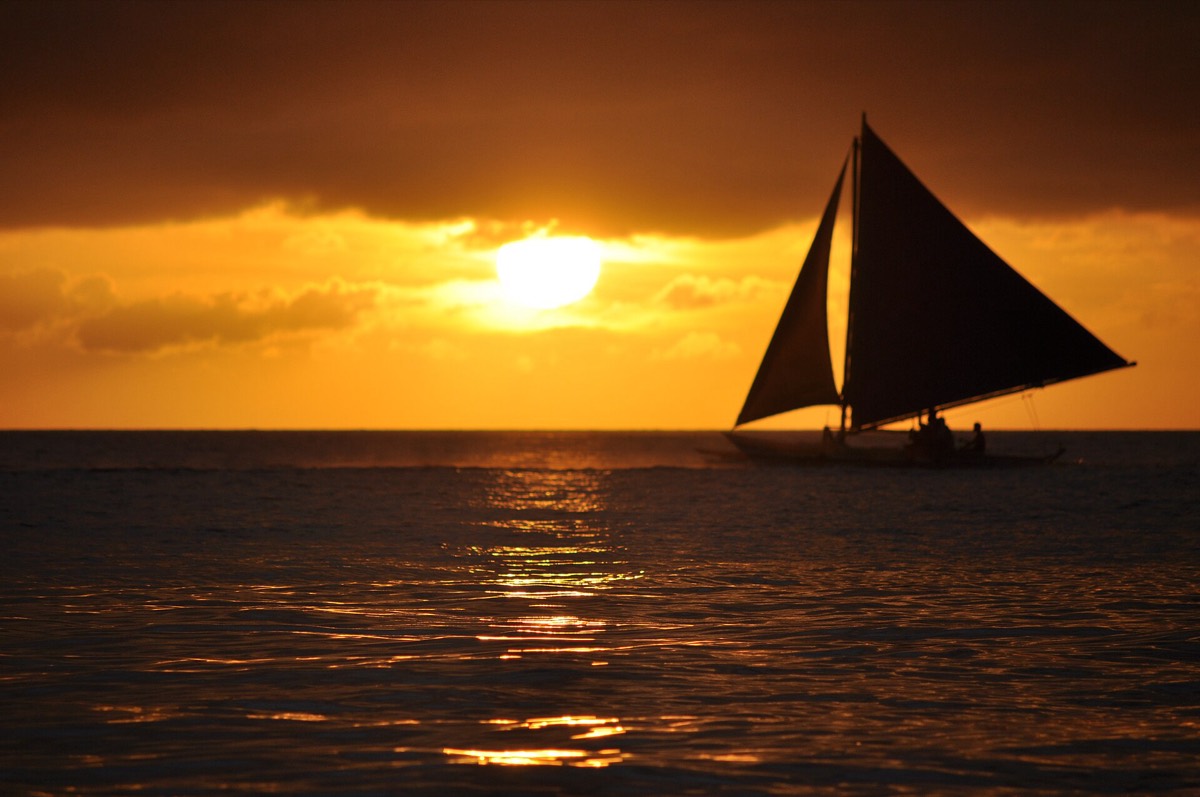
Sunset on a paraw sailboat
Sitting on the netting of a wooden double-outrigger as it skims across the bay at sunset, the island’s most beautiful hour seen from the water.

- Area
- White Beach & the stations
- Start from
- White Beach, any station
- Distance
- about 1 hour on the water off White Beach
- Time needed
- 1 evening
- Best season
- Best roughly November – May; limited in rough monsoon weather
- Difficulty
- Easy
- Transport
- Traditional paraw sailboat from the beach
- Tickets & rules
- Paid per boat or per person; agree the price and time before boarding
Why go
Every evening on Boracay, the whole of White Beach turns west. People stop walking, waiters pause, and a scatter of triangular sails slides across the orange water. Those sails belong to the paraw, the traditional Visayan double-outrigger sailboat, and riding one at sunset is the single thing I tell everyone not to skip.
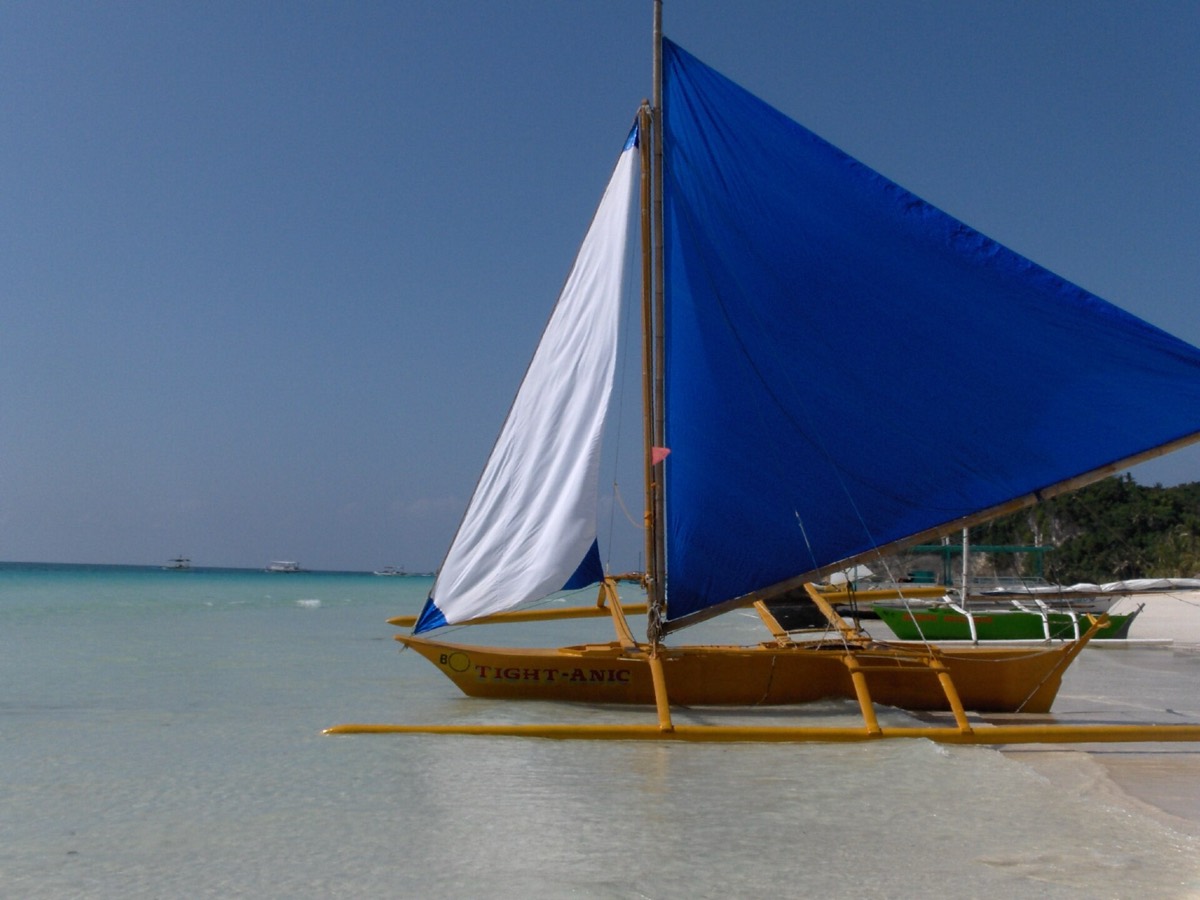
A paraw is narrow and light, with two long bamboo outriggers and nets strung between the hull and the floats. You sit or lie on those nets, a few centimetres above the sea, and when the wind fills the sail the boat suddenly leaps forward. Spray comes up through the mesh, the crew shift their weight along the outrigger, and the noise of the beach falls away behind you.
It is short, usually about an hour, and it is very simple. There is no music and no buffet, just wind, water and two or three sailors who have done this thousands of times. It is the closest you can get to how people once moved between these islands.
The story
The paraw has been sailing in the Visayas for centuries. Early Spanish chroniclers described fast outrigger sailboats in these waters, and the design was perfected for crossing the short, choppy straits between islands: light enough to be pulled up a beach, stable enough with its outriggers to carry people and cargo. For generations, fishermen and traders around Panay relied on boats like these.
Engines changed that, and in much of the Philippines the sailing paraw almost disappeared, replaced by motorised bangkas. Boracay is one of the places where it survived, partly because visitors loved it, and partly because the island holds a paraw regatta that keeps the craft and its sailors in practice. Racing paraws, with their bright sails and crews hanging off the outriggers, are a beautiful sight on a windy day.
The sailors are usually local men who learned from fathers or uncles. Ask them about the wind and you will get a short lesson: the amihan, the cool north-east monsoon of the dry months, brings the steady breezes that make the best sailing, while the habagat from the south-west can make White Beach too rough for the boats at all.
There is a quiet ritual to the end of the ride. As the sun touches the horizon the crew usually slow the boat and let it drift, so that for a minute or two there is nothing to do but watch the colour drain from the sky.

Getting there
Paraw operators set up along White Beach, especially around Station 1 and Station 2, from mid-afternoon. You can book through your hotel or simply walk along the sand and talk to the crews.
Boats usually launch from the beach itself: you wade in up to your knees and climb aboard, so wear something that can get wet and leave valuables behind.
A suggested plan
- 4:00 pmWalk along White Beach and compare paraw offers; agree price, duration and whether it is a shared or private boat.
- 5:00 pmChange into swimwear or quick-dry clothes and put your phone in a dry bag.
- 5:30 pmBoard as the light softens; settle on the nets near the middle of the boat.
- SunsetDrift as the sun sets behind the islands to the west.
- After darkBack on the sand for a late swim and dinner along the beach path.
Where to stay
Any of the three stations works. Station 1 has the widest beach for launching and the most open views west; Station 3 is a little calmer and often cheaper. Being able to walk back to your room in wet clothes is the main thing.
Good to know
- Sunset times shift through the year; ask what time to be ready rather than booking by the clock alone.
- Sit near the middle of the nets if you want to stay drier.
- A shared boat is cheaper; a private one lets you choose when to turn back.
- Bring a light layer; on the water after sunset the wind can feel cool.
- Agree the price clearly before boarding, and whether it is per person or per boat.
- Do not sail if the crew or the beach flags say the sea is too rough; trips are often cancelled during the habagat.
- Phones and cameras get wet on a paraw; use a dry bag or leave them behind.