White Beach from Station 1 to Station 3
A long, barefoot walk down one of the most famous beaches in Asia, from the quiet palms of Station 1 to the fishing-village end of Station 3.

- Area
- White Beach & the stations
- Start from
- Boracay, Station 1
- Distance
- about 4 km on foot along the sand
- Time needed
- half a day
- Best season
- All year; calmest water roughly November – May
- Difficulty
- Easy
- Transport
- On foot; e-trikes along the main road
- Tickets & rules
- None for the beach; Boracay’s environmental and terminal fees are paid on arrival
Why go
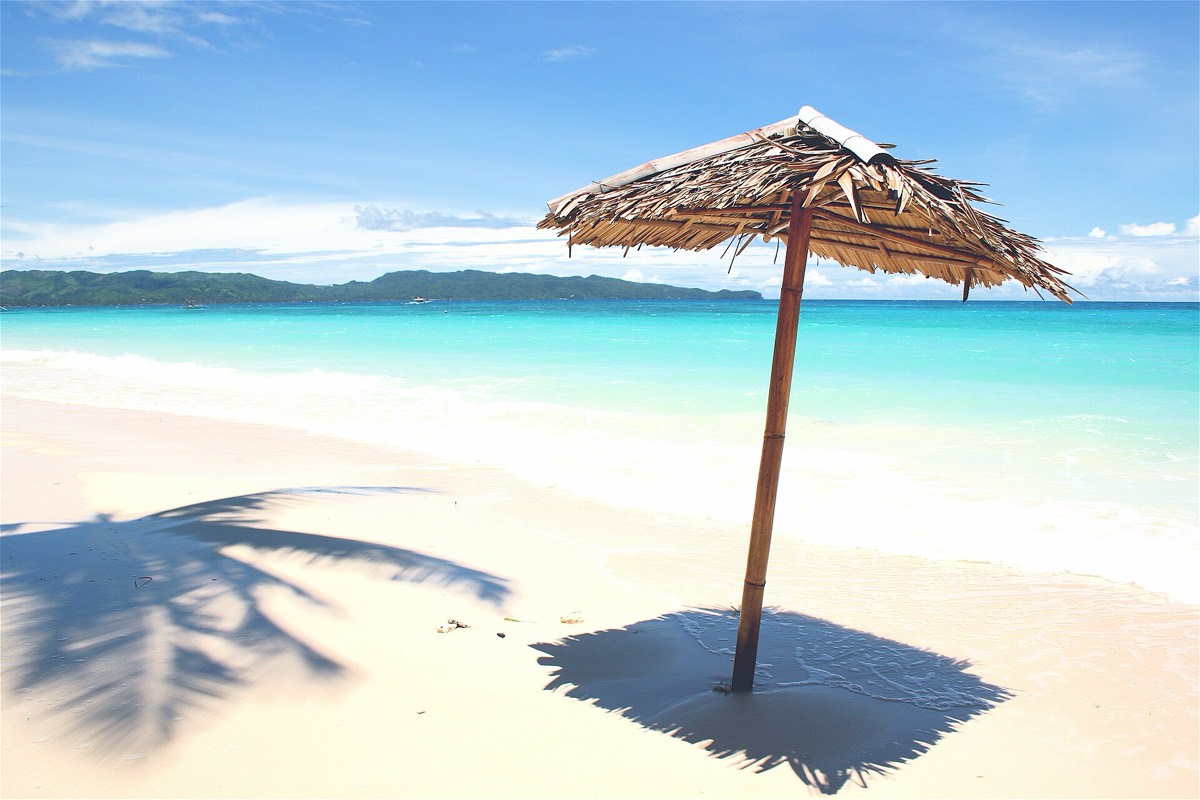
White Beach runs for roughly four kilometres along Boracay’s western shore, and the best way to understand it is simply to walk the whole thing, early, with your sandals in your hand. The sand is made largely of ground-down coral and shell, which is why it stays cool and fine underfoot even at noon, and why it looks almost blue-white in the low morning light. At seven in the morning the only people on it are sweepers, joggers and a few boatmen readying the sails.
The beach is divided into three ‘stations’, and each has its own mood. Station 1, in the north, is the widest and quietest stretch, backed by palms and the older, larger resorts. Station 2 is the busy middle, where the shopping lanes of D’Mall open onto the sand. Station 3, in the south, feels more local and more relaxed, with smaller guesthouses and boats pulled up near the shore.
Walking it end to end takes about an hour without stopping, but nobody does it without stopping. There is Willy’s Rock to wade out to, coffee to drink under a palm, swims to take in water that is often as clear as a pool, and the long, slow show of the island waking up.
The story
The three stations were originally the landing points where boats from the mainland dropped passengers before Boracay had proper ports. The names stuck long after the boats moved, and today they are used for everything from giving directions to pricing a tricycle ride. Ask anyone where they are staying and the answer will almost always start with a number.
Boracay’s first inhabitants were the Ati, a people who lived across Panay and the nearby islands long before Spanish ships arrived. One popular story says the island’s name comes from local words for white cotton or for the bright sand, though nobody can say for certain. Through the 1970s and 1980s, backpackers and travel writers began passing the word along, and the island grew from a few fishing families and coconut groves into a world-famous resort within a single generation.
That growth came at a price. In April 2018 the national government closed the whole island to tourists for six months for an environmental clean-up, after years of concern about sewage, crowding and buildings too close to the water. Drains were rebuilt, structures on the beach were removed and new rules were set: a setback zone from the shoreline, limits on beach furniture, and bans on smoking and drinking on the sand. The White Beach you walk today is largely the result of that pause.
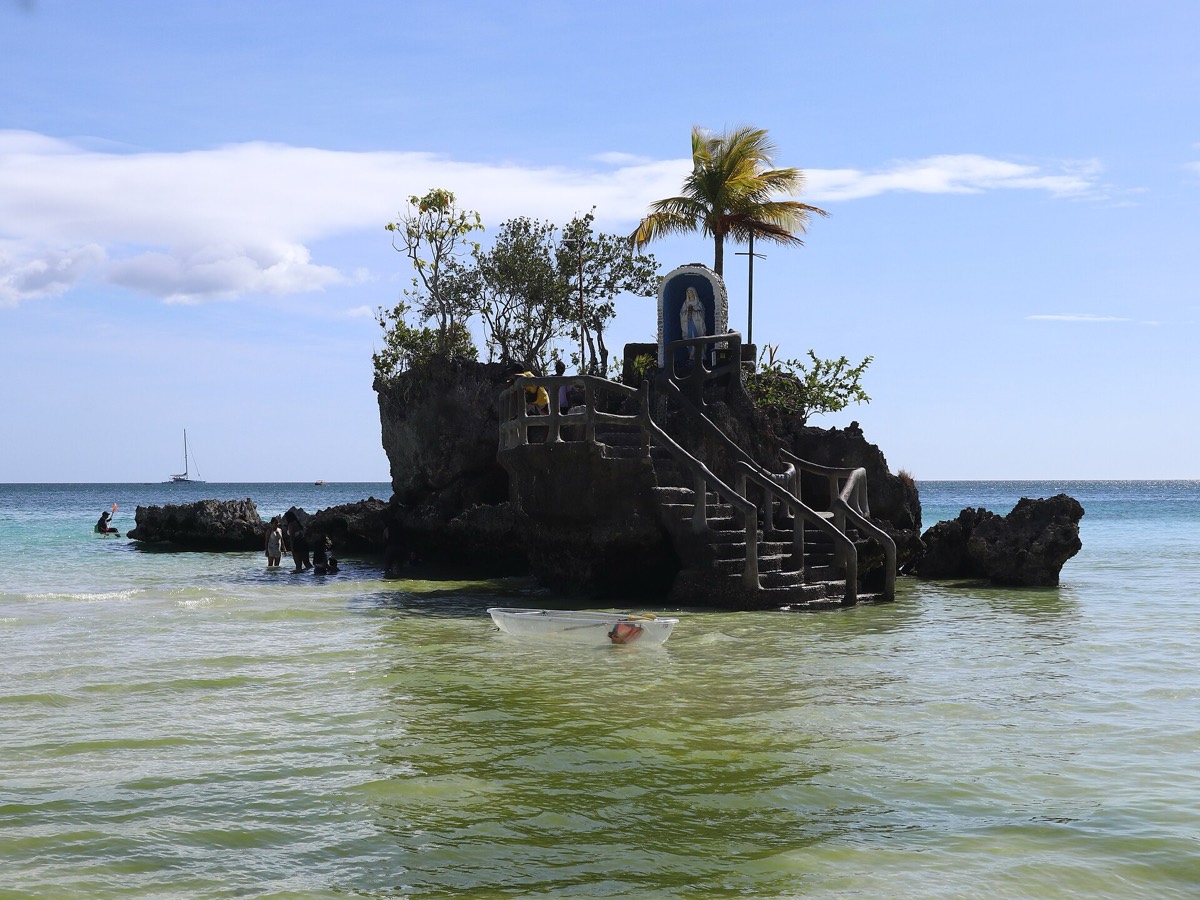
Willy’s Rock, the small volcanic outcrop off Station 1, carries a statue of the Virgin Mary in a little grotto. At low tide you can wade out to it; at high tide it stands alone in the water, a favourite silhouette for sunset photographs.

Getting there
Most people fly to Caticlan, a few minutes from the jetty, or to Kalibo, roughly one and a half to two hours away by van or bus. From Caticlan jetty port, small boats cross to Cagban port on Boracay in about fifteen minutes; you pay a terminal fee, an environmental fee and the boat fare, and you may be asked to show a hotel booking at an accredited place. Check current amounts before you travel.
From Cagban, e-trikes take you up the main road to whichever station you are staying in. Once on White Beach, everything is walkable; the beach path behind the sand connects all three stations.
A suggested plan
- 6:30Start at the northern end of Station 1 while the sand is still raked and empty.
- 7:30Wade out to Willy’s Rock at low tide, then coffee under the palms.
- 9:00Walk south through Station 2 and dip into D’Mall’s lanes before the shops get busy.
- 10:30Continue to Station 3 for a long swim off the quieter southern stretch.
- NoonLunch in the shade and a retreat from the midday sun.
Where to stay
Station 1 suits people who want space and calm, Station 2 is for those who like to be in the middle of everything, and Station 3 offers smaller, simpler and often cheaper guesthouses. Since the 2018 reforms, tourists are expected to stay in accredited accommodation, so book ahead and keep your confirmation handy.
Good to know
- Walk the beach early; by late morning the sand is bright enough to need sunglasses.
- Carry a reusable bottle; refill points are common in hotels and cafés.
- Low tide is the time for Willy’s Rock; check the tide table the night before.
- Keep a little cash for coffee and snacks along the beach path.
- Smoking and drinking alcohol on the beach itself are banned; fines are enforced.
- The sun reflected off white sand burns faster than you expect; reapply sunscreen and wear a hat.
- During the habagat (south-west monsoon), roughly June to October, waves on White Beach can be rough and red flags mean no swimming.