The Chocolate Hills at first light
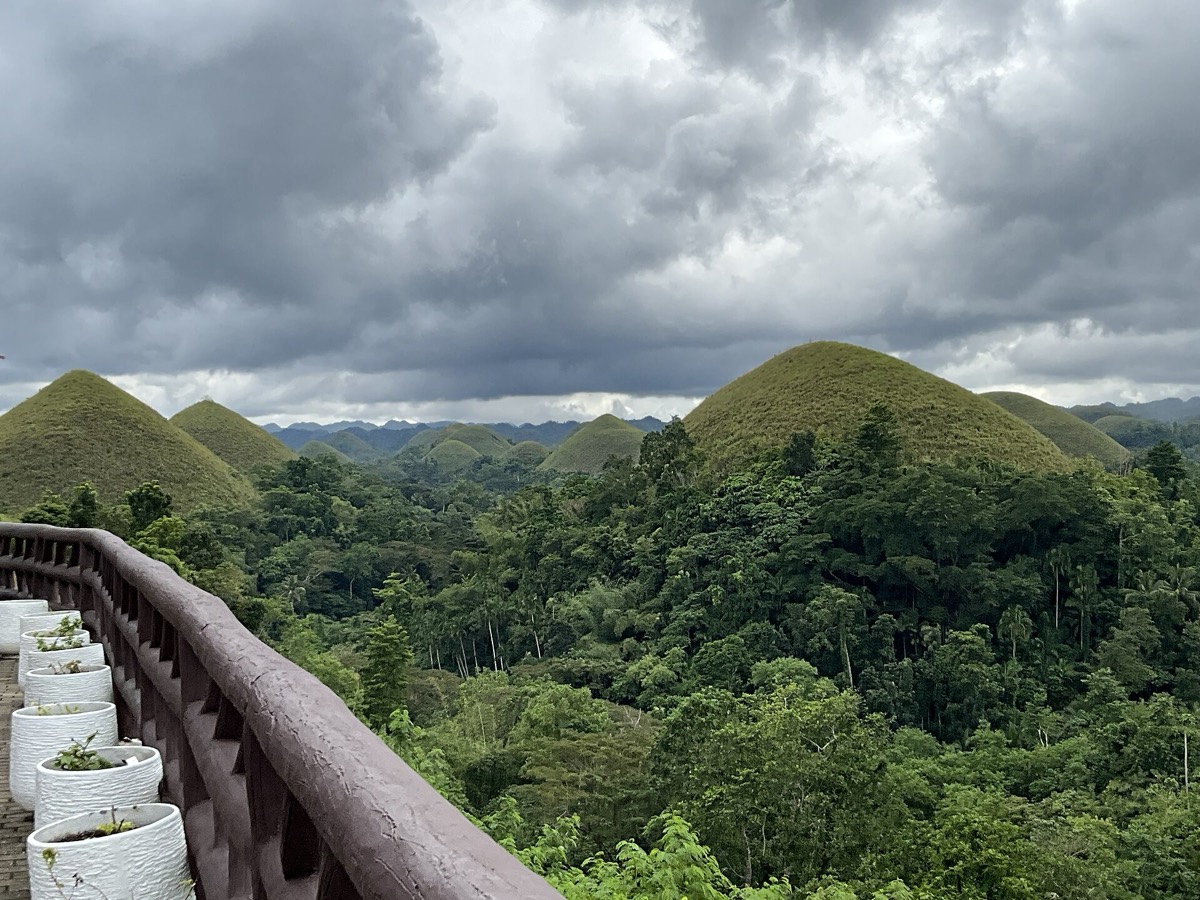
More than a thousand smooth, grass-covered limestone mounds rise from the plains of central Bohol, green after the rains and toasted brown in the dry season.

- Area
- Bohol interior
- Start from
- Panglao or Tagbilaran
- Distance
- about 55 km to Carmen
- Time needed
- 1 day
- Best season
- All year; brown in the dry months (around March – May)
- Difficulty
- Easy
- Transport
- Hired car or van, or scooter
- Tickets & rules
- Entrance fee to the viewing complex
Why go
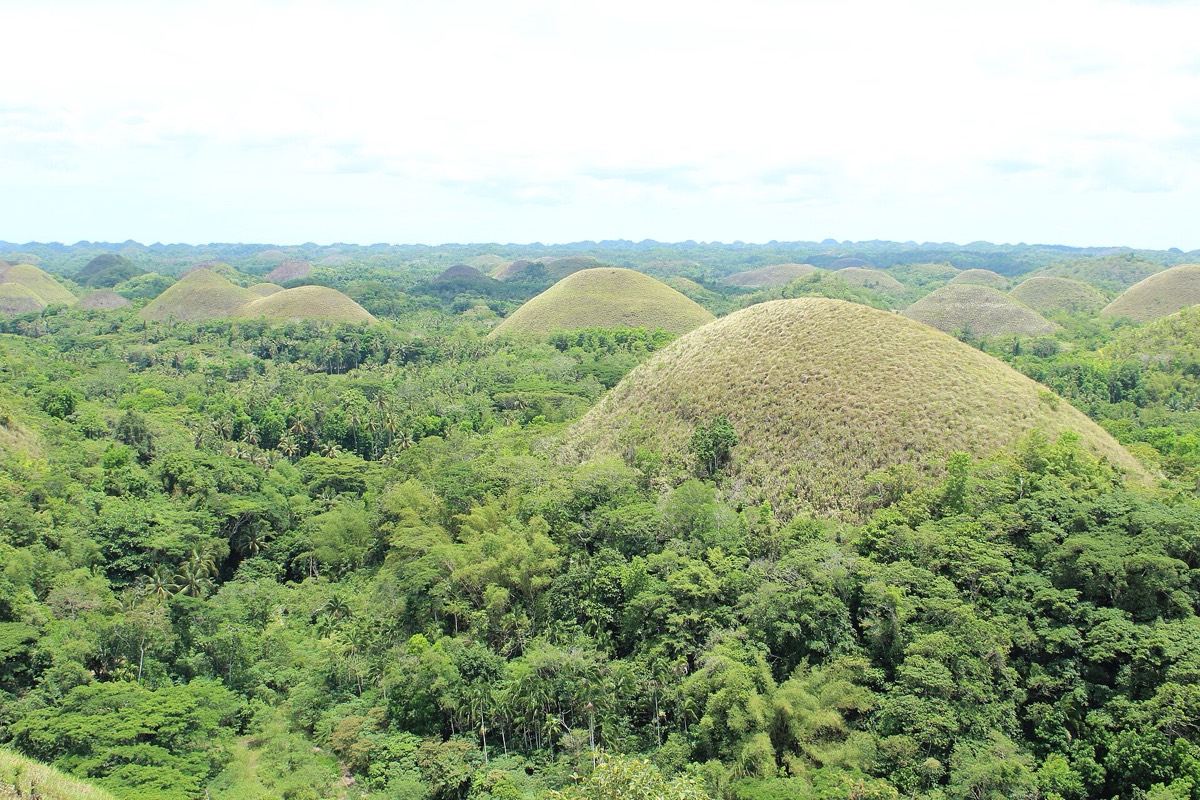
Everyone has seen the photographs, and yet nothing prepares you for the scale. From the viewing deck at Carmen the hills roll away in every direction, neat as if someone had piped them onto the land, each one roughly 30 to 50 metres tall, with rice fields and coconut palms filling the gaps between them. At dawn, mist sits in the hollows and the hills look like islands in a white sea.
The colour changes with the season. After the rains they are bright green, almost luminous; in the dry months of late spring the grass browns and the name suddenly makes sense. I shot both on different trips and honestly prefer the green, but the brown makes the shapes read more clearly, especially on black-and-white film.
Go beyond the main viewpoint. Small roads between Carmen, Batuan and Sagbayan wind right among the hills, and you can stop beside a field where a carabao is grazing with a cone-shaped hill behind it. That, more than the platform, is where the place feels real.
The story
Geologists generally explain the Chocolate Hills as weathered marine limestone. Over a very long time, the island rose from the sea, and rainwater dissolved the limestone along cracks and joints, leaving these rounded mounds, a type of karst landscape. Counts vary, but most sources say there are at least 1,260 hills, and some put the number much higher, spread over roughly 50 square kilometres.
Boholanos have better explanations. In one legend, two giants quarrelled and spent days hurling rocks and sand at each other until they were too tired to go on; they made peace and walked away, leaving the mess behind. In a sadder version, a giant called Arogo fell in love with a mortal woman named Aloya. When she died, he wept for days, and his tears hardened into the hills.
The hills were declared a National Geological Monument in 1988, and they appear on the provincial flag and seal. The main viewing complex in Carmen has about 214 steps up to a deck on top of one of the hills. It was damaged in the 2013 earthquake, which also caused landslides on some slopes, and was repaired afterwards.
Protection of the area has been a recurring debate, especially when new buildings appeared among the hills. Whatever is happening when you visit, the best thing a traveller can do is stick to the established viewpoints and not climb the hills themselves.

Getting there
Carmen is about two hours by road from Tagbilaran, longer from Panglao, along a road that passes Loboc and the man-made mahogany forest at Bilar. Most visitors hire a car or van with a driver for the day and combine the hills with the tarsiers and the Loboc river.
Buses run from the Dao terminal in Tagbilaran towards Carmen, and a habal-habal (motorbike taxi) can carry you from the town to the viewing complex. Riding a scooter yourself is possible if you are confident on Philippine roads.
A suggested plan
- 5:00Leave Panglao in the dark if you want sunrise; ask your driver to be on time the night before.
- 6:30Climb the steps at Carmen for the first light and the mist in the hollows.
- 8:00Breakfast nearby, then drive the back roads towards Sagbayan or Batuan for views among the hills.
- 10:30Stop at the man-made forest in Bilar on the way back.
- 12:30Lunch on a Loboc river cruise, then the tarsier sanctuary in the afternoon.
Where to stay
Most people visit as a day trip from Panglao or Tagbilaran. There are a few simple places to stay near Carmen if you want both sunset and sunrise without the long drive; it is very quiet at night.
Good to know
- The viewing deck gets busy from mid-morning when tour vans arrive; early or late is much calmer.
- Bring a light jacket for sunrise; the interior is cooler than the coast.
- Sagbayan Peak, another viewpoint to the north, is less crowded.
- Don’t climb the hills; it causes erosion, and many are on private land.
- ATV rides are offered near the hills; choose operators carefully, wear a helmet and stay on marked tracks.
- Steps are steep and slippery after rain.