The mahogany forest and the Sipatan bridges
Between Loboc and Bilar the road plunges into a cool tunnel of planted mahogany, then leads to swaying bamboo bridges and the birdy forests of Rajah Sikatuna.

- Area
- Bohol interior
- Start from
- Loboc
- Distance
- about 20 km of road with stops
- Time needed
- half a day
- Best season
- All year
- Difficulty
- Easy
- Transport
- Car or scooter; short walks
- Tickets & rules
- Small fee at the hanging bridges; protected landscape fees for forest trails
Why go
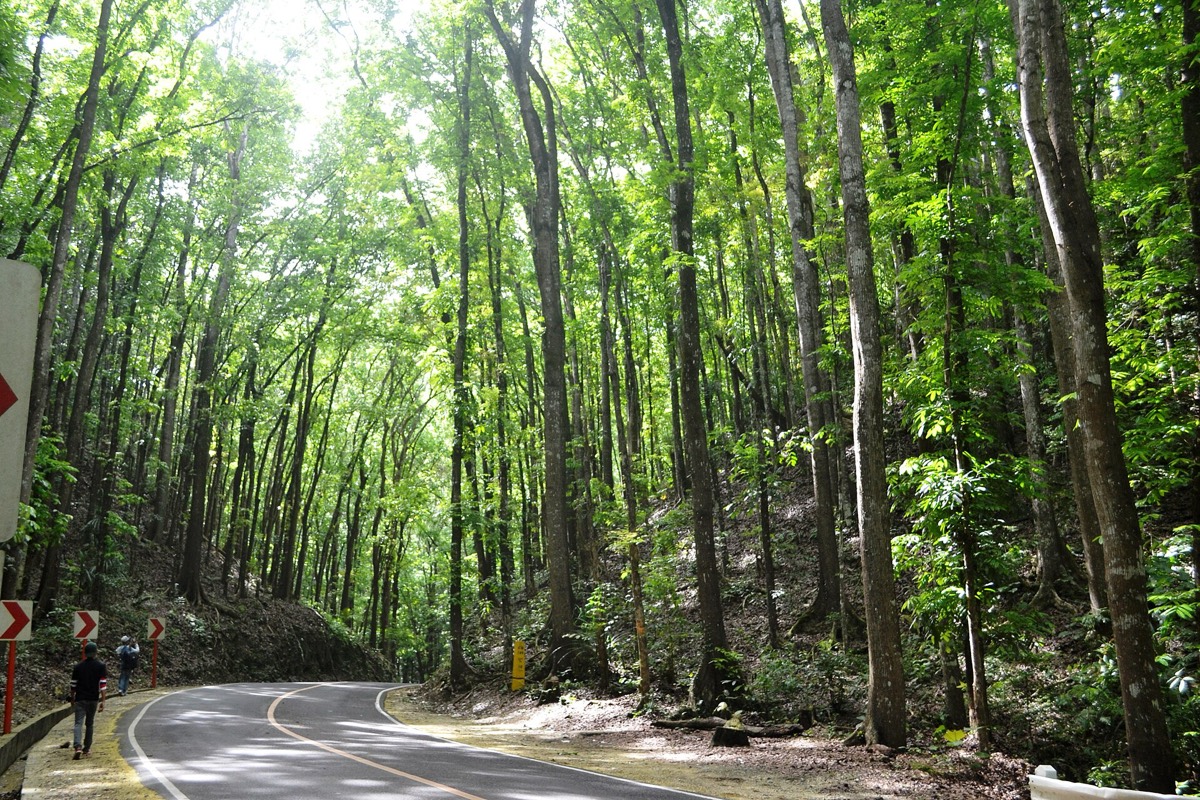
Driving north from Loboc, the heat suddenly drops and the light turns green. For a couple of kilometres the road runs under tall, straight mahogany trees planted in neat rows, their trunks dark and their crowns meeting overhead. It feels like driving into a cathedral, and every tour van stops so its passengers can stand in the middle of the road for a photograph.
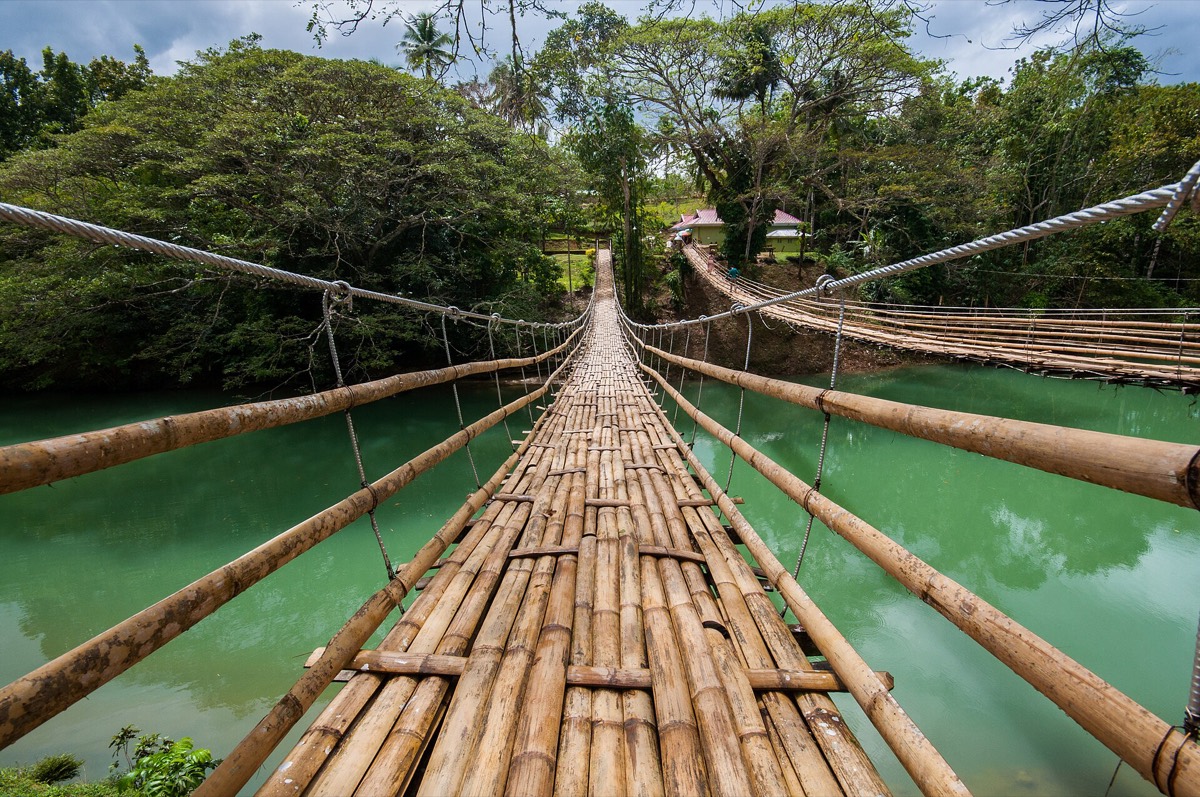
I stopped too, and then kept going to the quieter places nearby. In Sevilla, the Sipatan twin hanging bridges cross the Loboc river on woven bamboo slats and steel cables. They sway with every step; locals cross them carrying sacks of rice and baskets of eggs without a second thought, while visitors grip the side ropes and laugh nervously.
Further on, the forest of the Rajah Sikatuna Protected Landscape covers hills around Bilar and neighbouring towns. It is one of the last large patches of lowland forest on Bohol, and early mornings there are full of birdsong.
The story
The mahogany forest is often called man-made, and it is: a reforestation project planted around the mid-twentieth century on land that had been cleared. Mahogany is not native to the Philippines, and ecologists today prefer native species for reforestation, but the trees have become a much-loved landmark of the Bohol countryside.
The hanging bridges, known as the Sipatan or Sevilla twin bridges, were originally built to connect villages on either bank, and they still serve that purpose. Over the years they have been rebuilt and reinforced, and in practice people tend to use one for going over and the other for coming back, which keeps the swaying to a manageable level.
The Rajah Sikatuna Protected Landscape is named after the chieftain who sealed the blood compact in 1565. It shelters forest species that have disappeared from much of Bohol, and birdwatchers come for Philippine endemics. Guided trails start near the park’s headquarters in Bilar, and local guides can point out birds and plants that you would otherwise walk past.
Across the island, forests have been under pressure for generations from logging and clearing, and many upland villages now take part in community forestry. A guide in Bilar told me that his father had cut trees for a living, and that he himself now got paid to protect them.

Getting there
The mahogany forest lies on the main road between Loboc and Bilar, so it is a natural stop on the way to or from the Chocolate Hills. Sevilla’s hanging bridges are a short detour off the same road.
For forest walks in Rajah Sikatuna, contact the park office or arrange a local guide in advance, and start early.
A suggested plan
- 6:00If you are a birder, start with a guided morning walk in the Rajah Sikatuna forest.
- 9:00Drive to the man-made forest and walk a short stretch under the trees.
- 10:00Cross the Sipatan twin hanging bridges in Sevilla.
- 11:00Continue to Loboc for lunch or to Carmen for the Chocolate Hills.
Where to stay
Loboc’s riverside lodges are the closest comfortable base. There are also simple homestays in the uplands if you want an early start in the forest.
Good to know
- The forest road is a stop rather than a destination; ten or fifteen minutes there is enough.
- Wear shoes with grip for the bamboo bridges.
- Binoculars make a big difference on forest trails.
- Watch for traffic when stopping on the forest road; vans and trucks come round the bends fast.
- Don’t bounce on the hanging bridges and follow any limits on how many people can cross at once.