Don Khong, the Big Quiet Island
The largest of the 4000 Islands, where a sleepy riverside town, old temples and flat lanes through the paddies give you river life without the backpacker scene.

- Area
- 4000 Islands
- Start from
- Pakse
- Distance
- about 130 km; island roughly 18 km long
- Time needed
- 1–2 days
- Best season
- November – April
- Difficulty
- Easy
- Transport
- Minibus or bus from Pakse to Ban Hat Xai Khoune, then a short boat crossing
- Tickets & rules
- None
Why go
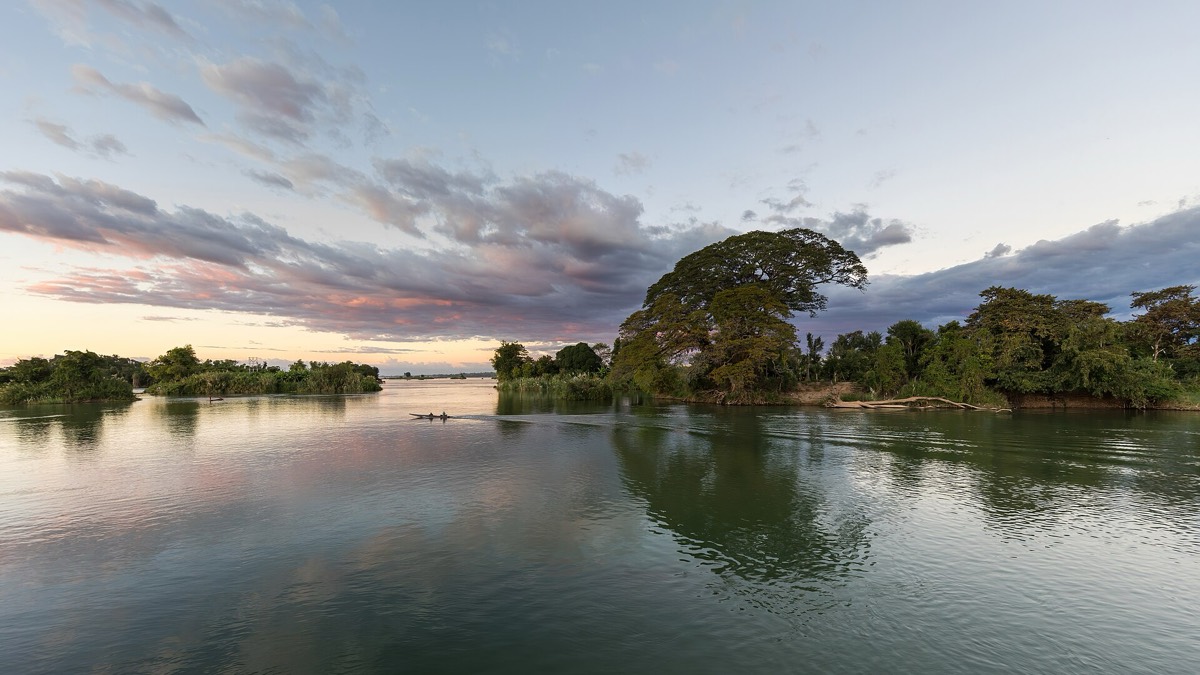
Most travellers heading for the 4000 Islands race past Don Khong on their way to Don Det. That is their loss. Don Khong is by far the largest island in the archipelago, and its little capital, Muang Khong, is a calm riverside town of wooden houses, a market, a couple of temples and a row of guesthouses looking straight across the Mekong.
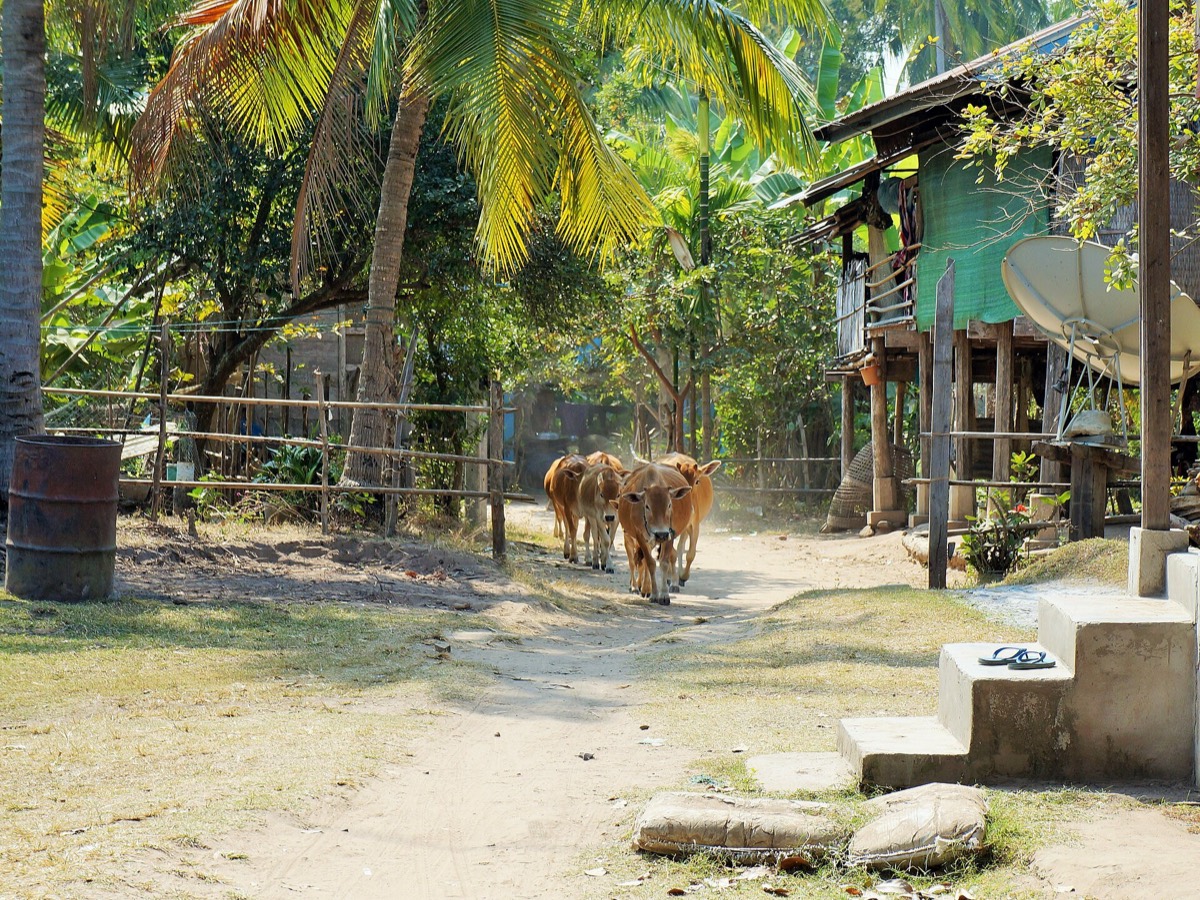
Hire a bicycle and you can ride a loop of quiet lanes around the island, past rice paddies, palm sugar trees, buffalo pools and villages where the main noise is a rooster or the clatter of a loom. The road is almost flat and the traffic is mostly bicycles, tractors and the occasional scooter carrying a whole family.
I like Don Khong as a pause between Pakse and the busier southern islands. It shows a side of Si Phan Don that is rural and unhurried, where tourism is a small part of life rather than the whole of it.
The story
Si Phan Don means four thousand islands, a number that is poetic rather than counted. In the dry season, as the Mekong drops, countless sandbanks, rocks and islets appear in a stretch of river that is many kilometres wide, and a handful of large islands, Don Khong among them, are inhabited all year round.
Muang Khong has long been the district town, with schools, a hospital and a market that draws people from smaller islands by boat. Its main monastery, Wat Jom Thong, is often described as the oldest on the island; its old chapel has an unusual cross-shaped plan that sets it apart from most Lao temples.
Life follows the river. In the dry months, families plant vegetables on the exposed banks and fishermen set traps in the channels; when the rains come in June, the water rises several metres, the gardens disappear and boats become the main way to move between villages. Each year at the end of Buddhist Lent, boat races are held on the river, and the town fills with crews and cheering crowds.

Getting there
Minibuses and buses from Pakse’s southern bus station to the 4000 Islands run along Route 13; ask to get off at Ban Hat Xai Khoune, the departure point for boats to Muang Khong. The ride takes around two and a half to three hours. The boat crossing is a few minutes, and boatmen wait on the bank.
From Don Khong, onward boats to Don Det and Don Khon can sometimes be arranged by guesthouses; otherwise return to the mainland and take a minibus a little further south to Nakasang.
A suggested plan
- MorningArrive in Muang Khong and check into a riverside guesthouse.
- Late morningWalk to Wat Jom Thong and the market.
- LunchFish laap and sticky rice facing the river.
- AfternoonCycle a loop of lanes around the island’s northern half, stopping in villages.
- EveningSunset over the Mekong from the town’s riverbank, then an early dinner.
Where to stay
Muang Khong has a handful of guesthouses and small hotels along the riverbank, most with simple rooms and terraces. Booking ahead is rarely necessary except during the boat racing festival and Lao holidays.
Good to know
- Bring enough cash from Pakse; banking services on the island are limited.
- Rent a bicycle for a full day; the island is bigger than it looks.
- Ask your guesthouse about boat trips to the small surrounding islands.
- Evenings are very quiet; this is a place for books and early nights.
- The midday sun on open paddy roads is punishing; carry water and rest at noon.
- Village dogs can be territorial; slow down and do not run.