The Southern Tip of Don Khon and the Lost Dolphins
A ride to the fishing village at the very end of Laos and a boat trip to the deep pool that was long home to Irrawaddy dolphins, with an honest word about what remains.

- Area
- 4000 Islands
- Start from
- Don Khon
- Distance
- about 5 km from the bridge to Ban Hang Khon, then a short boat trip
- Time needed
- half a day
- Best season
- Dry season, December – May, for calm water
- Difficulty
- Easy
- Transport
- Bicycle to Ban Hang Khon, then a longtail boat
- Tickets & rules
- Don Khon ticket; boat fee per boat
Why go
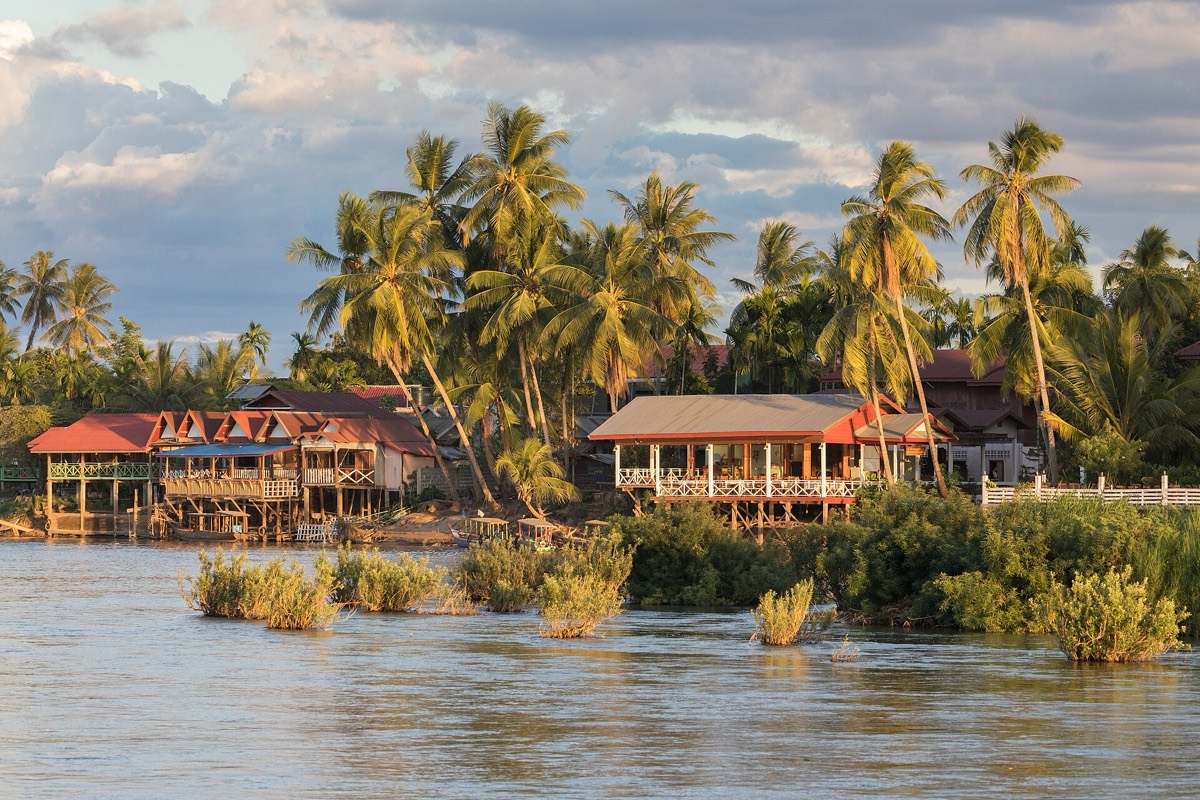
The southern tip of Don Khon feels like the end of the country, which it almost is. The track from the bridge runs through fields and coconut palms to Ban Hang Khon, a small fishing village where longtail boats are pulled up on the sand and the far bank across the water is Cambodia.
For decades, visitors came here to take a boat out to a deep pool on the border and watch Irrawaddy dolphins surface. I want to be honest: that small group dwindled for years, and according to WWF the last dolphin in this stretch of river died in 2022. Boatmen may still offer the trip, but it is no longer a dolphin-watching excursion.
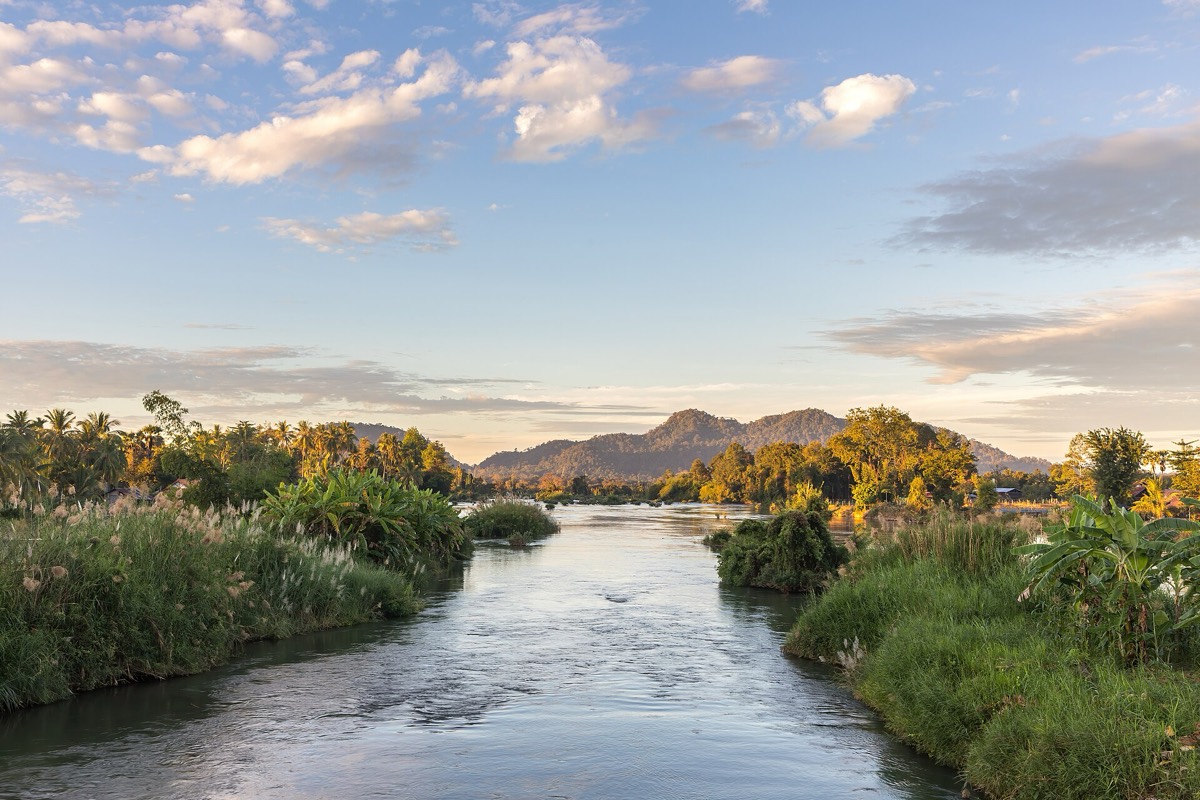
I still think the ride is worth it. The river here is wide and slow, kingfishers dart along the banks, fishermen check their nets from narrow canoes, and the light on the water in the early morning is something I keep coming back to.
The story
Irrawaddy dolphins live in coastal waters and a few large rivers of South and Southeast Asia. They have rounded heads without a beak and a curved mouth that makes them look as if they are smiling, which has made them a beloved symbol of the Mekong. In Lao and Khmer folklore they are sometimes said to be human in origin, which is one reason fishermen traditionally avoided harming them.
The pool at the border, often known by its Khmer name Anlong Chheuteal, was for many years the last place in Laos where they could be seen. Numbers fell over decades as the river changed, with gillnets, habitat pressure and the dolphins’ slow breeding all playing a part. Conservation groups worked with local communities to protect the pool, but the population had become too small to recover.
The Mekong’s remaining river dolphins now live downstream in Cambodia, mostly in deep pools between Kratie and the Lao border, where they are protected and studied. If you travel on into Cambodia, a visit to Kratie offers a far better chance to see them, and supports the communities that guard them.

Getting there
From the old railway bridge, cycle south along the old railway line past the second locomotive to Ban Hang Khon; it takes about half an hour on a flat, sometimes sandy track. Boats leave from the beach and charge per boat, so it is cheaper if you share.
Your Don Khon ticket covers the island; boat fees are paid separately to the boatmen.
A suggested plan
- 7:00Cycle south across Don Khon in the cool of the morning.
- 7:45Stop at the old pier and locomotive near the southern end of the railway.
- 8:15Take a longtail boat out along the border channels.
- 9:30Back in Ban Hang Khon for coffee and a rest on the beach.
- 10:30Ride back north, or on to Li Phi falls on the island’s western side.
Where to stay
Don Khon is closest, with a handful of calm guesthouses near the bridge; Don Det works too and is only a little further.
Good to know
- Early morning is calmest on the water and best for light.
- Bring a hat and sunscreen; there is no shade in the boats.
- If seeing dolphins matters to you, plan a stop in Kratie, Cambodia.
- Ask the boatman about birds and fishing methods; many are happy to talk.
- Life jackets are not always provided; ask before you set off.
- Do not land on the Cambodian bank; this is an international border.
- Agree the boat price and duration before departure.