Khone Phapheng, the Thundering Falls
The largest waterfall in Southeast Asia by volume, where the whole Mekong hurls itself over broad steps of rock in a deafening roar.

- Area
- 4000 Islands
- Start from
- Nakasang, Don Det or Don Khon
- Distance
- about 15 km from Nakasang
- Time needed
- half a day
- Best season
- Most powerful July – October; clearer views November – February
- Difficulty
- Easy
- Transport
- Tuk-tuk or motorbike from Nakasang; tours from the islands
- Tickets & rules
- Entry ticket at the gate
Why go
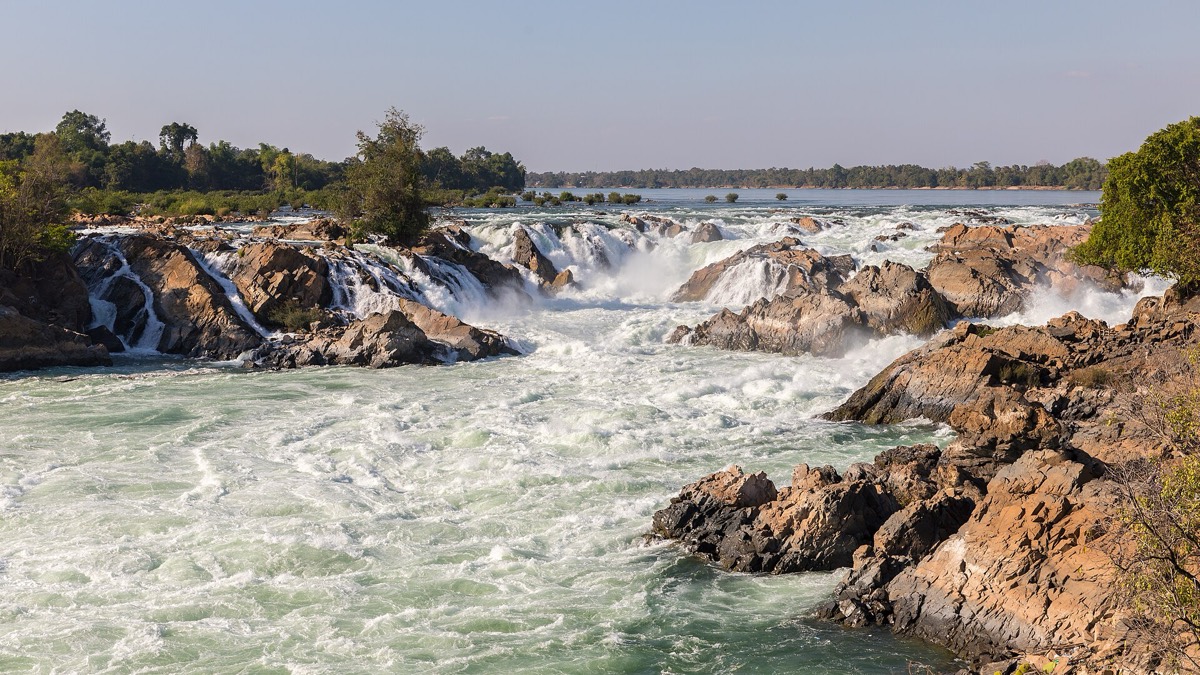
Khone Phapheng is where the Mekong loses its temper. The river, which has drifted calmly between the islands, suddenly pours over a series of rocky ledges in one colossal, churning cascade, throwing clouds of spray into the air and making the ground tremble under your feet. It is not especially tall, perhaps around twenty metres in total, but the width and force of it are overwhelming.
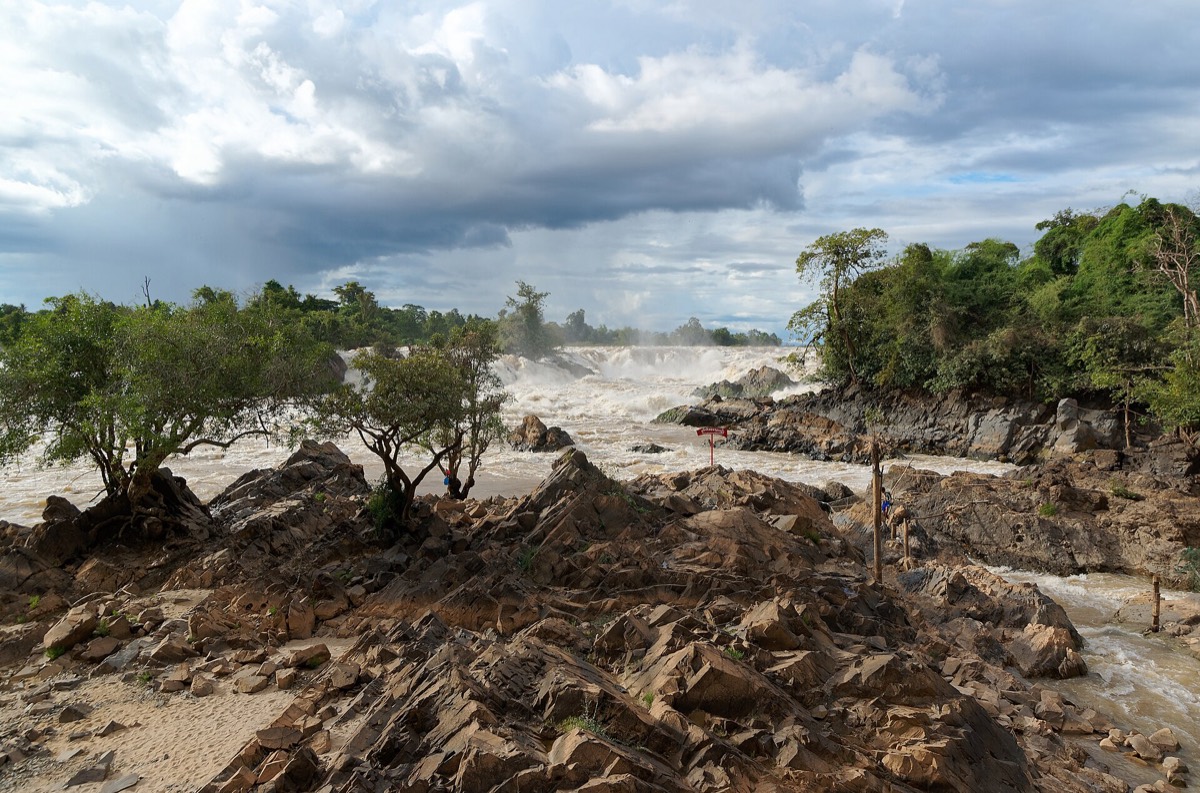
In the rainy season the volume of water passing over the falls is often described as the greatest of any falls in Southeast Asia, and the noise swallows conversation. In the dry season the river drops, the rocks emerge, and you can see the complicated structure of the channels and the bamboo fish traps clinging to them.
A walkway with viewing platforms brings you close to the main torrent, and the surrounding park has shady paths, simple restaurants and stalls selling grilled fish and coconuts. At weekends Lao and Thai families arrive by the busload, but even then the falls themselves make everyone fall quiet for a moment.
The story
For the French in the nineteenth century, the Khone Falls were a bitter surprise. They had hoped the Mekong would become a trade highway into the heart of Asia and, ultimately, to China. The great Mekong expedition of 1866 to 1868, led by Ernest Doudart de Lagrée and Francis Garnier, showed that falls and rapids made continuous navigation impossible. Khone Phapheng was the most impressive and most decisive barrier of all.
The French response, a few decades later, was the railway across Don Det and Don Khon, which let boats and cargo bypass the falls. For a time, steamboats served the river above the falls, carrying people and goods towards Pakse and Vientiane, while others worked below towards Cambodia.
The name is often explained as the voice of the Mekong, and many Lao people regard the falls as a place of strong spiritual presence; you may see small shrines near the viewpoints. For the fishermen, it is a place of work. In the dry months you can watch them climb out along ropes and bamboo poles to tend traps set into the edge of the torrent, a skill passed from father to son.

Getting there
The falls lie off Route 13, about a twenty-minute ride south-east of Nakasang, the boat landing for Don Det. Take the boat from the islands to Nakasang and hire a tuk-tuk for the return trip, or ride a rented motorbike. Many guesthouses on Don Det and Don Khon also sell tours that combine Khone Phapheng with Li Phi falls, kayaking or a boat trip.
Tickets are sold at the entrance; a small electric shuttle sometimes runs inside the park.
A suggested plan
- 8:00Boat from Don Det or Don Khon to Nakasang.
- 8:30Tuk-tuk or motorbike to the falls.
- 9:00Walk the main viewing platforms and the paths along the edge.
- 10:30Find a shady bench, eat grilled fish or fruit and watch the fishermen.
- 11:30Return to Nakasang and take a boat back to the islands, or continue south towards the Cambodian border.
Where to stay
Most people stay on Don Det or Don Khon. A few lodges on the mainland near Nakasang and close to the falls offer quieter alternatives and easy road access if you are travelling on to Cambodia.
Good to know
- Arrive early or in late afternoon for softer light and fewer crowds.
- Bring a waterproof bag for your camera in the rainy season; the spray carries far.
- Agree with your tuk-tuk driver how long he will wait before you go in.
- Combine the falls with the southern tip of Don Khon or a kayak trip for a full river day.
- Stay on the platforms and marked paths; the rocks at the edge are extremely dangerous.
- Hold on to small children; railings are not continuous everywhere.
- Watch your belongings in weekend crowds.