Phou Asa, the Stone Ring on the Hill
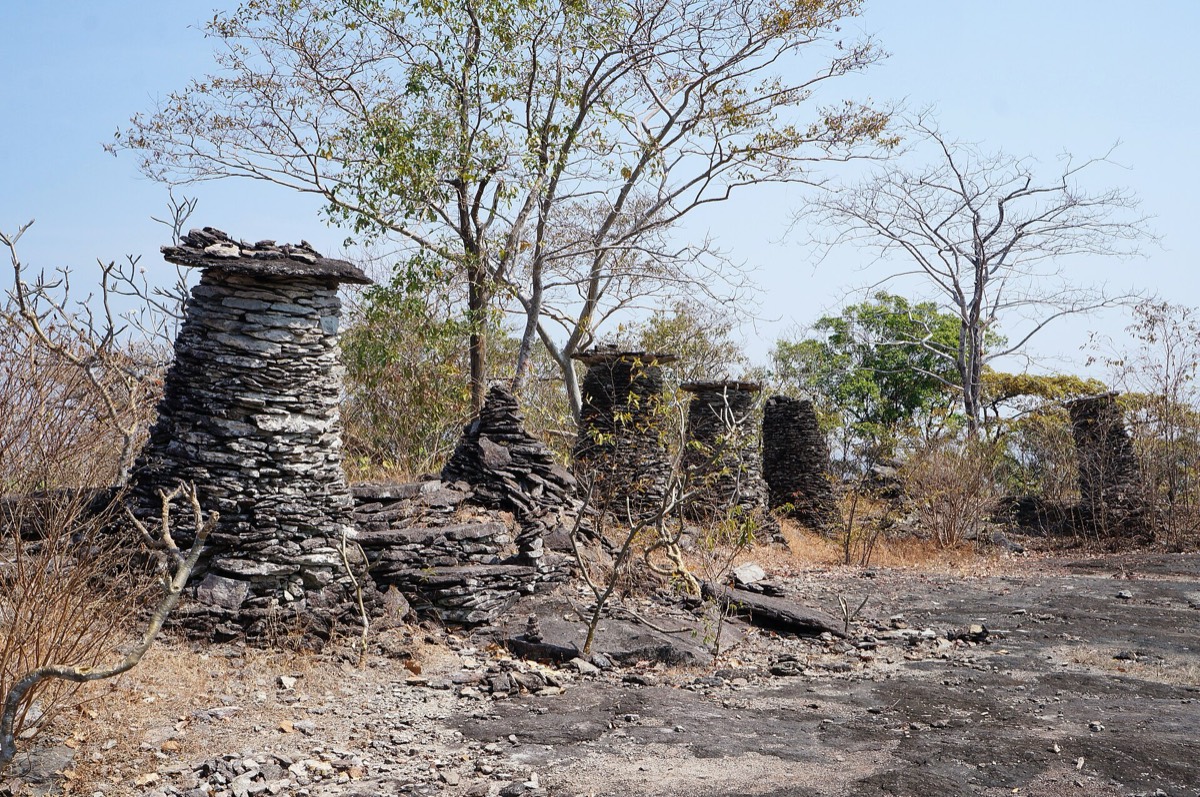
A short, steep scramble to a hilltop ring of mysterious stone pillars, with the forests and marshes of Xe Pian spread out below.

- Area
- Xe Pian
- Start from
- Kiet Ngong village
- Distance
- a few kilometres from the village, about 3 hours return
- Time needed
- half a day
- Best season
- November – April; early morning
- Difficulty
- Moderate
- Transport
- On foot with a local guide from Kiet Ngong
- Tickets & rules
- Small site fee and guide fee, paid in the village
Why go
Phou Asa is one of those odd little places that make southern Laos so rewarding. On top of a rocky, forested hill near Kiet Ngong stands a circle of stacked stone pillars and low walls, part ruin and part puzzle, gazing out over the wetlands. There are no ticket barriers, no souvenir stalls and, on most mornings, nobody else at all.
The approach is half the pleasure. You walk out of the village past rice fields and buffalo ponds, through dry dipterocarp forest where the leaves crunch underfoot, and then scramble up over boulders as the trees thin. Lizards flick away from the rocks, and the view opens up a little more with every step.
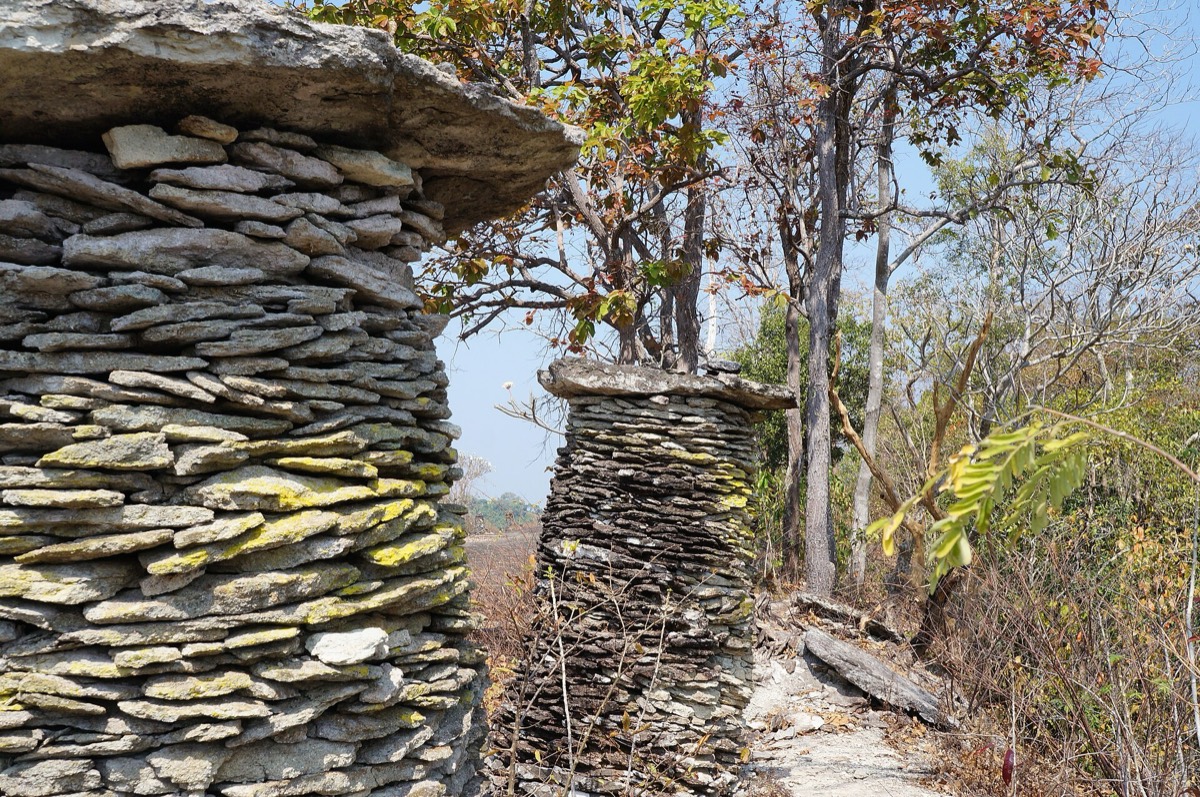
At the top, the pillars stand like the remains of a giant fence, grey and lichen-covered, with grass growing between the stones. I sat there for an hour with my guide, who pointed out the villages, the marsh and the distant line of hills towards the Cambodian border, naming each one.
The story
Nobody seems entirely sure who built Phou Asa or why, and that uncertainty is part of its pull. The most common local account connects the hill with a nineteenth-century regional leader whose name it now carries, and who is said to have fortified the summit as a stronghold or refuge. Others in the area say the stones are older and were simply reused. Without proper excavation, both versions remain stories.
What is clear is the logic of the place. From the summit you can see for many kilometres across flat country, so anyone approaching would be visible long before they arrived. The stones themselves are local slabs, stacked without mortar into pillars a little taller than a person, arranged roughly in a ring with gaps that might once have been gateways.
For the villagers the hill is not only history. It is a place of guardian spirits, and you may find a few flowers, candles or a small glass of rice spirit left at the foot of a pillar. Guides ask visitors not to shout, not to move stones and not to take anything away, and I have never heard anyone argue.

Getting there
Phou Asa is reached from Kiet Ngong village, about an hour and a quarter by road south of Pakse via Route 13 and the turning east towards Xe Pian. Arrange a guide at the village visitor centre or through your homestay the evening before, so you can leave early.
The walk is a mix of flat village paths and a short, steep climb over rocks near the top. In the past visitors were sometimes taken by elephant; today walking is the usual and more comfortable way.
A suggested plan
- 6:30Coffee and sticky rice at your homestay, then meet your guide.
- 7:00Walk out across the fields and into the dry forest, looking for birds.
- 8:00Scramble up the final rocky slope to the summit.
- 8:30Explore the stone ring slowly and take in the view over the wetlands.
- 9:30Descend carefully and return to the village before the heat.
- 11:00Rest, then spend the afternoon on a wetland walk or ride back to Pakse.
Where to stay
Stay overnight in a Kiet Ngong homestay or one of the small lodges near the edge of Xe Pian, so you can start before the sun is high. As a day trip from Pakse it is possible, but you will be climbing in the heat.
Good to know
- Go early; the rocks soak up heat and the summit has little shade.
- Carry at least a litre and a half of water per person.
- Shoes with real grip matter more than distance here; flip-flops are a bad idea.
- Pay fees and tip guides in kip, in small notes.
- The boulders near the top are slippery when wet or dusty; use your hands and take your time.
- Do not climb on or move the stone pillars; they are fragile and locally respected.
- Stay with your guide in the forest; paths fork and look alike.