Pergasingan hill: sunrise over the Sembalun valley
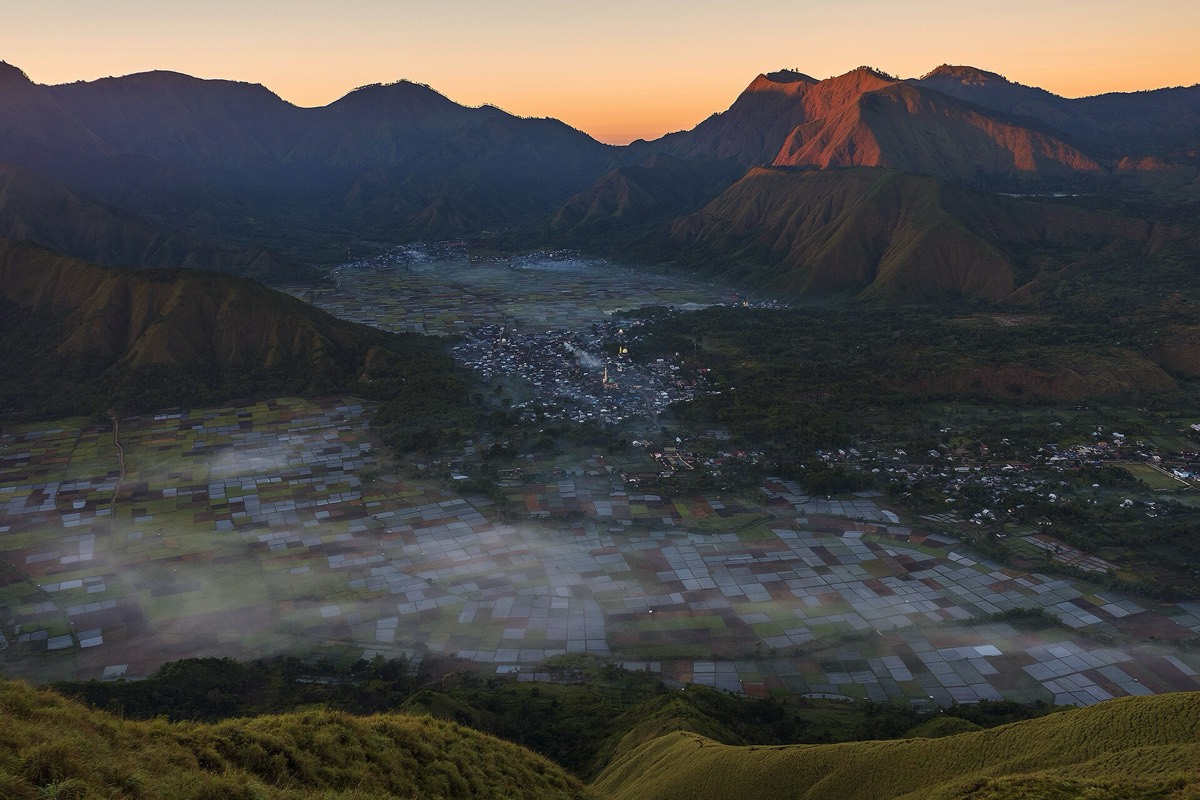
A steep pre-dawn climb above Sembalun’s patchwork of garlic and strawberry fields, for a sunrise with Rinjani glowing on one side and the sea on the other.

- Area
- Sembalun & the east
- Start from
- Sembalun Lawang
- Distance
- about 2–3 km up and back
- Time needed
- half a day (or overnight camping)
- Best season
- April – November best; trails can close in the wettest months
- Difficulty
- Moderate
- Transport
- Scooter or car to the trailhead, then on foot
- Tickets & rules
- Small entrance ticket; guide optional
Why go
Sembalun is a high, wide valley on Rinjani’s eastern side, at roughly 1,100 to 1,200 metres. It feels like another country: cool air, pine trees, terraced fields of garlic, shallots, cabbages and strawberries laid out in strips of every shade of green, with steep grassy hills on every side. In the morning, mist pools on the valley floor and you hear cockerels and motorbikes far below.
Bukit Pergasingan is the hill most people climb for the view. The path is short but steep, a stiff hour or so up dusty switchbacks and steps, and at the top you are standing on an open grassy ridge at around 1,700 metres. Behind you Rinjani’s summit catches the first light; in front, the valley’s patchwork fields slowly emerge from the shadow.
It is a perfect taste of the mountain for anyone not doing the full trek, and a good warm-up for those who are. Some people camp on top to see both sunset and sunrise.
The story
Sembalun is one of the oldest settled places in Lombok, according to local tradition. The village of Sembalun Bumbung and the hamlet of Beleq claim to be among the first settlements on the island, founded by survivors who came down from the mountain after a great eruption, which some connect with the Samalas eruption of 1257. In Desa Beleq a small group of traditional houses is kept as a heritage site.
Farming here has always been different from the lowlands. It is too cold for much rice, so the valley grows vegetables and, above all, garlic, which is sold all over Lombok. Strawberries came more recently, and pick-your-own farms are now popular with visitors from Mataram on weekends.
The name Pergasingan is often linked to gasing, a spinning top, after the shape of the fields seen from above, though explanations vary. What is not in doubt is how the view changes through the seasons: green in the wet months, gold and brown in the dry, when fires on the hills are sometimes a problem.
The 2018 earthquakes struck the Sembalun area badly, with landslides on Rinjani and serious damage to houses. People rebuilt quickly, often with lighter materials, and tourism has become a bigger part of the valley’s economy since.

Getting there
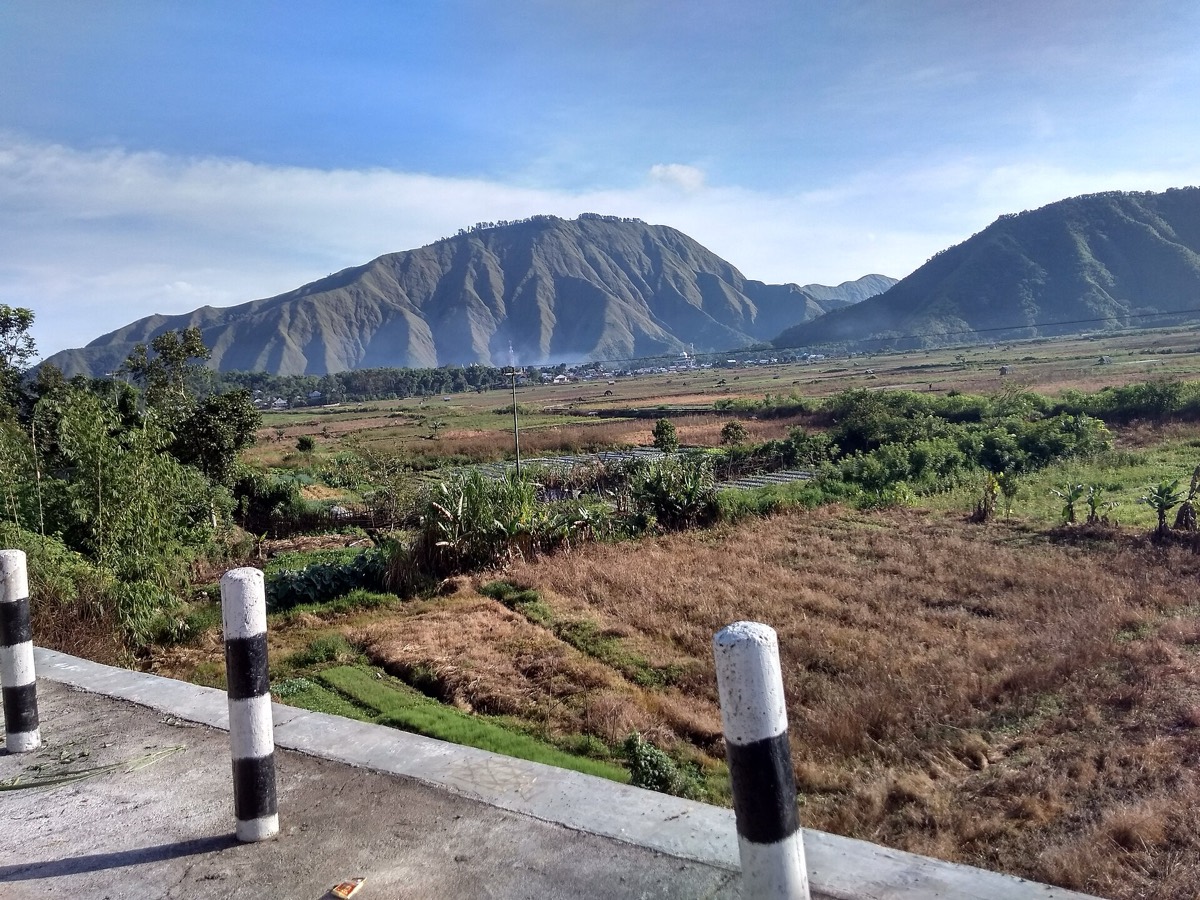
Sembalun is about three hours by road from Senggigi or Mataram, longer from Kuta, via winding mountain roads. The road over the pass from the north coast is especially beautiful. Hire a driver or ride carefully if you are an experienced scooter rider.
The trailhead is close to Sembalun Lawang; your homestay can explain the way or arrange a guide. Start in the dark with a head torch.
A suggested plan
- 4amLeave your homestay with a torch and warm layers.
- 4:30–5:30amClimb the steep path to the top of Pergasingan.
- SunriseWatch the light hit Rinjani and the valley; have a hot drink.
- MorningDescend, then breakfast and a walk through the garlic fields.
- Late morningVisit the traditional houses at Desa Beleq or a strawberry farm.
Where to stay
Sembalun has many simple homestays and small lodges, especially in Sembalun Lawang near the Rinjani trailhead. Bring warm clothes: nights here are cold and hot water is not always guaranteed.
Good to know
- Wear shoes with grip: the path is dusty and slippery on the way down.
- Bring a fleece and a windproof jacket; the summit is cold before dawn.
- Ask locally whether the trail is open; it sometimes closes for safety.
- Fresh strawberries and garlic make good gifts for friends on the coast.
- The path is steep with drops in places; go slowly in the dark.
- Grass fires can happen in the dry season; never light fires.
- Mountain roads are steep and winding; avoid driving at night.