The Rinjani summit climb from Sembalun
A tough night climb up loose volcanic scree to the top of Indonesia’s second-highest volcano, for a sunrise that reaches across Lombok to Bali and Sumbawa.

- Area
- Sembalun & the east
- Start from
- Sembalun Lawang
- Distance
- about 25 km round trip, around 2,600 m of ascent
- Time needed
- 2–3 days
- Best season
- Roughly April – December; usually closed in the wettest months
- Difficulty
- Hard
- Transport
- Transfer to the trailhead, then on foot with a licensed guide and porters
- Tickets & rules
- National park ticket booked in advance; licensed guide or registered operator required
Why go
The summit of Rinjani is one of the great sunrise viewpoints of Southeast Asia, and it has to be earned. From the Sembalun crater rim, at about 2,600 metres, the final climb starts in the middle of the night and gains more than a thousand metres up a steep ridge of loose volcanic gravel, where you often slide back half a step for each one forward.
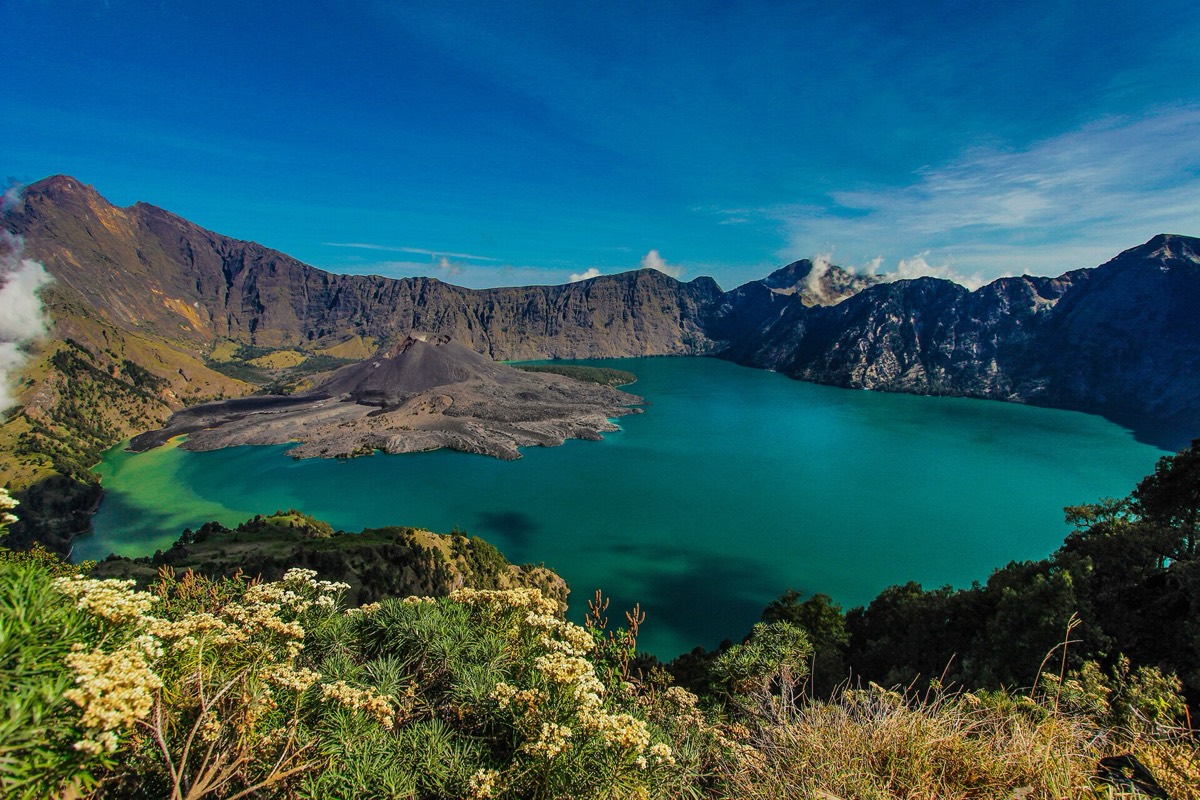
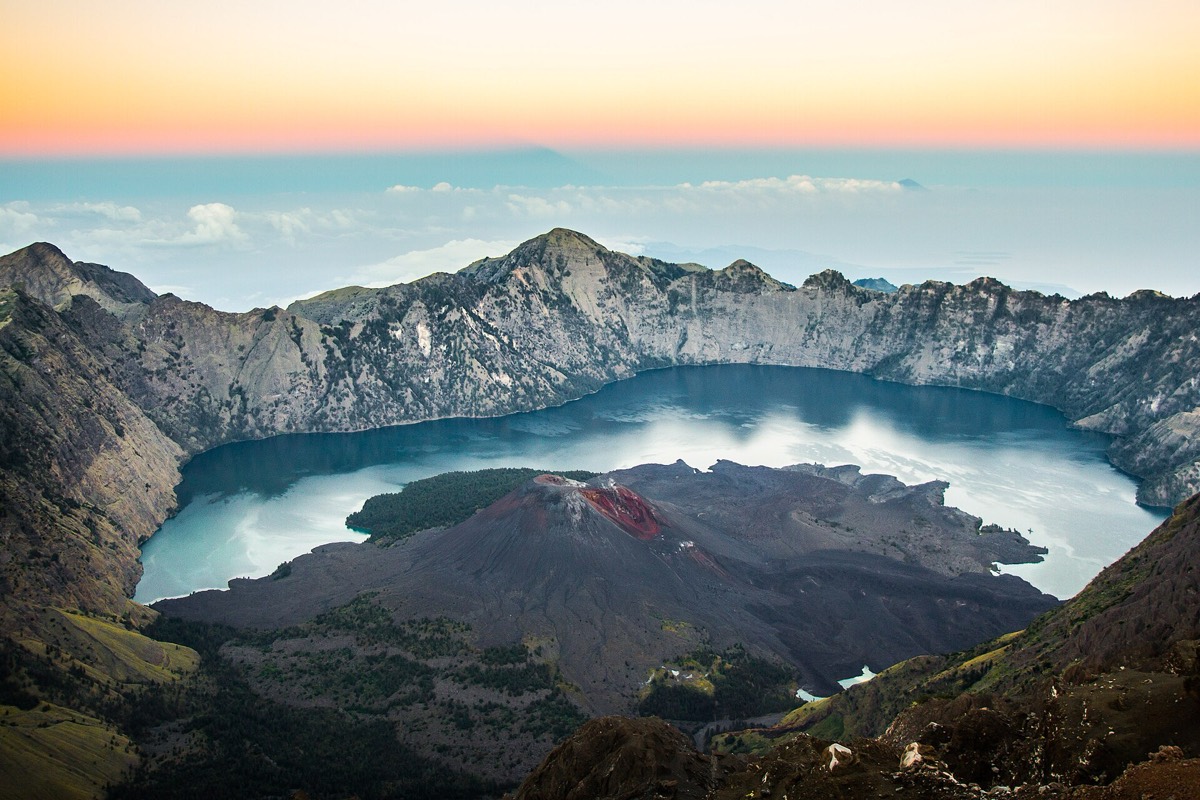
At the top, at about 3,726 metres, the world falls away on every side. The crater lake lies far below, Barujari smoking in the middle, and the shadow of the mountain stretches west across Lombok as the sun rises. On clear mornings you can see Agung on Bali and Tambora on Sumbawa, the island’s great neighbours.
The first day walking from Sembalun is also beautiful, across open savannah where the valley grasslands rise into pine forest. Even if you decide not to go for the summit, the rim camp and the sunrise there are worth the climb.
The story
Rinjani’s summit is part of the old volcano that survived the collapse of Samalas in 1257. The eruption sent ash across Lombok and far beyond, and is now thought to have affected the global climate, contributing to cold summers in parts of the world. Some researchers have linked it to mass graves of the period found in London, though that is debated.
Climbing to the top for sport is relatively modern. Local guides from Senaru and Sembalun built up the trekking trade from the 1990s, often with support from conservation programmes that tried to ensure income stayed in nearby villages. Porters, carrying loads of food, water and tents in baskets on bamboo poles, are still the backbone of every trek.
The mountain is not always calm. Barujari has erupted repeatedly, including notable eruptions in 2015 and 2016 that closed the park and grounded flights at Lombok and Bali airports. The 2018 earthquakes triggered landslides that trapped trekkers inside the caldera and led to a long closure.
Because of accidents and overcrowding, park authorities have introduced stricter rules over the years: online booking, quotas, required guides, and in some cases health checks. The rules change, so check the latest from the park or a reputable operator.

Getting there
Most climbers book a package with a licensed operator that includes the transfer to Sembalun, park fees, guide, porters, food and camping gear. Two-day summit trips are common; three days allows a descent to the lake or across to Senaru.
Arrive in Sembalun the day before to rest and adjust to the altitude.
A suggested plan
- Day 1 morningRegister and walk across the savannah, with rest stops at shelters along the trail.
- Day 1 afternoonSteep climb through forest to the Sembalun crater rim; camp.
- Day 2, 2–3amStart the summit climb in the dark, slowly and steadily.
- Day 2 sunriseReach the summit, if conditions allow, then descend carefully back to camp.
- Day 2 afternoonReturn to Sembalun, or continue to the lake on a three-day route.
Where to stay
Sleep in Sembalun Lawang the night before and after. Homestays there are used to tired trekkers and can arrange luggage storage, laundry and hot meals.
Good to know
- Gaiters or high-top boots help keep scree out of your shoes.
- Trekking poles make the scree much easier.
- Bring a warm down layer and gloves; summit winds are fierce.
- Eat and drink before the summit push even if you are not hungry.
- The summit ridge has steep drops; stay on the path and keep close to your guide.
- Turn back if visibility, wind or your health turns; the summit is optional.
- Hypothermia is a real danger in wet or windy weather.