Gods in Sandstone at the National Museum
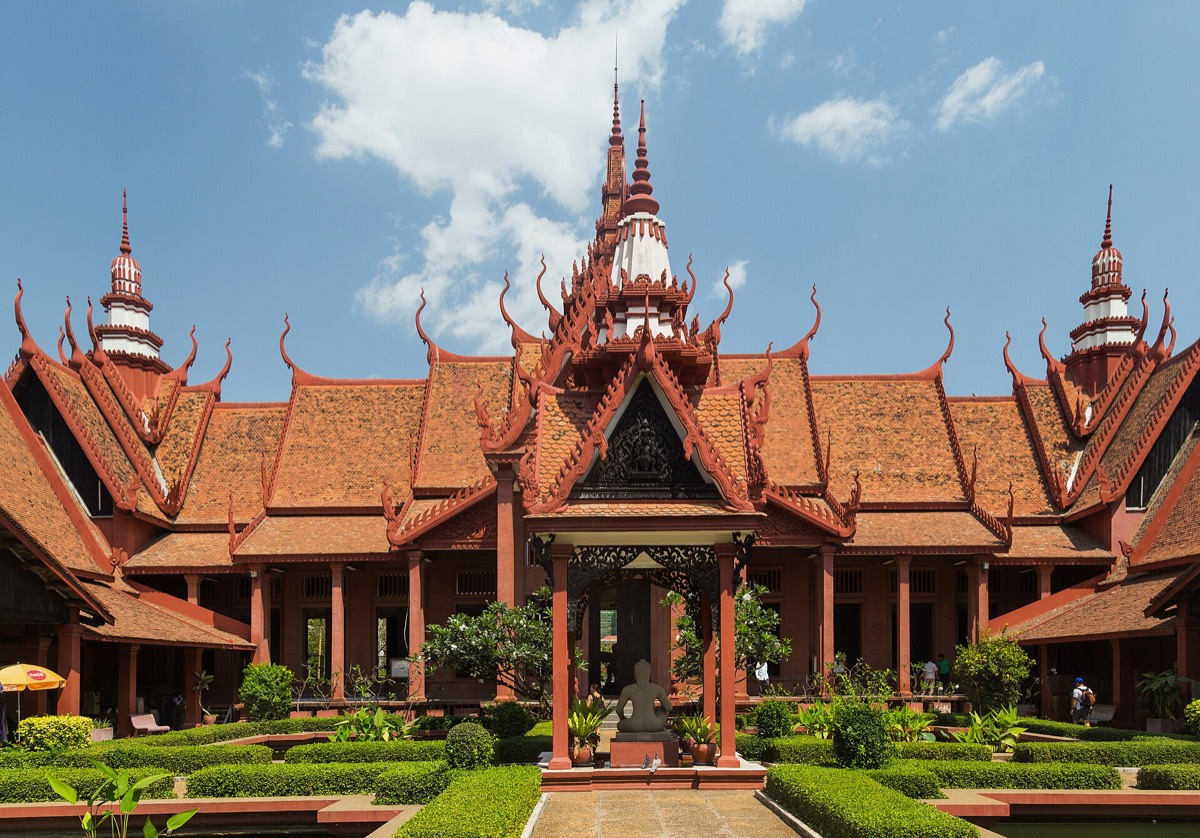
A rust-red pavilion around a lotus garden, holding the finest collection of Khmer sculpture in the world, from Funan to the age of Angkor.

- Area
- Royal riverside
- Start from
- Royal Palace area
- Distance
- walking distance
- Time needed
- 2–3 hours
- Best season
- All year; a perfect rainy-day or midday route
- Difficulty
- Easy
- Transport
- On foot from the palace or riverside
- Tickets & rules
- Entry ticket (around 10 USD, check current price); audio guide available; no photos in some galleries
Why go
If you are going on to Angkor, come here first; if you have just been, come here after. The National Museum of Cambodia gathers the statues that once stood in the temples, many of them too fragile or precious to leave in the jungle, and seeing them at eye level in quiet galleries teaches you to read the stones you will meet later.
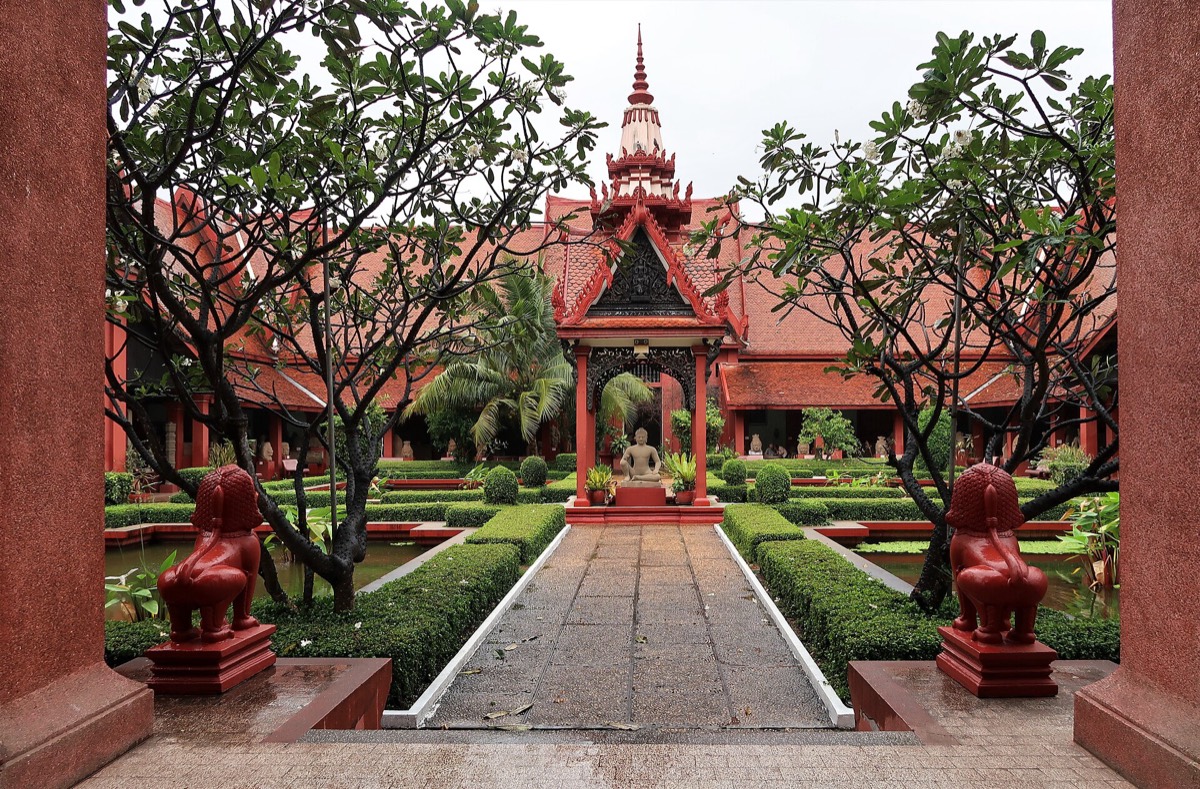
The building is a pleasure in itself: a red terracotta pavilion with sweeping Khmer roofs, built around a central courtyard garden with lily ponds, frangipani trees and a seated figure in the middle. The galleries open onto verandas, so the air moves and the light comes in sideways onto the sandstone. On a hot afternoon or in a monsoon downpour it is one of the calmest places in the city.
I always end up sitting on the bench in the garden for half an hour, listening to the rain on the roof tiles and watching the koi. It is the gentlest way I know to spend the hottest part of the day in Phnom Penh.
The story
The museum was designed by George Groslier, a French scholar born in Phnom Penh who fell deeply in love with Khmer art, and it opened in 1920. Groslier also founded a school of Cambodian arts to revive traditional crafts, and the building reflects his ambition: European museum ideas wrapped in a Khmer temple form.
Among the treasures, look for the great eight-armed Vishnu from Phnom Da in the south, carved in the pre-Angkorian period, perhaps in the sixth century, with a calm round face and arms rising like branches. There is the so-called Leper King, a seated figure from Angkor Thom whose identity is still debated, and the serene, slightly smiling portrait head usually identified as King Jayavarman VII, the builder of the Bayon.
The single most beautiful object for me is the fragment of a huge bronze reclining Vishnu found at the West Mebon temple near Angkor, from the eleventh century. Only the head, shoulders and part of the arms survive, but the face is wonderful, and you can see where precious inlays once filled the eyes and moustache.
The museum survived the 1970s by being abandoned and locked; when staff returned in 1979 the gardens were wild and the roof was home to a large colony of bats. Restoration took years, and much of the work of repairing statues is still carried out on site by Cambodian conservators.

Getting there
The museum is on Street 13 at the corner with Street 178, immediately north of the Royal Palace. From the riverside it is a five-minute walk.
Opening hours are usually from morning until late afternoon, without the long midday closure of the palace, which makes it the perfect place to go when the palace shuts.
A suggested plan
- StartPick up an audio guide or a printed plan; begin with the pre-Angkorian rooms on the left.
- First hourFunan and Chenla periods: the Phnom Da Vishnu, early Buddhas, linga and Harihara figures.
- Second hourThe Angkor galleries: the West Mebon bronze, Jayavarman VII, the Leper King, lintels and Garudas.
- ThenSit in the courtyard garden and let it settle; visit the small shop for books on Khmer art.
- AfterWalk along Street 178, once known for art shops and galleries, toward the river.
Where to stay
Any of the small hotels between the museum and the river put you within a few minutes’ walk. The streets around 178 and 240 are lively but not as loud as the main riverfront strip.
Good to know
- Visit before you go to Angkor to make the temples easier to read.
- The museum is a good choice for the middle of the day when the palace is closed.
- Remove your hat in the presence of the Buddha images and don’t pose next to statues as if they were props.
- Flowers and incense are often offered to some statues; leave them undisturbed.
- Photography rules vary by room; watch for signs.
- Street 178 outside has tuk-tuk touts; agree any fare before getting in.
- Some galleries can be warm; carry water.