Baphuon and the royal terraces
A temple-mountain rebuilt like a giant jigsaw puzzle, a hidden reclining Buddha, and long terraces where kings watched parades of elephants.

- Area
- Angkor core
- Start from
- Bayon
- Distance
- walking distance inside Angkor Thom
- Time needed
- half a day
- Best season
- All year; mornings or late afternoon
- Difficulty
- Easy
- Transport
- On foot from the Bayon; tuk-tuk or bicycle to get there
- Tickets & rules
- Angkor Pass; shoulders and knees covered for the upper level of the Baphuon
Why go
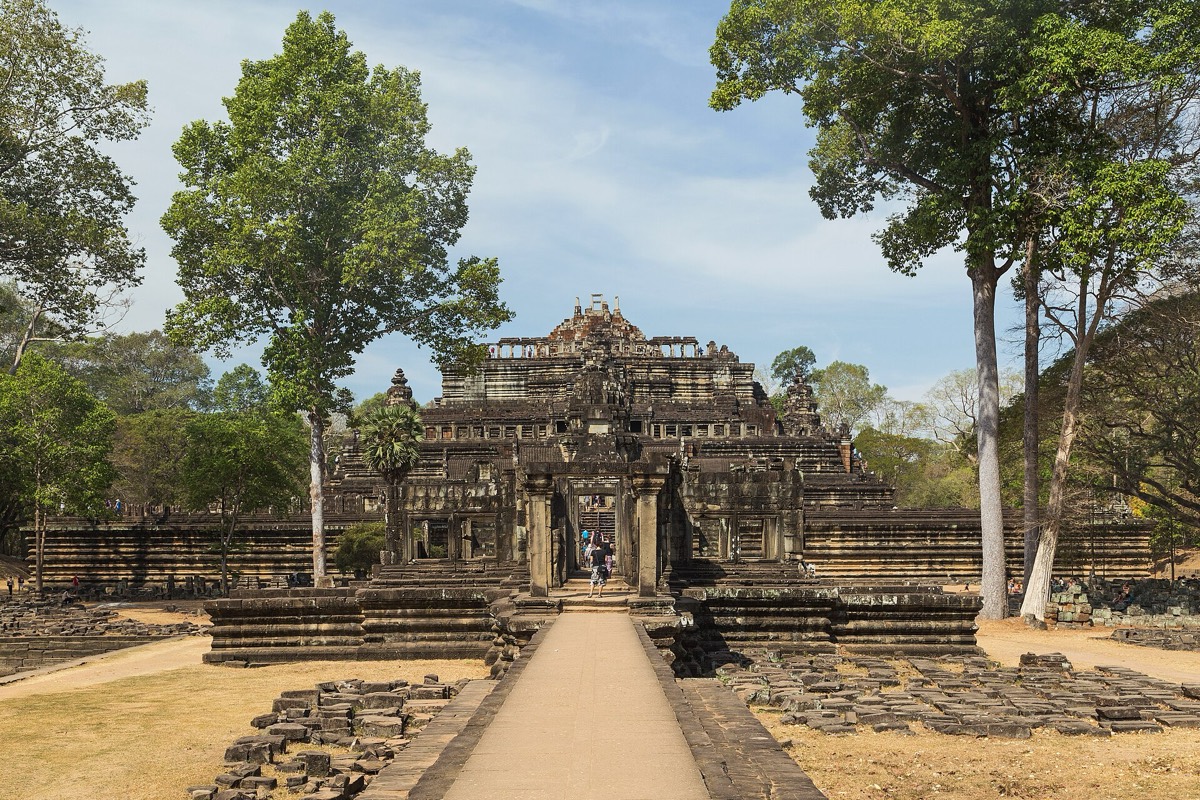
Most visitors rush from the Bayon to their next stop, but the area just north of it was the heart of royal life in Angkor Thom and it is one of my favourite places to wander slowly. Within a few hundred metres you have a great pyramid temple, the site of the royal palace, sacred bathing pools and two terraces carved with an extraordinary procession of creatures.
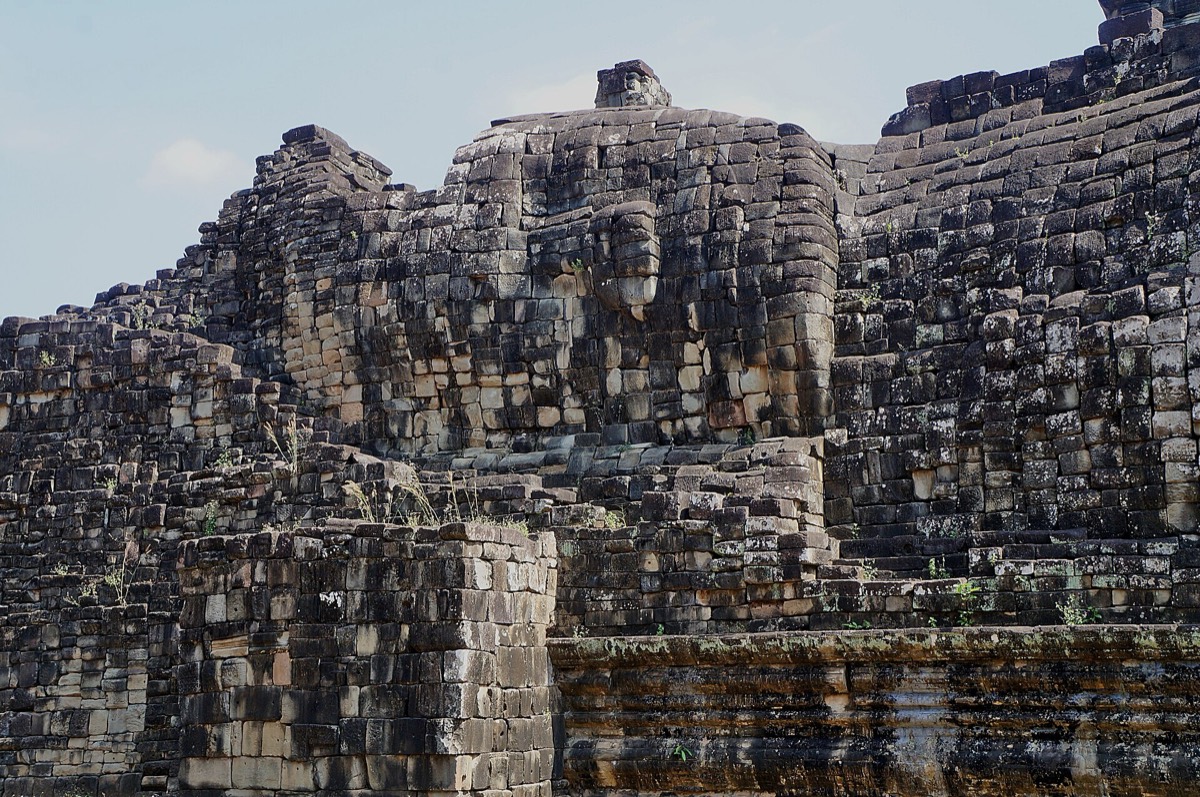
The Baphuon is reached by a long raised walkway on round stone columns. From the top level you look across tree tops to the Bayon’s towers, and you can see how the city was laid out. On its western side, if you step back, an enormous reclining Buddha emerges from the masonry. It is easy to miss and astonishing once you see it.
The Terrace of the Elephants and the Terrace of the Leper King are perfect for the late afternoon, when the sun lights up the carved walls and the grass in front of them fills with families.
The story
The Baphuon was built in the middle of the eleventh century under King Udayadityavarman II, a century before Angkor Wat. It was a Hindu temple dedicated to Shiva and once one of the tallest monuments of its time; Zhou Daguan described a tower of bronze here in the thirteenth century. In the fifteenth or sixteenth century, when the region had become Buddhist, the western face was rebuilt as a reclining Buddha around seventy metres long.
The temple was built on sand fill and kept collapsing. In the 1960s the French conservation team dismantled it, numbered some three hundred thousand stones and laid them out in the forest, planning to rebuild it on a stronger core. Then the civil war came, the work stopped, and the records were lost. When the team returned in the 1990s, they had to put the temple back together largely from photographs and memory. It was finally finished in 2011, and is often called the largest jigsaw puzzle in the world.
Just north lies the walled enclosure of the royal palace. The wooden buildings have vanished, but the small temple-pyramid of Phimeanakas still stands, and legend says that the king spent the first watch of every night there with a serpent spirit in the form of a woman.
The Terrace of the Elephants, more than three hundred metres long, was a royal reviewing stand. The Terrace of the Leper King owes its name to a statue found on top, possibly representing Yama, the god of death, whose lichen-covered stone suggested a disease. Its double walls are carved with rows of gods, nagas and seated figures.

Getting there
From the Bayon, walk north along the road for about five minutes to the Baphuon entrance. The palace enclosure, Phimeanakas and the terraces are all within a short stroll.
If you came by tuk-tuk, ask the driver to drop you at the Bayon and wait at the Terrace of the Elephants, where there are parking spots and food stalls.
A suggested plan
- StartWalk the raised causeway to the Baphuon and climb to the upper level for the view over Angkor Thom.
- NextGo around the western side to find the reclining Buddha in the masonry.
- ThenPass through the palace enclosure to Phimeanakas and the two royal bathing ponds behind it.
- Late afternoonWalk the length of the Terrace of the Elephants, then the hidden inner walls of the Terrace of the Leper King.
- OptionalCross the road to the twelve towers of Prasat Suor Prat facing the terraces.
Where to stay
Base yourself in town. Many people combine this route with the Bayon in a single morning, then return for lunch and a rest.
Good to know
- The Terrace of the Leper King has a narrow hidden corridor with beautifully preserved carvings that many visitors overlook.
- The Baphuon’s top level sometimes has dress and age restrictions; carry a scarf.
- Bring snacks and water; the stalls near the terraces are basic.
- Late afternoon light is best for the terraces, which face east but catch golden reflected light.
- The Baphuon stairs are steep with a handrail; take them slowly.
- Watch your step at the edge of the terraces, which have no railings.
- Some guides near the Bayon offer unofficial tours; licensed guides carry a badge.