Chinatown: temples, shophouses and a hawker lunch
A Hindu temple, a mosque and Chinese temples on the same few streets, quiet shophouse lanes and the biggest hawker centre in the city for lunch.

- Area
- Heritage quarters
- Start from
- Chinatown MRT
- Distance
- about 3–4 km on foot
- Time needed
- half a day to a full day
- Best season
- All year; especially lively before Chinese New Year
- Difficulty
- Easy
- Transport
- MRT to Chinatown, Maxwell or Telok Ayer
- Tickets & rules
- Free entry to temples; covered shoulders and knees, shoes off where asked
Why go
Chinatown is where I recommend everyone start, because it shows in a few streets how Singapore works. On South Bridge Road a Hindu temple, a mosque and a modern Buddhist temple stand within a few minutes of each other, and on Telok Ayer Street a Chinese temple, a mosque and a church are neighbours. Nobody here finds this remarkable, which is what makes it remarkable.
Between the temples are rows of restored shophouses in pastel colours, with carved shutters, decorative tiles and the covered 'five-foot way' along the front that keeps walkers out of the sun and the rain. Around Ann Siang Hill and Club Street the lanes climb gently and turn quiet; around Pagoda Street and Trengganu Street they are full of souvenir stalls and smells of roasting chestnuts and dried meat.
And then there is the food. Chinatown Complex Food Centre has hundreds of stalls on its upper floor, and Maxwell Food Centre down the road is one of the best-known hawker centres in the country. You can eat extremely well here for very little money, which feels like a small miracle in an expensive city.
The story
In 1822 Raffles drew up a plan for the growing settlement that divided it into quarters for different communities, and the area south-west of the river was set aside for the Chinese. Immigrants from southern China, Hokkien, Teochew, Cantonese and Hakka, poured in, sharing cramped rooms above shops, working as coolies, traders and craftsmen and sending money home. Clan associations and temples became the centres of social life.
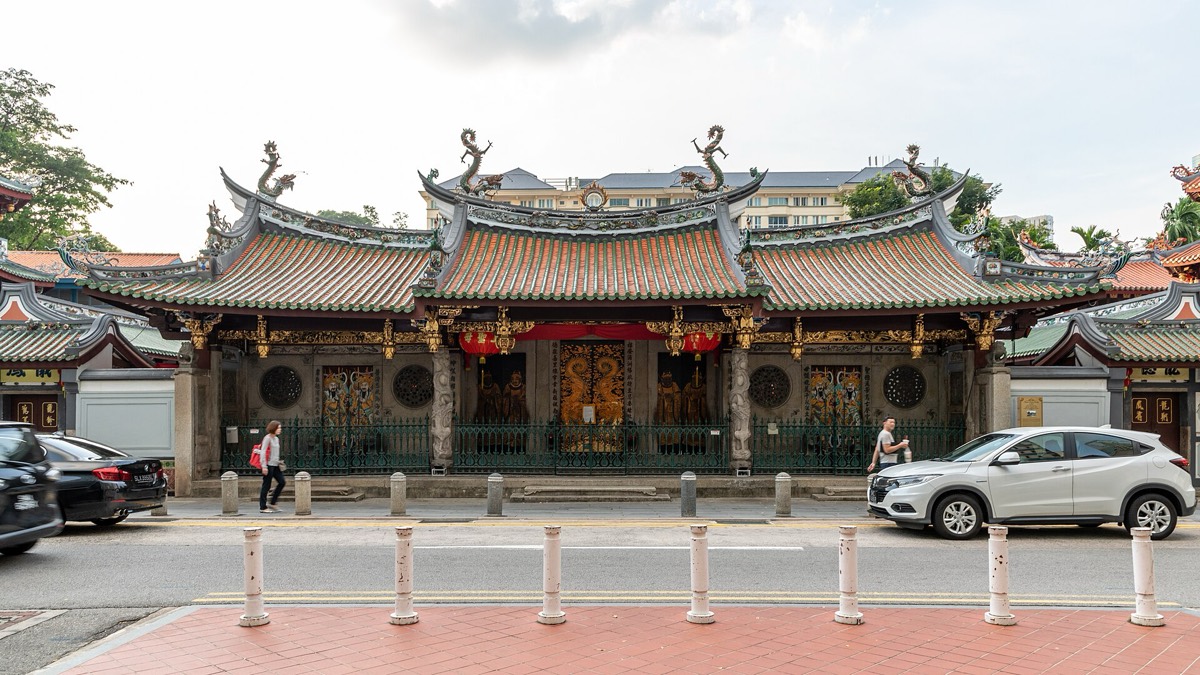
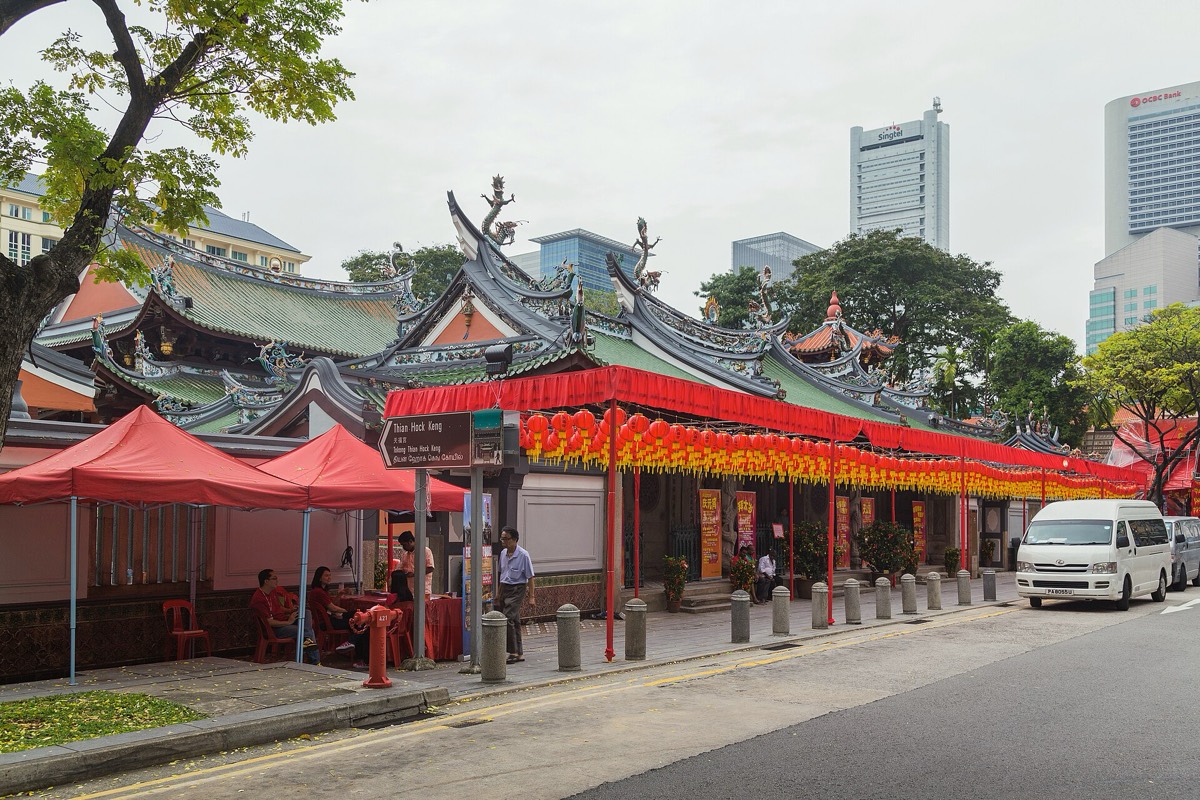
Thian Hock Keng on Telok Ayer Street, finished in the early 1840s, is one of the oldest and most beautiful Chinese temples in the city, dedicated to Mazu, the goddess of the sea. It once faced the shore, and sailors arriving from China would come straight here to give thanks for a safe crossing. The sea is now far away behind land reclamation, but the temple still has its carved beams, stone dragons and quiet courtyards.
Sri Mariamman Temple, dating back to 1827, is the oldest Hindu temple in Singapore, its tall gopuram covered with brightly painted figures of gods. Nearby stands the Jamae Mosque, built by Tamil Muslims. The Buddha Tooth Relic Temple is far newer, completed in 2007 in a Tang-dynasty style, with a museum and a quiet rooftop garden with a prayer wheel.
The Chinatown Heritage Centre recreates the tiny cubicles that families once lived in, with bunks, shrines and cooking stoves crammed together. It is a sobering counterpoint to the polished shophouses outside.

Getting there
Chinatown MRT (North East and Downtown lines) brings you right into Pagoda Street. Maxwell and Telok Ayer stations on other lines are also within easy walking distance.
Everything on this route can be done on foot; distances between temples are short.
A suggested plan
- 9:00 amStart at Thian Hock Keng and the other temples along Telok Ayer Street while it is still cool.
- 10:00 amWalk up Ann Siang Hill and Club Street to see the restored shophouses.
- 11:00 amVisit Sri Mariamman Temple and the Buddha Tooth Relic Temple on South Bridge Road.
- 12:00 pmLunch at Maxwell Food Centre or Chinatown Complex: chicken rice, wonton noodles, or whatever has the longest local queue.
- AfternoonChinatown Heritage Centre, then the lanes around Pagoda Street and Smith Street.
Where to stay
Chinatown is one of the best bases in the city, with boutique hotels in old shophouses, good transport links and endless food. It can be noisy around the main market streets.
Good to know
- Carry a packet of tissues; locals 'chope', or reserve, hawker tables by leaving one on the seat.
- Return your tray and crockery after eating; it is expected and enforced.
- Many hawker stalls close one day a week and sell out by early afternoon.
- Visit in the weeks before Chinese New Year for the street market and lanterns.
- Remove shoes where signs ask and avoid pointing your feet at altars.
- Photography may be restricted inside some prayer halls; follow the signs.
- The streets around Pagoda Street get very crowded on weekends and holidays.