Kampong Glam: the Sultan Mosque, Arab Street and Haji Lane
A golden-domed mosque, fabric shops, murtabak stalls and narrow painted lanes in the old Malay and Arab quarter of the city.

- Area
- Heritage quarters
- Start from
- Bugis MRT
- Distance
- about 2–3 km on foot
- Time needed
- half a day
- Best season
- All year; Ramadan evenings bring a busy food bazaar
- Difficulty
- Easy
- Transport
- MRT to Bugis or Nicoll Highway
- Tickets & rules
- Free entry to the mosque outside prayer times; robes are lent at the door for those who need them
Why go
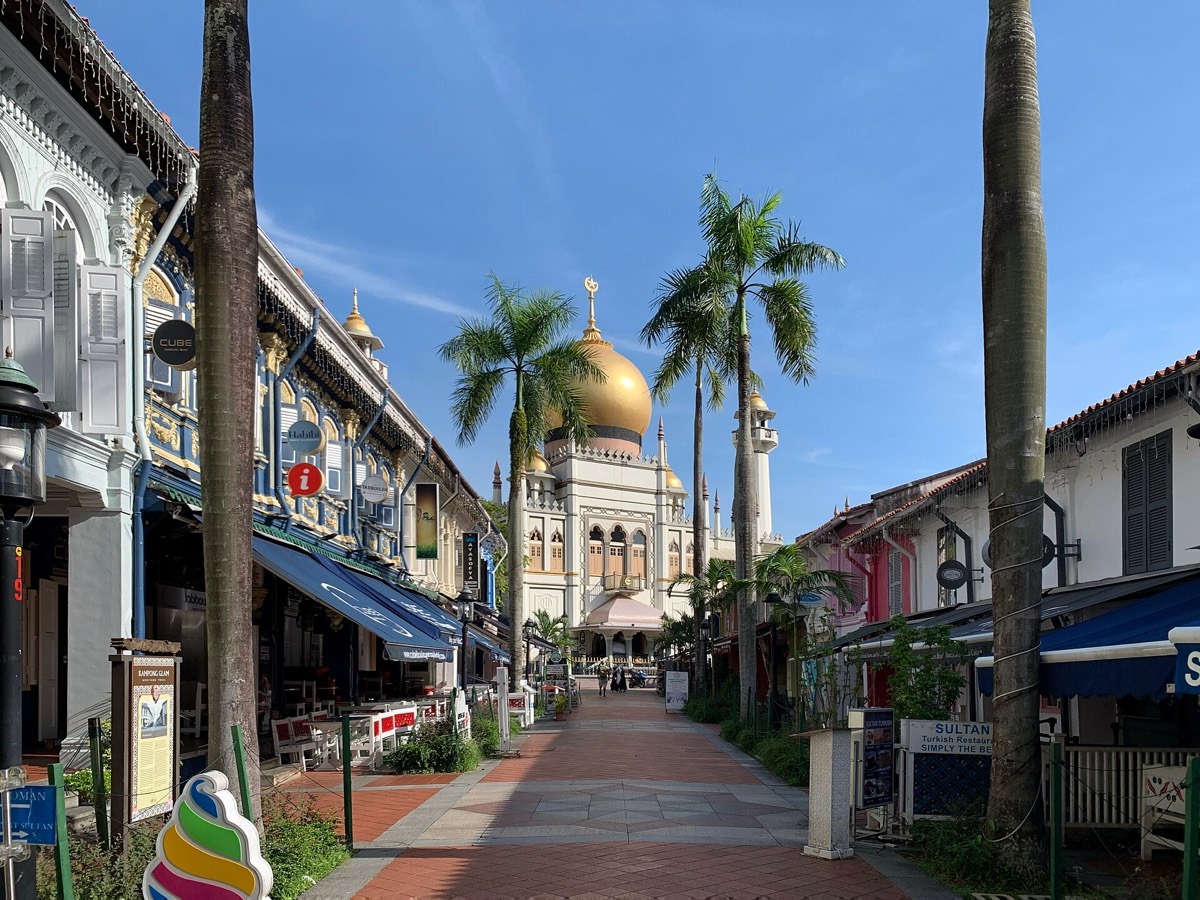
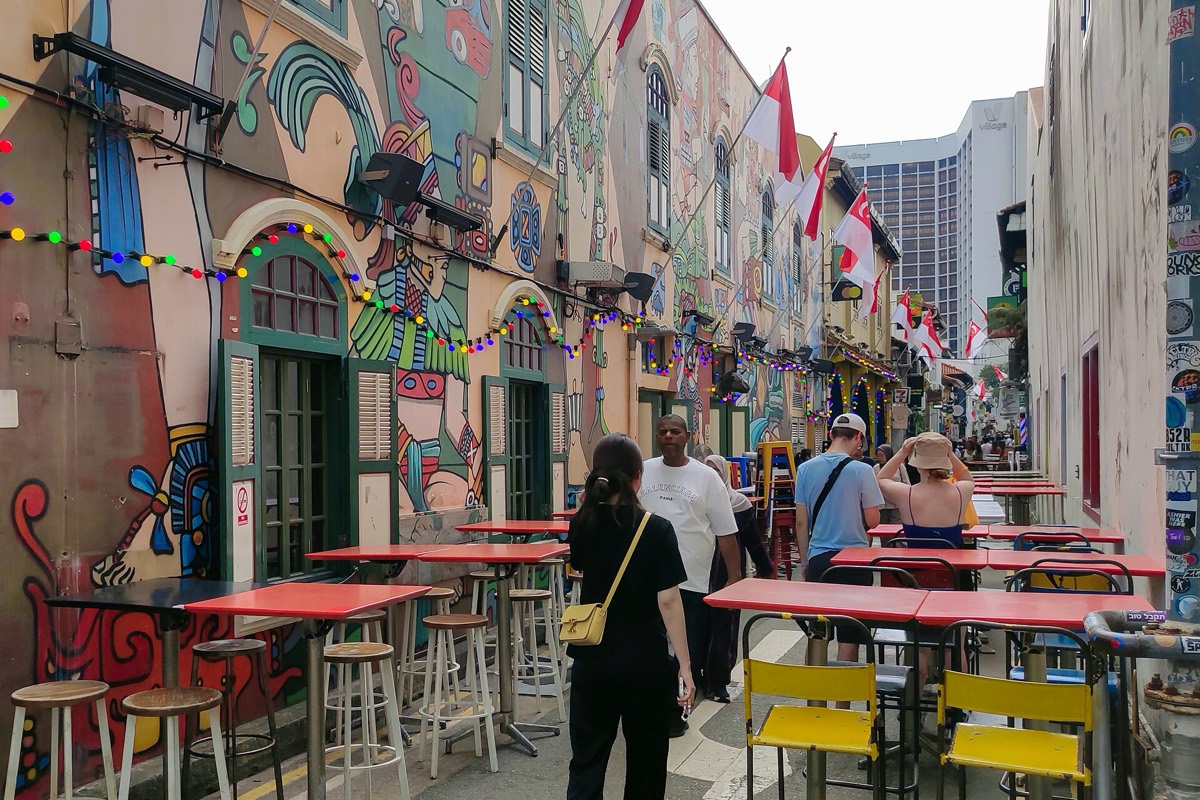
Kampong Glam is small, and that is its charm. Within a few streets you have the great golden dome of the Sultan Mosque, a former palace that now houses a museum of Malay heritage, carpet and textile shops along Arab Street, and the narrow, mural-covered strip of Haji Lane with its tiny boutiques and cafés. It feels intimate and slightly old-fashioned even when it is crowded.
The rhythm of the area follows the mosque. At prayer times the call echoes down Bussorah Street, men hurry in with their caps on, and the shops pause for a few minutes. Between prayers the pedestrian street in front of the mosque, lined with palm trees, is one of the prettiest spots in the city, especially in the soft light of late afternoon.
Food is serious here too. Restaurants along North Bridge Road have served murtabak, a stuffed and fried flatbread, and nasi padang for generations, and the area is full of Middle Eastern and Turkish places as well. Come hungry, and do not plan to hurry.
The story
The name is often said to come from the gelam tree, a kind of paperbark that once grew in the swampy land here, though historians are not entirely sure. In 1819, when the British wanted to make their trading post official, they recognised Hussein Shah as the Sultan of Johor, and he was given this area as his residence. His palace, the Istana Kampong Glam, was later rebuilt in the 1840s and now houses the Malay Heritage Centre.
The first mosque on the site was built in the 1820s. The present Sultan Mosque dates from the early 1930s, designed by the architectural firm Swan and Maclaren in a mixed style with Moorish and Indian touches. A well-known story says that the dark band at the base of its golden domes is made of the bottoms of glass bottles, donated by poorer Muslims who wanted everyone to be able to contribute to the building.
Arab Street recalls the Hadhrami Arab traders who settled here and became important merchants and landowners. The area was also a hub for pilgrims setting off for Mecca, which is said to be how Haji Lane got its name. Bugis seafarers from Sulawesi, Javanese, Boyanese and other communities lived and traded here too, making Kampong Glam a meeting place for the whole Malay world.
Today the old textile shops are slowly giving way to cafés and boutiques, but if you look carefully you can still find shops selling batik, songkok caps and perfumes, and old men drinking coffee at the same tables their fathers used.

Getting there
Bugis MRT on the East-West and Downtown lines is about five minutes' walk from the mosque. Nicoll Highway station on the Circle line is also close.
All the sights are within a few hundred metres of each other.
A suggested plan
- 10:00 amVisit the Sultan Mosque between prayer times; the main prayer hall is viewed from the edge.
- 11:00 amWalk around the Malay Heritage Centre and its gardens.
- 12:00 pmLunch on murtabak or nasi padang along North Bridge Road.
- 1:30 pmBrowse the textile and carpet shops of Arab Street and the boutiques of Haji Lane.
- 5:00 pmReturn to Bussorah Street for the mosque in the late afternoon light, then have tea in a café.
Where to stay
Bugis and Kampong Glam have a good range of hostels and boutique hotels, and the area is well connected and lively in the evenings.
Good to know
- The mosque is closed to visitors during Friday prayers around midday; check visiting hours.
- Dress modestly; robes are available at the entrance for those in shorts or sleeveless tops.
- During Ramadan there are evening food stalls and the area is especially atmospheric after sunset.
- Haji Lane is quietest on weekday mornings, when the murals are easy to photograph.
- Do not enter the prayer hall itself and avoid walking in front of people praying.
- Haji Lane is narrow and crowded on weekend evenings.
- Some bars in the area stay open late and can be noisy for nearby hotels.