Little India: flowers, spices and temple bells
Jasmine garlands, gold shops and curry steam along Serangoon Road, colourful temples and a wet market where Singapore's Indian community has shopped for generations.

- Area
- Heritage quarters
- Start from
- Little India MRT
- Distance
- about 3 km on foot
- Time needed
- half a day
- Best season
- All year; Deepavali lights in October or November are spectacular
- Difficulty
- Easy
- Transport
- MRT to Little India, Rochor or Farrer Park
- Tickets & rules
- Free entry to temples; remove shoes and cover shoulders and knees
Why go
Little India is the most vivid and sensual part of Singapore. The moment you step out of the station you smell jasmine and incense from the garland makers, hear Tamil film songs from the music shops and see sari fabrics piled in every colour. Compared with the polish of downtown, it feels looser, busier and warmer.
The best place to begin is the Tekka Centre, a market and hawker centre where you can watch butchers, fishmongers and vegetable sellers in the morning and then eat biryani, dosa or roti prata upstairs. From there the lanes branch off along Serangoon Road, with temples, spice shops and old shophouses painted in bright colours.
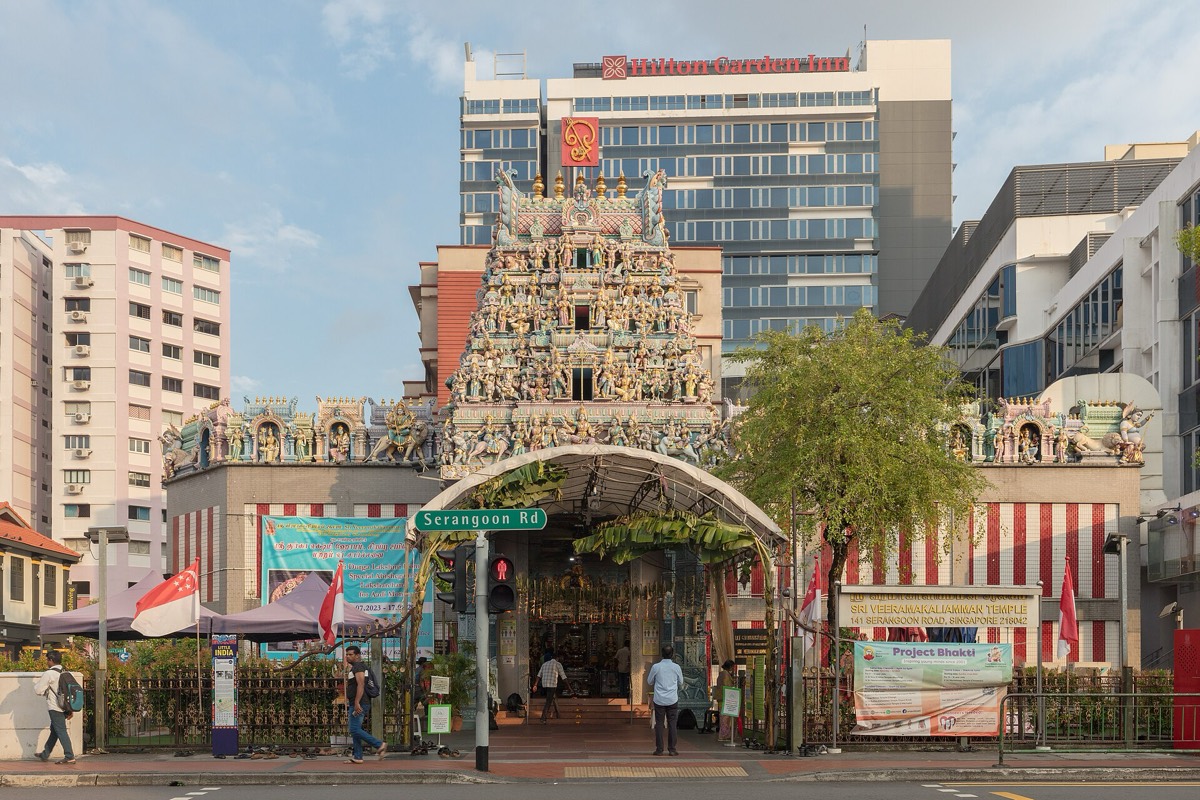
Go to at least one temple during a puja. The Sri Veeramakaliamman Temple, dedicated to the fierce goddess Kali, is a short walk from the market, and at prayer times the bells ring, the priests carry flames and the devotees crowd forward. Visitors are welcome as long as they are quiet and respectful.
The story
In the 19th century this area was a place of cattle and brick kilns, with streams that suited cattle trading and grass for grazing. Indian traders, labourers and soldiers settled around it, and by the early 20th century it had become the heart of the Tamil and wider South Asian community. Many street names still recall the old trades and people, and the old buffalo market gave its name to Kerbau Road, kerbau being the Malay word for buffalo.
Sri Veeramakaliamman Temple was founded in the 1850s by Bengali labourers and later rebuilt in the Tamil style. Further up Serangoon Road, the Sri Srinivasa Perumal Temple, dedicated to Vishnu, is the starting point of the annual Thaipusam procession, when devotees carry elaborate kavadi, some with hooks and skewers through their skin, all the way to a temple on Tank Road.
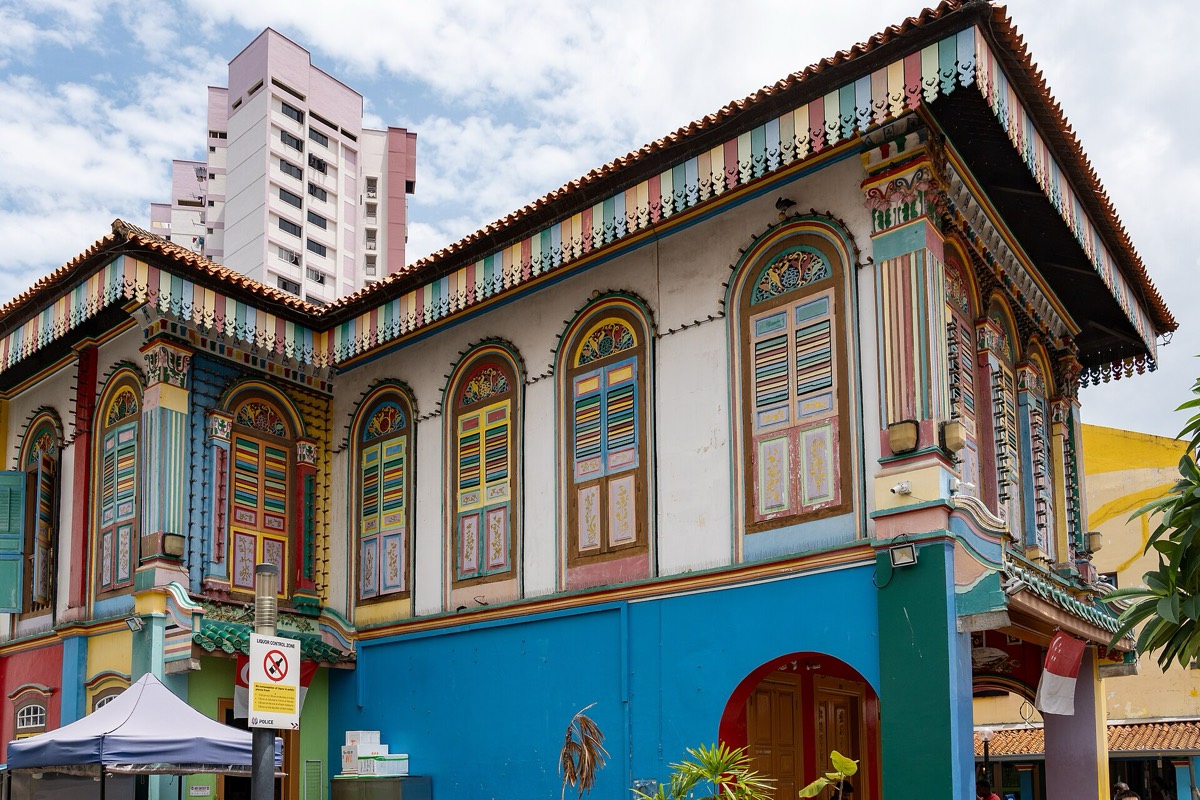
On Kerbau Road stands the House of Tan Teng Niah, a 1900 villa built by a Chinese businessman and painted in an almost absurd rainbow of colours. It is a reminder that Little India was never only Indian; Chinese, Malay and other families have always lived here too.
On Sundays the area fills with migrant workers from South Asia enjoying their day off, phoning home, sending remittances and eating together. It can feel crowded, but it is also very much the living heart of the neighbourhood.

Getting there
Little India MRT on the North East and Downtown lines opens directly onto the Tekka Centre. Farrer Park station is closer to the northern end of Serangoon Road.
Walk south to north along Serangoon Road and the parallel streets, then return by MRT.
A suggested plan
- 8:30 amBreakfast at the Tekka Centre: prata, dosa or a strong teh tarik, pulled tea.
- 9:30 amWalk through the wet market downstairs and the flower garland stalls outside.
- 10:00 amVisit Sri Veeramakaliamman Temple; check the puja times if you want to see a ceremony.
- 11:00 amSee the House of Tan Teng Niah and wander the side streets of Kerbau Road and Dunlop Street.
- 12:00 pmContinue to the Sri Srinivasa Perumal Temple, then lunch on a banana-leaf curry.
- EveningCome back after dark during festival season to see the Serangoon Road lights.
Where to stay
Little India and nearby Farrer Park have many budget and mid-range hotels and hostels; it is a lively, central base with good food at all hours.
Good to know
- Eat banana-leaf meals with your right hand if you like; cutlery is always available.
- Some large shops in the area are open late or around the clock, handy for travel supplies.
- Bring small change for temple donation boxes and flower garlands.
- Visit around Deepavali for lights, markets and a festive atmosphere, but expect crowds.
- Take shoes off before entering temples and do not touch the deities or offerings.
- Sundays are very crowded; if you prefer calm, come on a weekday morning.
- Ask before photographing worshippers or people at the market.