Hinagdanan cave and the Panglao watchtower
A cool underground lagoon reached by ladder-like steps, an old coral church, and a five-storey watchtower built to spot raiders: Panglao’s quieter side, away from the beaches.

- Area
- Panglao & reefs
- Start from
- Panglao
- Distance
- about 20 km in a loop
- Time needed
- half a day
- Best season
- All year; a good rainy-day option
- Difficulty
- Easy
- Transport
- Tricycle, scooter or hired car
- Tickets & rules
- Entrance fee for the cave, extra for swimming
Why go
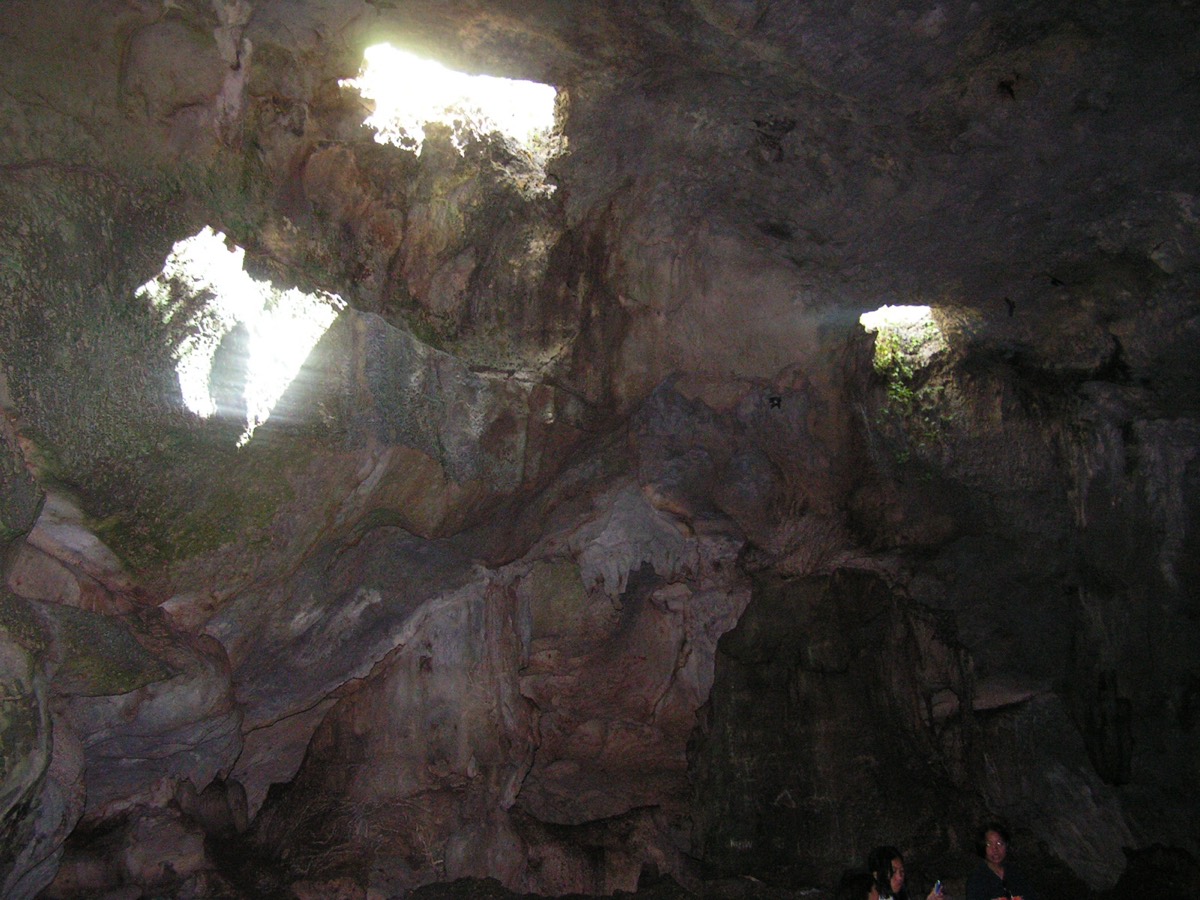
On a grey morning when the sea was choppy and the dive boats stayed in, I went underground. Hinagdanan cave lies under a farmer’s field in Dauis, and you go down a set of narrow stone steps into a chamber where sunlight falls through two holes in the roof onto a pool of clear, cool water. Stalactites hang above, and the light shifts as clouds move overhead.
You can swim if you pay a small extra fee. The water is brackish and chilly, a shock after the heat outside, and it is deep enough that you can float and look up at the shafts of light. Early in the day it is almost silent except for drips.
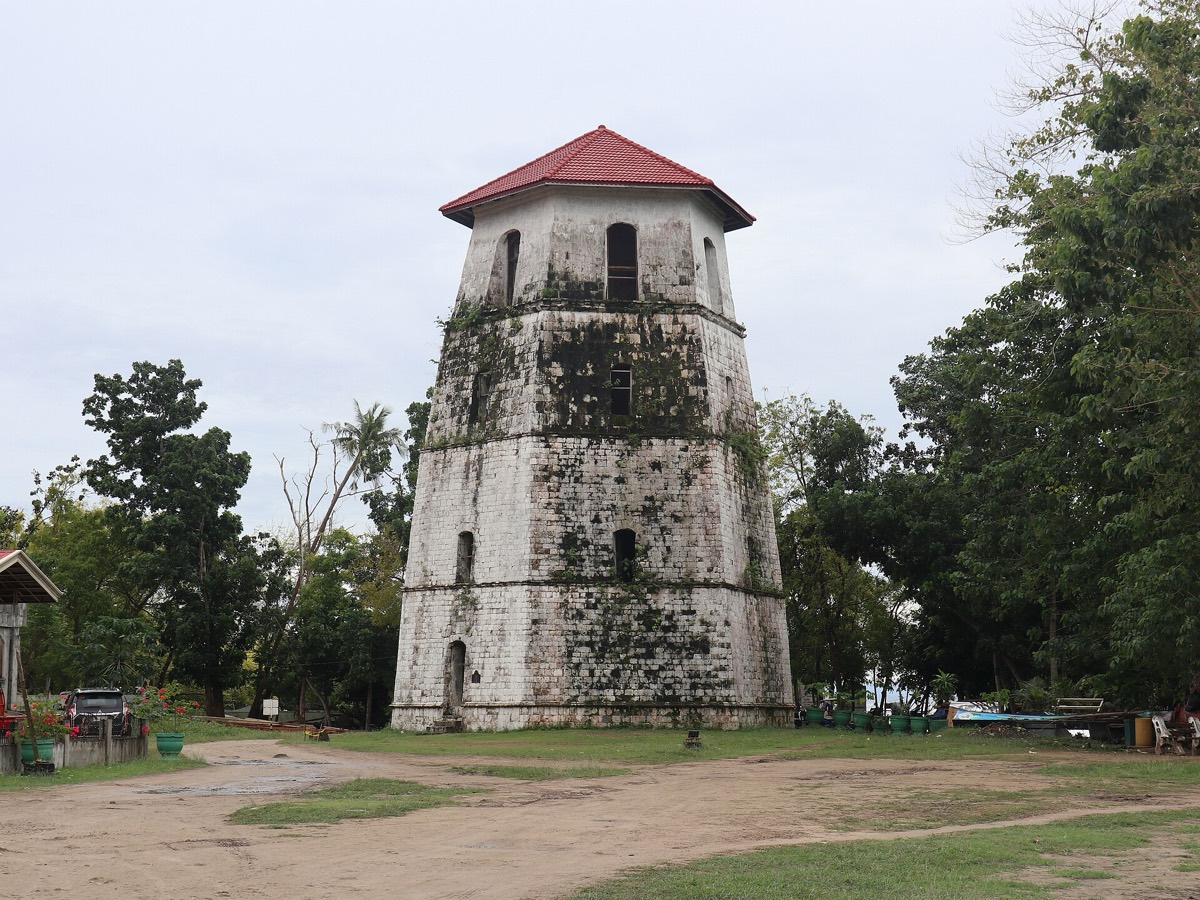
From there, a loop around the island takes in the church in Panglao town and the tall stone watchtower beside it, a reminder that this peaceful island once lived in fear of slave raiders.
The story
The name Hinagdanan comes from the local word for ladder or stairs, hagdan. According to local stories, a farmer clearing his land found a hole in the ground and dropped a stone into it, hearing a splash far below. He then built a ladder to climb down, and the cave got its name.
The cave is a classic piece of karst geology, like the Chocolate Hills: rainwater seeping through limestone over a very long time dissolved out the chamber, and the sea, not far away, mixes with fresh water in the pool. People say the water level rises and falls slightly with the tides.
The Panglao watchtower, beside the church of San Agustin in the town plaza, is often described as the tallest Spanish-era watchtower in the Philippines, with five storeys. It was built in the nineteenth century to watch for raiding ships, a constant danger across the Visayas.
Panglao’s church, rebuilt in the late nineteenth and early twentieth centuries, has a painted ceiling with scenes from the life of Saint Augustine.

Getting there
Hinagdanan is in Bingag, Dauis, on the northern side of Panglao, about 15–20 minutes by tricycle from Alona. Panglao town and its church are on the south-west of the island, near Alona.
A tricycle hired for a few hours is easiest. If you ride a scooter, the roads are paved but busy near the bridges.
A suggested plan
- 9:00Arrive at Hinagdanan early, before the tour groups, and go down into the cave.
- 9:45Swim in the pool if you like; bring a towel.
- 10:30Stop at the Dauis church on the way, if you haven’t already seen it.
- 11:30Visit the church and watchtower in Panglao town, then lunch nearby.
Where to stay
Any Panglao base works for this. The north side of the island, around Dauis, has some quieter guesthouses with views across the channel to Tagbilaran.
Good to know
- Wear sandals with grip; the steps are wet and smooth.
- Morning light through the roof holes is best for photographs.
- Bring a dry bag for valuables if you plan to swim.
- Don’t touch stalactites or rock formations; they grow extremely slowly.
- Swimming is at your own risk, and there is no lifeguard; children should be supervised closely.