Blood Compact, the old capitol and the Punta Cruz watchtower
A pact sealed in blood in 1565, a museum in a neoclassical capitol and a triangular stone watchtower built against raiders: the history of Bohol, close to the city.

- Area
- Tagbilaran & coast
- Start from
- Tagbilaran
- Distance
- about 20 km in total
- Time needed
- half a day
- Best season
- All year; a good rainy-day plan
- Difficulty
- Easy
- Transport
- Tricycle or hired car
- Tickets & rules
- Small museum entrance fees; none at the shrine
Why go
Tagbilaran is where most travellers land and leave without looking around, which is a pity on a rainy day. Within a short tricycle ride you can stand on the shore where a Spanish conquistador and a Boholano chieftain sealed a friendship with their own blood, then dry off in a museum full of jars, textiles and fossil shells, and finish at a lonely watchtower on a point facing the sea.
The Blood Compact shrine is a cluster of bronze figures on a low platform above the water. The sculptures are larger than life, and the sea behind them is calm and grey-green on overcast days. It is one of the few places in the city where you get a long view across the Bohol Sea towards Panglao and, on clear days, the hills of Cebu.
The National Museum’s Bohol branch occupies the old provincial capitol, a white neoclassical building near the city’s plaza. It is compact, free or very cheap, and air-conditioned, and its galleries on burial jars, local weaving and the island’s geology explain a lot about what you will see later in the hills and churches.
The story
On 16 March 1565, the Spanish expedition led by Miguel López de Legazpi anchored off Bohol and met Datu Sikatuna, a local ruler. According to the Spanish accounts, the two men each cut their arms, let a few drops of blood fall into a cup of wine and drank it as a sign of friendship. The ritual, known in the Philippines as sandugo, was a local custom, and the event is still celebrated every July in Bohol’s Sandugo festival.
The bronze monument was made by Napoleon Abueva, a Bohol-born sculptor and one of the Philippines’ National Artists. Abueva grew up in the province, and many Boholanos speak of him with a quiet pride. Look at the faces of the figures: he gave Sikatuna the same stature and dignity as the Spaniards, which was a point he cared about.
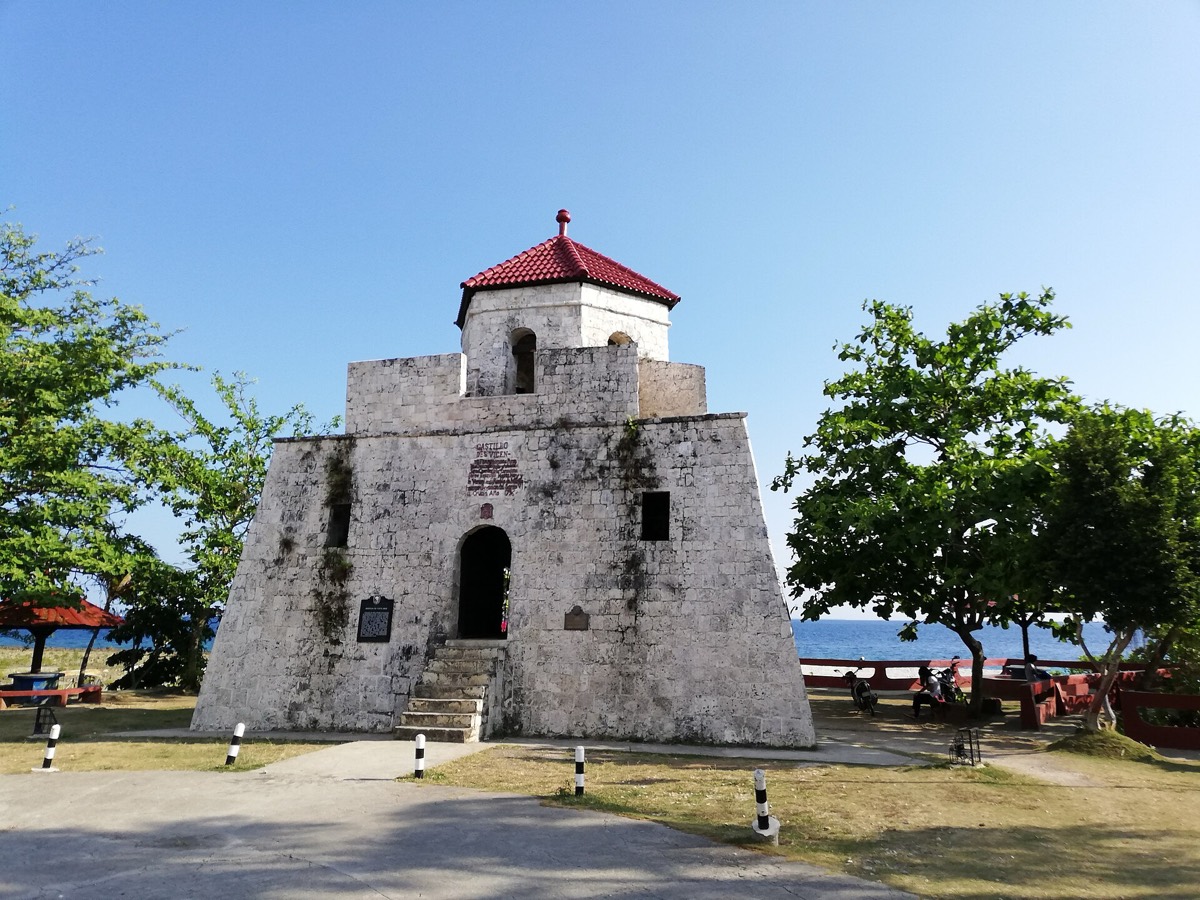
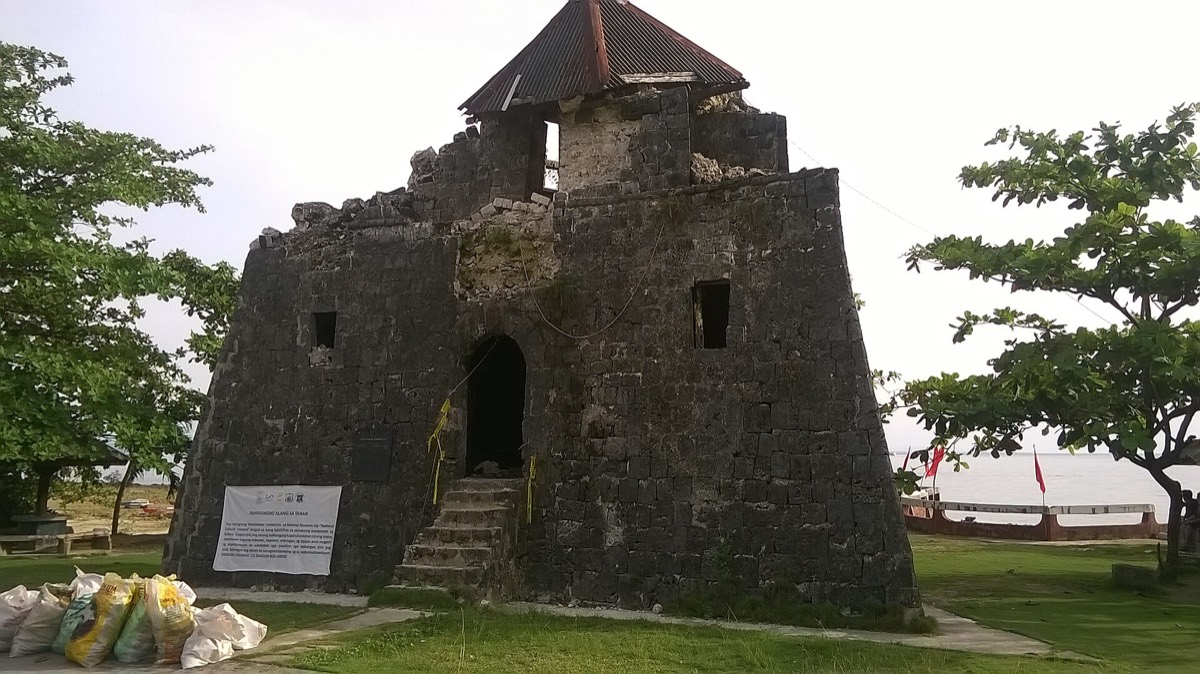
The Punta Cruz watchtower in Maribojoc tells a darker part of the story. Built in the late eighteenth century, traditionally in 1796, it is a triangular stone tower from which lookouts watched for raiding ships from the south. When sails appeared, signals passed from tower to tower along the coast and people fled inland or into fortified churches. Standing inside on a windy afternoon, you get a sense of how long and nervous those watches must have been.
The capitol building was damaged in the 2013 earthquake and restored before reopening as a museum. The galleries include burial jars and pottery from pre-colonial sites around the island, and a collection of shells and fossils that hints at how much of Bohol was once sea floor.

Getting there
The Blood Compact shrine is in the Bool district on the eastern edge of Tagbilaran, a short tricycle ride from the centre. The museum is in the city centre near the main plaza and cathedral.
Maribojoc is roughly 15 km north-west of Tagbilaran along the coast. A hired tricycle or car can take you there and back, or combine it with the Abatan river firefly trip in the evening.
A suggested plan
- 9:00Visit the National Museum in the old capitol, starting with the archaeology and geology rooms.
- 10:30Walk past St Joseph the Worker Cathedral and the plaza, then take a tricycle to the Blood Compact shrine.
- 12:00Lunch in the city: a simple carinderia with grilled fish and rice is enough.
- 13:30Drive to Maribojoc and the Punta Cruz watchtower; sit on the rocks below it for a while.
- Late afternoonContinue to the Abatan river for the evening firefly paddle, or return to Panglao.
Where to stay
This route works from either Tagbilaran or Panglao. Tagbilaran is more convenient for early ferries; Panglao is nicer for evenings.
Good to know
- Check museum opening days; national museums in the Philippines are often closed on Mondays.
- The shrine is most pleasant in the morning or late afternoon, when the bronze isn’t too hot to stand beside.
- Ask at the museum about temporary exhibitions; there are sometimes good ones on local crafts.
- The shrine is beside a busy road; tricycles drop you at the gate, so arrange your return ride before you go in.
- Rocks around Punta Cruz are slippery after rain.