Kampung Baru: a Malay village under the towers
Wooden stilt houses, mango trees and the city’s best nasi lemak, a few minutes’ walk from the Petronas Towers.

- Area
- Neighbourhoods
- Start from
- Central Kuala Lumpur
- Distance
- walking distance, about 3 km
- Time needed
- half a day
- Best season
- All year; mornings and evenings, and especially during Ramadan
- Difficulty
- Easy
- Transport
- LRT to Kampung Baru station
- Tickets & rules
- None; dress modestly, this is a residential Malay neighbourhood
Why go
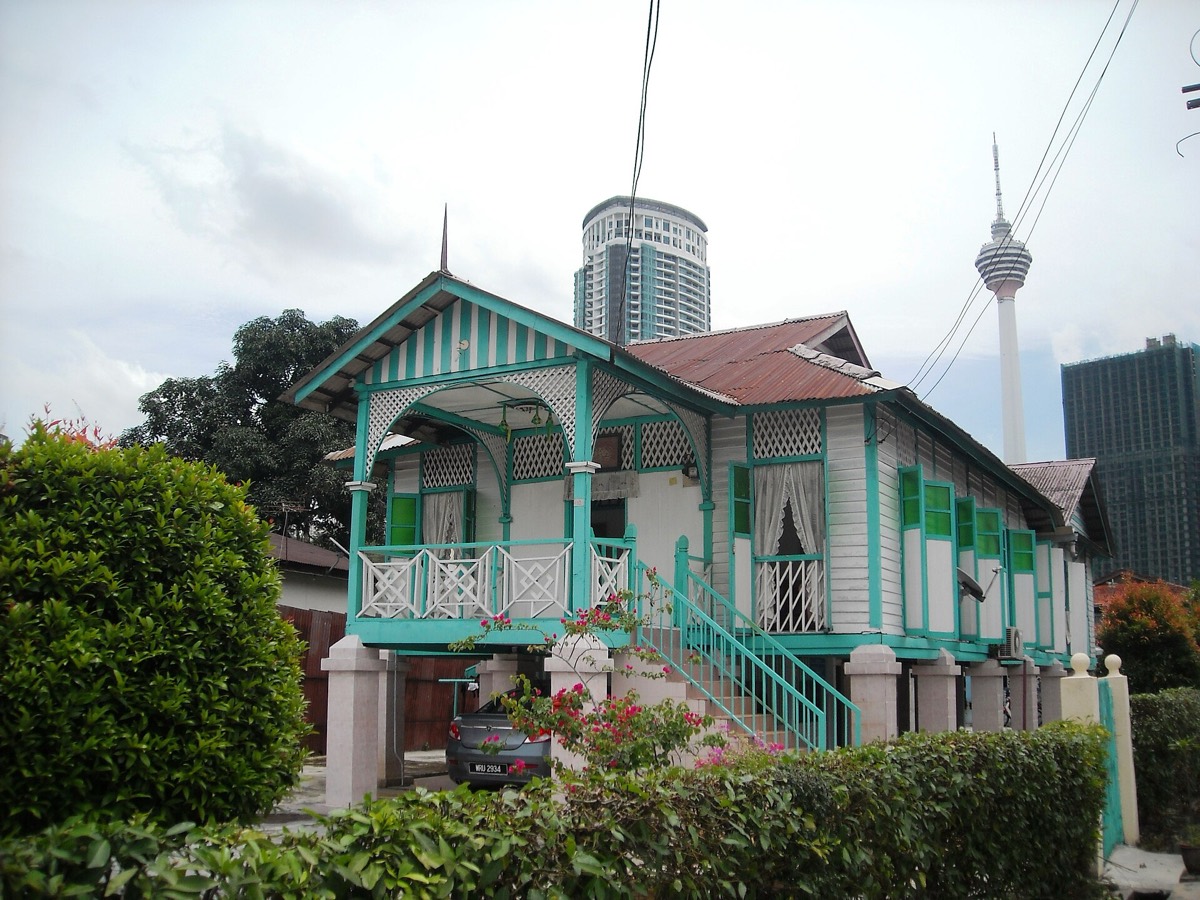
Kampung Baru is the most surprising neighbourhood in Kuala Lumpur. A few minutes from the Petronas Towers, you walk among wooden houses on stilts, with carved eaves, painted shutters, potted orchids and hens scratching under mango and banana trees. Glass towers rise directly behind the rooftops, which makes for some of the strangest and most beautiful photographs in the city.
It is still a living Malay village, not a museum. Children cycle to Quran school, grandmothers sit on the steps, and the mosque calls the faithful to prayer five times a day. Visit with the same respect you would show any village, and you’ll be welcomed.
Above all, come to eat. Kampung Baru is famous for its Malay food: nasi lemak wrapped in banana leaf, grilled fish, lamb soup, and sweet kuih in every colour. During Ramadan, the evening food bazaar on Jalan Raja Muda Musa is one of the busiest and most delicious in the country.
The story
Kampung Baru, which simply means ‘new village’, was created around 1900 by the British authorities as a Malay Agricultural Settlement. The idea was to give Malays a home in the growing city, which was dominated by Chinese and Indian traders, while keeping their village way of life. The land was reserved for Malay ownership, and that status is the reason the neighbourhood survived when everything around it was rebuilt.
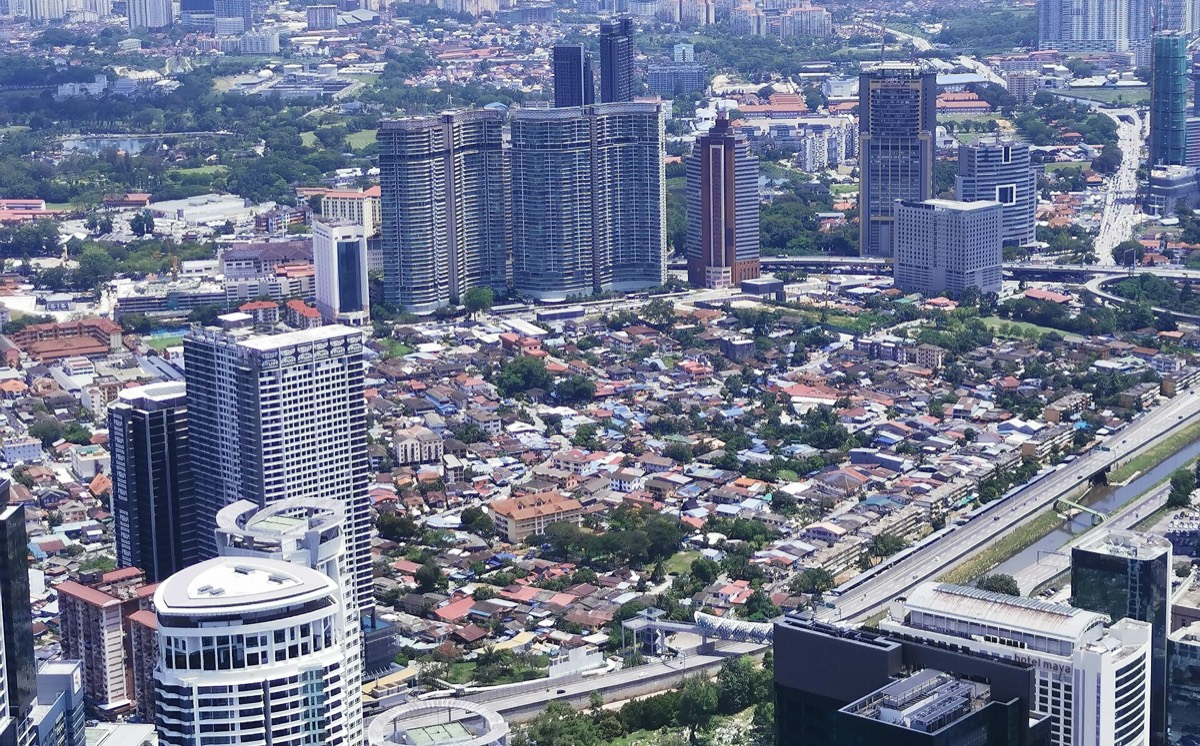
Over the following decades, the area became a cultural centre for urban Malays, home to writers, musicians and activists. Many of the land plots are now owned jointly by dozens of descendants of the original settlers, which makes any sale or redevelopment very complicated. Developers have been dreaming of it for years, and the debate about its future is a constant topic in the city.
In 2020 a curved pedestrian bridge, the Saloma Link, was opened over the river and the motorway, linking the village directly to KLCC. It’s named after Saloma, a beloved Malaysian singer and actress of the 1950s and 60s, and it changes colour at night.

Getting there
Take the LRT to Kampung Baru station on the Kelana Jaya line, or walk across the Saloma Link bridge from the KLCC area, about 15 minutes.
A suggested plan
- 7:30Breakfast of nasi lemak at a stall near the main road.
- 8:30Walk the lanes south of Jalan Raja Muda Musa to see the old wooden houses.
- 10:00Stop at the Kampung Baru mosque from outside, and visit a kuih stall for sweets.
- EveningCome back at dusk and cross the Saloma Link bridge to see the towers lit up behind the village.
Where to stay
There are few hotels in Kampung Baru itself; KLCC and Chow Kit are close, and some apartments in the area offer views of the towers.
Good to know
- Ask before photographing people or their houses, and keep your distance from private yards.
- Many stalls are open only for breakfast or only for dinner; afternoons are quiet.
- During Ramadan, eat discreetly during the day; at sunset the bazaar comes alive.
- Pork and alcohol are not served here.
- Cover your shoulders and knees; this is a conservative residential neighbourhood.
- Traffic on the main road is heavy and the pavements are narrow, so be careful.