Thean Hou Temple and the goddess of the sea
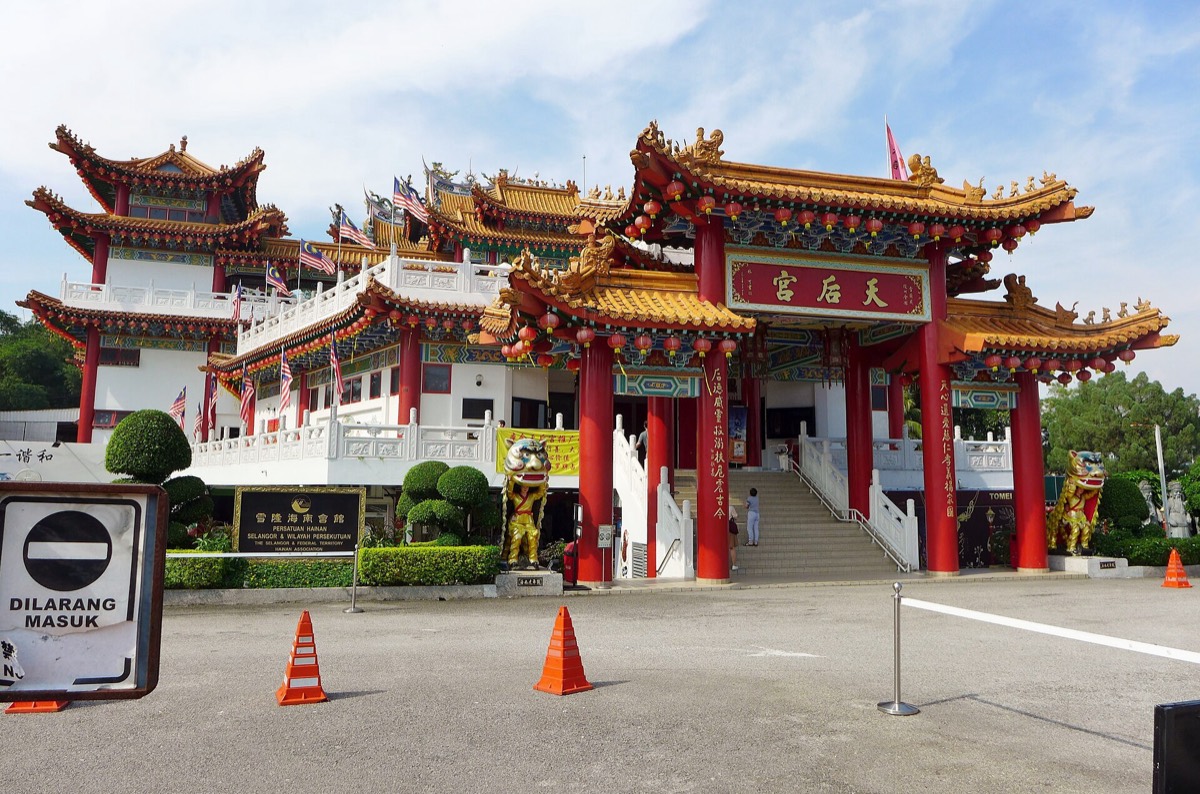
A six-tiered temple of red lanterns and golden dragons on a hilltop, built by the Hainanese community for the protector of sailors.

- Area
- Neighbourhoods
- Start from
- Central Kuala Lumpur
- Distance
- about 5 km from the centre
- Time needed
- 2–3 hours
- Best season
- All year; Chinese New Year and late afternoons
- Difficulty
- Easy
- Transport
- Grab or taxi; or walk 20–25 minutes from KL Sentral or Tun Sambanthan station
- Tickets & rules
- Free; dress modestly
Why go
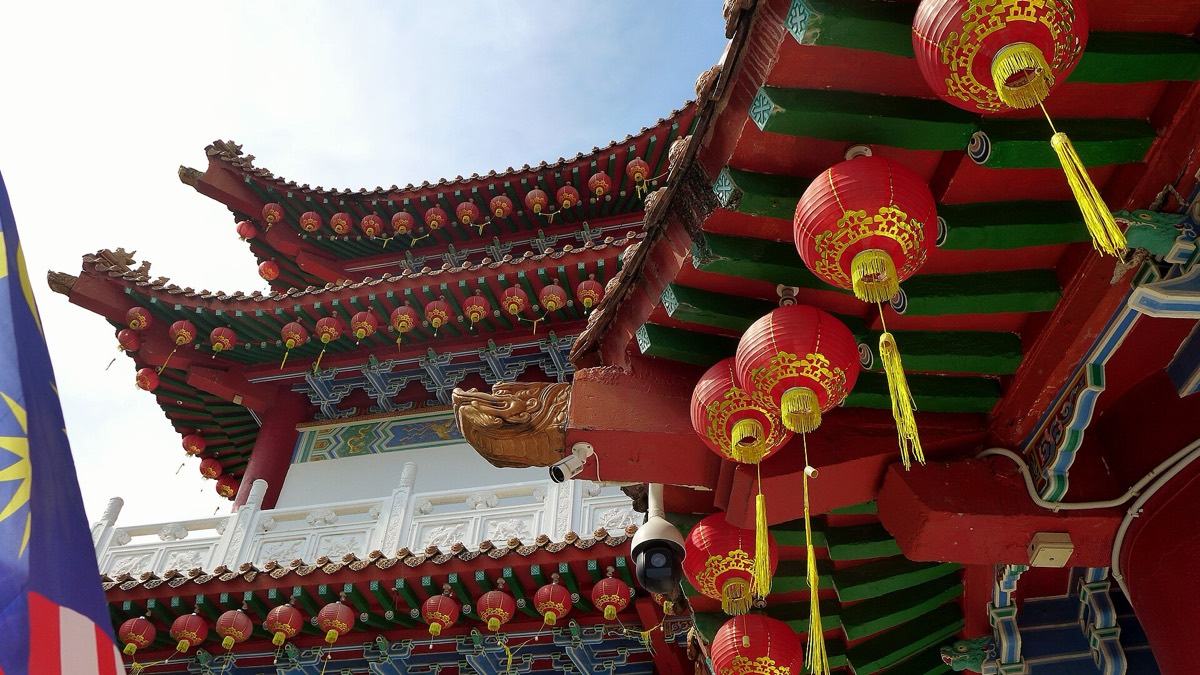
The Thean Hou Temple stands on Robson Heights, just above the city, and from its terraces you look out across the roofs of Kuala Lumpur. With its sweeping roofs, red pillars and hundreds of lanterns, it is one of the largest Chinese temples in Southeast Asia, and one of the most photogenic.
Inside the main hall sit three goddesses: Tian Hou, the Heavenly Mother, in the centre, flanked by Guan Yin, goddess of mercy, and Shui Wei Sheng Niang, goddess of the waters. Worshippers shake bamboo fortune sticks and burn incense; outside, couples come for wedding photographs, and families stroll in the garden of the twelve zodiac animals.
It’s best in the late afternoon and at dusk, when the lanterns are lit and the evening light falls warm on the red and gold. During Chinese New Year, thousands of lanterns turn the whole hill red.
The story
Tian Hou, also known as Mazu, is the patron goddess of seafarers. According to legend, she was a girl named Lin Moniang, born on an island off the coast of Fujian in the tenth century, who could see sailors in danger in her dreams and save them. After her death she was worshipped up and down the Chinese coast, and emigrants carried her across the South China Sea.
The Hainanese community of Kuala Lumpur, who came from the island of Hainan, built the temple and opened it in 1989. It mixes traditional Chinese architecture with modern elements, and it serves not only as a place of worship but also as a community centre, with a wedding hall where many couples officially register their marriage.
The garden has statues of the twelve animals of the Chinese zodiac, and visitors like to find their own. There’s also a statue of Guan Yin standing among the trees, a well of wishes, and a small medicinal herb garden.

Getting there
The easiest way is by Grab, about 15 minutes from the centre. On foot, it’s about a 20–25 minute walk from Tun Sambanthan monorail station or KL Sentral, but the final part is a steep road with heavy traffic.
A suggested plan
- 4:00 pmArrive by Grab and walk around the zodiac garden first.
- 4:45 pmVisit the main prayer hall and the terraces with views over the city.
- 5:30 pmWatch the lanterns come on as the light softens.
- 6:30 pmHead down to Brickfields for dinner.
Where to stay
Brickfields and KL Sentral hotels are the closest; Bangsar, with its cafés, is also nearby.
Good to know
- Visit at dusk for the lanterns.
- Be quiet in the prayer hall and don’t walk in front of worshippers.
- There are often fortune tellers on the lower level.
- Chinese New Year is magical but very crowded.
- The approach road is steep and busy; take a car rather than walking at night.
- Avoid stepping on the raised thresholds of doorways; it’s considered impolite.