Masjid Jamek and the River of Life at dusk
The muddy confluence where Kuala Lumpur was born, now framed by an old mosque, misty blue light and a riverside promenade that comes alive after dark.

- Area
- Old KL
- Start from
- Central Kuala Lumpur
- Distance
- walking distance, about 2 km
- Time needed
- an evening
- Best season
- All year; after 7 pm
- Difficulty
- Easy
- Transport
- LRT to Masjid Jamek station
- Tickets & rules
- Mosque visits outside prayer times; covered arms and legs, robes and headscarves lent at the door
Why go
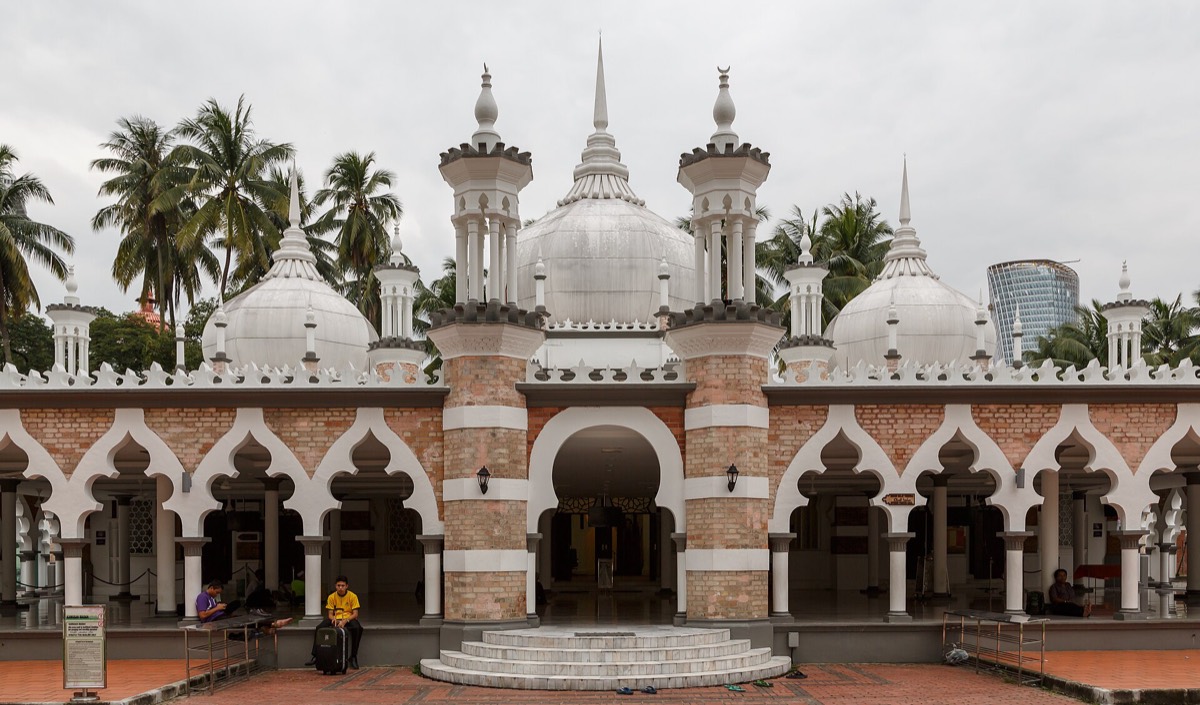
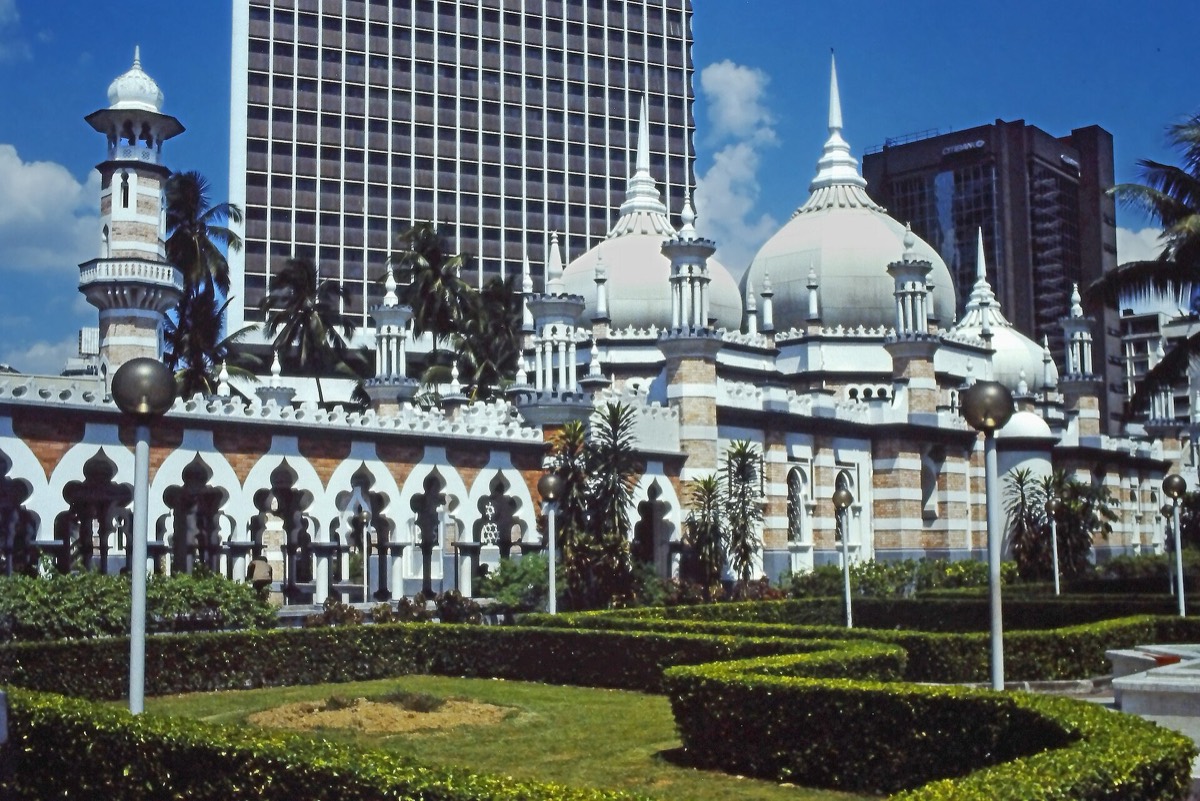
Two rivers, the Klang and the Gombak, meet in the centre of the city, and on the spit of land between them stands Masjid Jamek, one of KL’s oldest mosques. With its striped red brick and white plaster, onion domes and slim minarets, it looks like something from a fairytale, set among palm trees right where the city got its name.
For decades the rivers were brown, sluggish and hidden behind concrete. A long project known as the River of Life cleaned up the banks, built promenades and added a nightly spectacle at the confluence called the Blue Pool: as night falls, the water and walls glow blue, and every so often a fine mist drifts over the river, lit by coloured lights.
It’s a little theatrical, I admit, but it’s one of the loveliest evening walks in the city, cool and free, and you can easily combine it with a sunset at Merdeka Square and dinner in Chinatown.
The story
‘Kuala Lumpur’ is usually translated as ‘muddy confluence’, and this is the confluence. In the 1850s Malay chief Raja Abdullah sent Chinese miners up the Klang to open tin mines at Ampang. Boats could go no further than this point, so supplies were unloaded here, and a rough settlement of traders grew up on the riverbanks.
The mosque was designed by the British architect A.B. Hubback and opened in 1909 on what had been a Malay burial ground. For more than fifty years it was the main mosque of the city, until the National Mosque was completed in 1965. Hubback, who also designed the old railway station, was one of the inventors of KL’s ‘Moorish’ style, borrowed largely from northern India.
The River of Life project, completed in stages in the 2010s, is part environmental cleanup, part urban renewal. The water is not yet clean enough to swim in, but the promenade now runs along the river past old shophouses, and the murals on nearby walls give the area a new life.
Even today, the rivers can rise quickly in a heavy storm; flash floods have shaped the history of the city since its first decades.

Getting there
The LRT Masjid Jamek station sits right beside the mosque, so you can step off the train and be at the confluence in two minutes. Merdeka Square and Central Market are also within five to ten minutes’ walk.
A suggested plan
- 5:00 pmVisit Masjid Jamek in the late afternoon, outside prayer times, if it is open to visitors.
- 6:30 pmWatch the sunset from Merdeka Square as the old buildings light up.
- 7:30 pmWalk to the Blue Pool and stand on the bridge to watch the mist and lights.
- 8:30 pmFollow the promenade south towards Central Market and Chinatown.
- 9:00 pmDinner at the late-night stalls in Chinatown.
Where to stay
Stay in Chinatown or around Masjid Jamek to walk back after the show; both areas are lively late into the evening.
Good to know
- The light and mist show usually starts after dusk; check current times locally.
- The best view is from the bridge on Lebuh Pasar Besar.
- Mosque opening hours for visitors are limited, and closed on Friday around midday prayers.
- Combine it with Merdeka Square and Chinatown for a perfect first evening.
- Pavements near the river can be slippery after rain.
- Avoid the riverbanks during heavy storms, when the water rises quickly.