Climbing Mount Kinabalu to Low's Peak
Two days up a mountain of granite, from moss forest to bare rock, to stand on Low's Peak at 4,095 metres as the sun rises over Borneo.

- Area
- Kinabalu highlands
- Start from
- Kinabalu Park headquarters
- Distance
- about 8.7 km each way
- Time needed
- 2 days (1 night on the mountain)
- Best season
- All year; often clearer February – April
- Difficulty
- Hard
- Transport
- Bus or car to Kinabalu Park HQ, then shuttle to Timpohon Gate
- Tickets & rules
- Climbing permit, compulsory licensed guide, insurance and pre-booked mountain hut; book months ahead
Why go
Mount Kinabalu is the reason many people come to Sabah, and the climb is everything you hope it will be, if hard on the legs. On the first day you climb about 6 km from Timpohon Gate to Laban Rata, rising nearly 1,400 metres through changing forest: tall trees and orchids, then oaks and rhododendrons hung with moss, then stunted bushes and pitcher plants. Huts with water appear every kilometre or so.
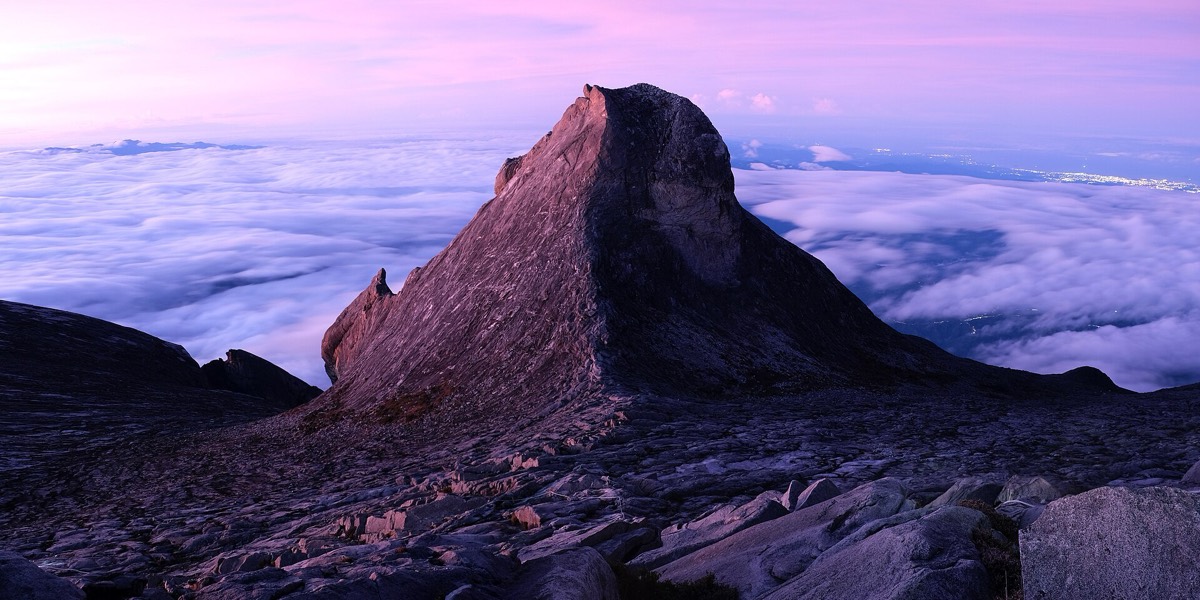
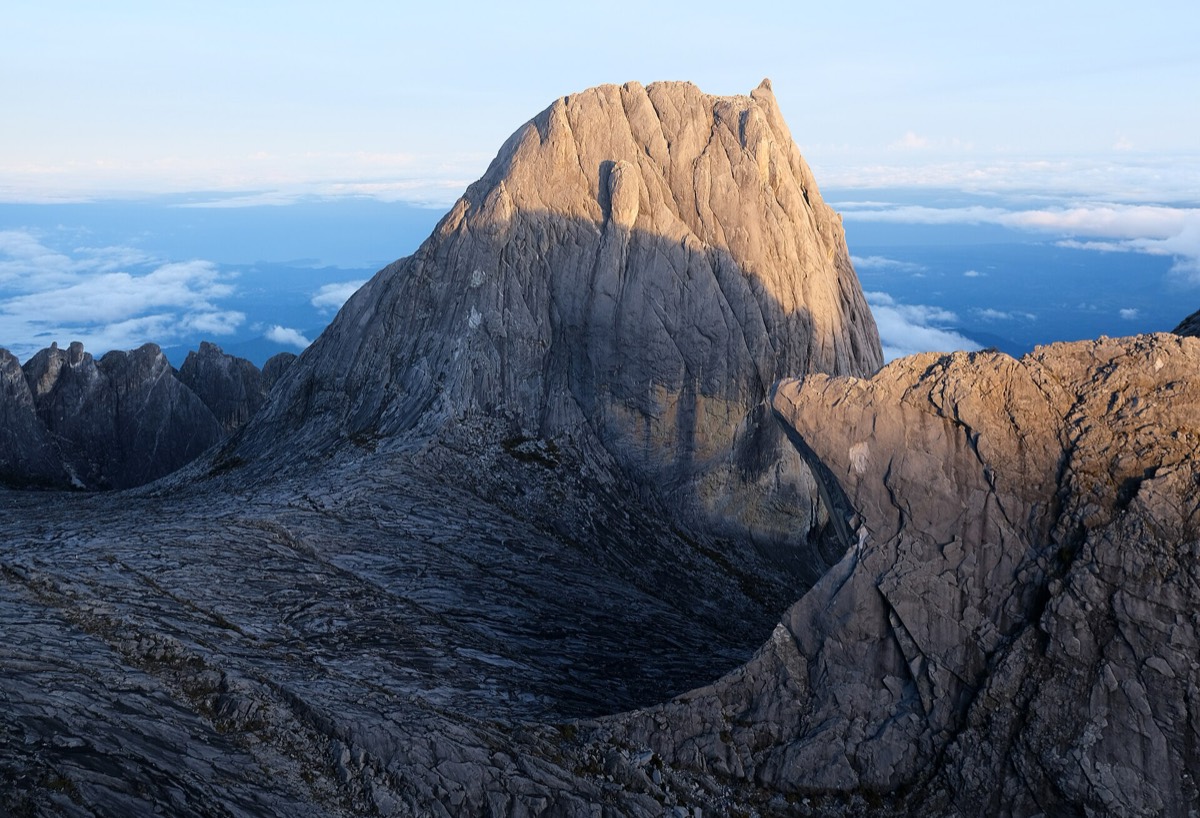
You sleep, briefly, at around 3,270 metres. Before 3 am you're back on the trail with a headlamp, climbing steep steps and then out onto the bare granite plateau, following a white rope in the dark. The summit is a small, cold knob of rock above jagged pinnacles. As the sky lightens, the whole of northern Borneo spreads out below, often under a sea of cloud, and the mountain throws a triangular shadow over it.
It's not a technical climb, and fit beginners do it every day, but it's long and steep. The descent, after summit and breakfast, is the part that most people remember in their knees for days.
The story
For the Kadazandusun people, Kinabalu is sacred: a resting place of the spirits of the dead. Some say the name comes from 'Aki Nabalu', the revered place of the dead. Another story tells of a Chinese prince who climbed the mountain to steal a pearl guarded by a dragon, married a local woman and then left her; she waited on the mountain for him and was turned to stone, a 'Cina balu', a Chinese widow. Guides still perform a small ceremony each year to appease the mountain's spirits.
The first recorded attempt on the mountain by an outsider was in 1851 by Hugh Low, a British colonial official, who reached the summit plateau but not the highest point. The peak now bears his name. The highest point itself was first reached in 1888 by the zoologist John Whitehead. Low's Gully, the deep chasm on the north side, stayed unexplored until the 1990s.
On 5 June 2015 an earthquake struck the mountain while climbers were on the summit trail. Rockfalls killed eighteen people, including guides and schoolchildren. The trail was closed for months and partly rerouted. Locals linked the quake to a group of tourists who had stripped on the summit days before, a reminder of how seriously the mountain is still regarded.

Getting there
Kinabalu Park HQ is about two hours by road from KK. Buses towards Ranau and Sandakan can drop you at the park gate, but most climbers arrange transport through their package.
Climbing is only allowed with a permit, a licensed mountain guide and a reserved bed at Laban Rata. These are limited and usually sold together as a package by licensed operators; book well in advance, especially for weekends and holidays.
A suggested plan
- Day 1, 7:30 amRegister at park HQ, meet your guide, shuttle to Timpohon Gate (about 1,866 m).
- Day 1, 8 am – 2 pmClimb to Laban Rata at a steady pace. Lunch on the way.
- Day 1, eveningEarly dinner at Laban Rata, sleep by 8 pm.
- Day 2, 2:30 amSummit push in the dark with your guide; reach Low's Peak around dawn.
- Day 2, morningDescend to Laban Rata for breakfast, then all the way down to the gate by early afternoon.
Where to stay
The night before, sleep at or near Kinabalu Park HQ or in Kundasang to acclimatise a little and start early. On the mountain, beds at Laban Rata and the nearby huts are basic, shared and cold.
Good to know
- Train beforehand with stairs and long hikes; the descent is the hardest part.
- Bring warm layers, gloves, a hat and a waterproof jacket; it can be near freezing at the top.
- Hire a porter for heavy bags; they are local and the fee is fair.
- Walking poles save your knees on the way down.
- Altitude sickness can strike even fit people; tell your guide about headaches or nausea and turn back if needed.
- Guides can stop the summit attempt in heavy rain or high wind; their decision is final.
- The mountain is sacred; don't shout, strip or misbehave on the summit.